
NSK NS15 Linear Guide Specs: Wholesale Supplier for Sale

Most buyers fixate on rail width and block length, yet the primary cause of installation failure is not dimensional mismatch but a single-letter error in the preload suffix.
The core specifications for the NSK NS15 linear guide include a 15mm rail width, standardized block heights across precision grades, and critical preload classes ranging from V0 to H. Accurate selection requires matching the preload suffix to the application’s rigidity needs and verifying the lubrication port layout against the machine design to prevent customs clearance delays and operational seizure.
I still recall the silence in the warehouse when a container destined for a Middle East industrial hub was held at customs. The paperwork listed a standard preload, but the physical blocks inside carried a high-preload suffix. The discrepancy was minor on paper but catastrophic for the client’s assembly line. The blocks were too stiff for the intended low-friction application, causing immediate binding upon installation. That incident reshaped how I inspect every NSK NS15 linear guide specs sheet. It is not merely about ensuring the part fits the rail; it is about ensuring the internal ball circulation matches the thermal and load expectations of the machinery.
Understanding these nuances separates a smooth import process from a logistical nightmare. Below, we dissect the technical matrices that define this component, moving beyond basic size charts to the engineering realities that dictate performance.
What Are the Core Dimensions of NSK NS15?
Dimensional consistency is the baseline, but spatial planning must account for block height variations across precision grades.
When integrating a NSK NS15 linear guide into a CNC spindle or automated gantry, the first step is verifying the envelope dimensions. The rail width is fixed at 15mm, but the block height and mounting hole patterns can vary subtly depending on the series variant. A common oversight is assuming all NS15 blocks share identical external profiles. In reality, the height difference between standard and high-precision blocks, though measured in microns, can alter the center of gravity in high-speed applications.
Consider the following comparison of key dimensional attributes. Note that while the rail width remains constant, the block geometry dictates the mounting interface.
| Dimension Attribute | Standard Series | High-Precision Series | Impact on Installation |
|---|---|---|---|
| Rail Width | 15 mm | 15 mm | Consistent mounting footprint |
| Block Height | Standard Tolerance | Tighter Tolerance | Affects spindle alignment |
| Mounting Hole Pitch | Standard | Standard | Interchangeable in most cases |
| Lubrication Port Position | Side/Top Options | Side/Top Options | Must match grease line routing |
A European automation integrator once faced weeks of downtime because they ordered blocks based on rail width alone, ignoring the specific block height tolerance required for their pre-aligned spindle housing. The slight deviation caused misalignment, leading to uneven wear. This highlights why checking the NSK NS15 linear guide dimensions against the original equipment manufacturer’s drawing is non-negotiable.
The lesson here is clear: dimensions are not just numbers; they are constraints. Verifying the block height and lubrication port position before shipment prevents costly rework at the destination.
How to Choose the Right Preload for NS15?
Preload is not a measure of quality but a setting for rigidity; higher preload does not always mean better performance.
The preload class determines the internal clearance between the balls and the raceway. For the NSK NS15 linear guide, preload ranges from light (V0) to heavy (H). A common misconception is that selecting the highest preload ensures maximum durability. In truth, excessive preload generates heat and increases friction, which can be detrimental to high-speed spindles or applications requiring smooth, low-resistance movement.
Selecting the wrong preload suffix is a frequent cause of customs holds and technical failures. If the commercial invoice lists a standard preload but the physical goods are marked with a high-preload code, customs officials may flag the shipment for inspection due to document mismatch. This delay can disrupt just-in-time manufacturing schedules.
| Preload Class | Rigidity Level | Typical Application | Risk of Misapplication |
|---|---|---|---|
| V0 / Z0 | Light | High-speed, low-load | Minimal risk, but may lack stiffness |
| C0 / G0 | Medium | General machinery | Balanced performance |
| H | Heavy | High-rigidity, low-speed | Overheating if used in high-speed apps |
A case from a Southeast Asian textile machinery plant illustrates this point. They replaced worn guides with high-preload units to “improve stability.” Instead, the increased friction caused the drive motors to overheat, leading to premature failure. The correct approach would have been to match the original preload specification, ensuring the NSK NS15 block preload rating aligned with the motor’s torque capacity.
When sourcing, always confirm the preload suffix on the packaging matches the technical requirement. This simple verification step ensures both mechanical compatibility and administrative smoothness during import.
Why Do Precision Grades and Lubrication Ports Matter?
Precision grades define thermal stability, while lubrication port placement dictates maintenance accessibility.
Precision grades for the NSK NS15 linear guide range from Normal to Ultra. While higher precision offers tighter tolerances, it is not universally superior. In environments with significant thermal fluctuation, an ultra-precision guide may experience thermal expansion jams if the housing is not machined to matching tolerances.
Lubrication is another critical factor. The position of the grease nipple—whether on the side, top, or end—must align with the machine’s lubrication system. An incorrect port position can make routine maintenance impossible without disassembling the entire unit. This often leads to neglected lubrication, causing block seizure and unplanned downtime.
| Precision Grade | Tolerance Level | Best Use Case | Lubrication Consideration |
|---|---|---|---|
| Normal | Standard | General industrial | Standard port access |
| High | Tight | CNC machines | Requires clean environment |
| Ultra | Very Tight | Precision measurement | Critical port alignment |
A mining equipment operator in South America reported frequent block seizures on their conveyor systems. Upon inspection, it was found that the lubrication ports were obstructed by the mounting frame due to a mismatch in the block orientation. Switching to a variant with a top-mounted lubrication port resolved the issue, extending the service life significantly. This underscores the importance of verifying the NSK linear guide HS code and physical configuration against the actual installation environment.
Ensuring the precision grade matches the thermal environment and the lubrication ports are accessible is essential for long-term reliability. These details, often overlooked in initial procurement, define the operational lifespan of the component.
How to Avoid Customs and Installation Pitfalls?
Verification of suffixes and HS codes against physical packing lists prevents clearance delays and fitment errors.
Importing linear guides involves more than just paying duties. It requires meticulous documentation. The HS code for linear motion bearings must be accurately declared, and the product description on the invoice must match the physical markings on the blocks. A discrepancy in the preload suffix or precision grade can trigger a customs hold, as seen in the earlier Middle East case.
To mitigate these risks, a rigorous verification process is necessary. This includes cross-referencing the part number on the packaging with the purchase order and ensuring that the traceability documents provided by the supplier match the physical goods. For distributors and OEMs, this level of scrutiny ensures that the NSK NS15 linear guide specs are not just theoretical but practically verified.
| Verification Step | Action | Outcome |
|---|---|---|
| Document Check | Match invoice suffix to packing list | Prevents customs holds |
| Physical Inspection | Verify block markings and port position | Ensures correct fitment |
| Traceability Review | Confirm batch numbers and origin | Guarantees authenticity |
A distributor in Central Asia implemented a strict suffix verification protocol after experiencing repeated clearance issues. By requiring suppliers to provide detailed photos of the block markings before shipment, they reduced their customs delay ratio substantially. This proactive approach saves time and money, ensuring that the goods arrive ready for immediate integration.
The key to smooth import and perfect fit lies in the details. Verifying every suffix, code, and physical attribute before the goods leave the warehouse prevents costly surprises at the destination.
Conclusion
Accurate specification matching prevents both mechanical failure and logistical delays.
Mastering the NSK NS15 linear guide specs requires attention to preload, precision, and lubrication details. By verifying these parameters against application needs and import requirements, buyers ensure optimal performance and smooth customs clearance. This disciplined approach transforms procurement from a transactional task into a strategic advantage.
NSK Bearings Mentioned in This Article
Deep Groove Ball Bearings Genuine NSK 6303-6317 Deep Groove Ball Bearings for Excavators 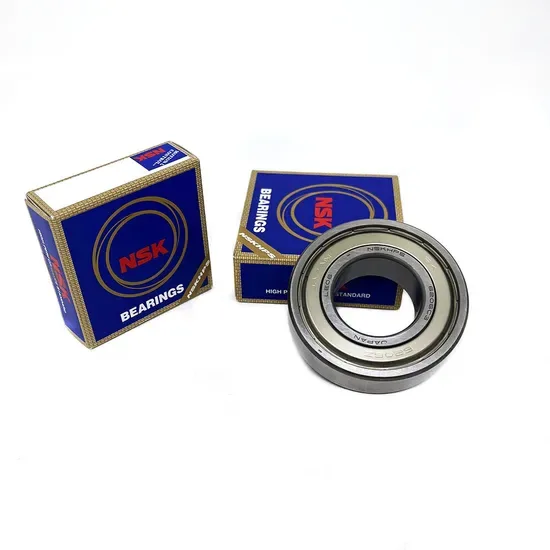 Deep Groove Ball Bearings X&S NSK 6202 6203 6301 Deep Groove Ball Bearings for Auto Parts Deep Groove Ball Bearings NSK High-Temperature Deep Groove Ball Bearing 608zz 6302 6910 6319-2RS Automotive Bearings and Parts NSK Deep Groove Ball Bearing 608 6204 6301 for Electric Motor Automotive
Target Industries
Any alternative is marked separately on the quote and requires buyer approval.
