
NSK 6007VV Bearing for Sale | Global Wholesale Supplier
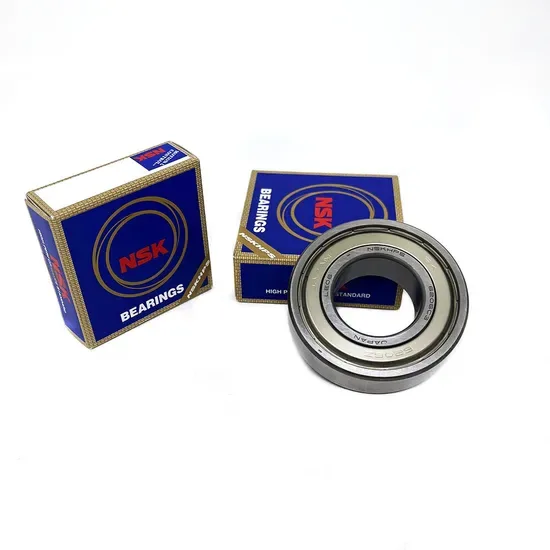
The VV suffix does not guarantee dust protection.
NSK 6007VV bearings feature non-contact rubber seals designed for low-friction, clean environments, not heavy dust or high-temperature zones. Selecting the correct internal clearance and grease type is more critical than the seal code itself for preventing premature failure in industrial applications.
I still remember the smell of burnt grease mixing with humid air in a palm oil processing plant in Southeast Asia. The maintenance manager held up a seized 6007 bearing, its rubber seals melted and fused to the outer ring. He had ordered what he thought was the best option: an NSK 6007VV, assuming the double seals would keep out the moisture and heat. He was wrong. The VV seal is non-contact, meaning it leaves a tiny gap that allows hot, humid air to circulate freely while trapping standard grease inside until it carbonizes. That mistake didn’t just kill the bearing; it stopped the entire pressing line for days. This incident taught me that selling or specifying an NSK 6007VV requires looking beyond the part number. You must understand the interplay between seal type, internal clearance, and lubrication. As a global supplier dealing with diverse industrial environments, I see this mismatch constantly. Buyers often treat the NSK 6007VV as a generic drop-in replacement, ignoring the specific engineering constraints that define its performance limits.
Understanding these nuances is essential for anyone sourcing an NSK 6007VV for sale in demanding sectors. Let’s break down why specifications matter more than brand reputation alone.
What Are the Core Dimensions of NSK 6007VV?
The basic geometry of the NSK 6007VV follows strict international standards, but the devil lies in the tolerances. This deep groove ball bearing has a bore diameter of 35 mm, an outer diameter of 62 mm, and a width of 14 mm. These dimensions are standardized under ISO 492, ensuring interchangeability across brands. However, the “VV” designation specifically refers to the sealing arrangement, not the dimensional accuracy class.
Many buyers assume all 6007 bearings are identical outside the seal. This is a dangerous oversimplification. The basic dynamic load rating and speed limits are heavily influenced by the internal construction. For an NSK 6007VV, the non-contact seals generate minimal friction, allowing for higher rotational speeds compared to contact-sealed variants. Yet, this advantage disappears if the bearing is subjected to axial loads it wasn’t designed to handle. The deep groove design accommodates some misalignment, but excessive axial force can displace the balls, leading to edge loading and rapid fatigue.
When evaluating an NSK 6007VV for sale, verify the tolerance class. Standard P0 tolerance is sufficient for most general industrial motors and pumps. However, for precision spindles or high-speed applications, you may need tighter tolerances. The key is matching the dimensional stability to your housing fit. A loose housing combined with a standard tolerance bearing will cause creeping, generating heat regardless of the seal type. Always check the shaft and housing tolerances against the manufacturer’s recommendations before finalizing your order.
VV vs. DDU: Which Seal Fits Your Operating Conditions?
This is where most failures occur. The confusion between VV and DDU seals is pervasive in the distribution channel. VV stands for non-contact rubber seals on both sides. DDU stands for contact rubber seals on both sides. The difference is not just semantic; it is functional.
VV seals rely on a small labyrinthine gap. They offer low torque and low heat generation, making them ideal for high-speed electric motors where efficiency is paramount. However, they provide limited protection against fine dust or water spray. If you install an NSK 6007VV in a woodworking plant filled with fine sawdust, the dust will eventually bypass the seal, mix with the grease, and act as an abrasive paste. I once consulted for a furniture manufacturer who switched from open bearings to VV sealed ones, expecting full protection. Within months, their spindle motors failed due to dust ingress. The solution was not a better brand, but a different seal type.
DDU seals, being contact-type, press against the inner ring, creating a physical barrier. They offer superior protection against contaminants but generate more friction and heat. They are unsuitable for very high-speed applications because the friction can lead to thermal runaway.
| Feature | VV Seal (Non-Contact) | DDU Seal (Contact) |
|---|---|---|
| Friction Torque | Low | High |
| Dust Protection | Limited (Fine dust can enter) | Robust (Effective barrier) |
| Water Resistance | Moderate (Splash only) | High (Jet wash resistant) |
| Speed Limit | High | Medium to Low |
| Ideal Application | Clean, high-speed motors | Dirty, slow-to-medium speed gearboxes |
When sourcing an NSK 6007VV for sale, ensure your application matches the VV profile. If your environment is dusty or wet, do not default to VV just because it is available. Ask for technical support to evaluate if a DDU or even a shielded ZZ variant is more appropriate. Misidentifying the seal requirement is a common error that leads to unnecessary downtime.
How to Match Grease and Clearance to Your Machine?
The seal is only half the story. The internal environment—grease and clearance—determines the bearing’s lifespan. In the palm oil mill case mentioned earlier, the failure wasn’t just due to the seal type; it was exacerbated by the wrong grease and clearance combination.
Standard grease has a limited temperature range. In high-ambient-temperature environments, standard lithium-based greases can dry out or oxidize rapidly. Once the grease degrades, the metal-to-metal contact increases, generating more heat, which further degrades the grease. It is a vicious cycle. For high-temperature applications, synthetic greases with higher dropping points are necessary. However, using thick, high-viscosity grease in a high-speed NSK 6007VV can cause churning. Churning generates significant heat, effectively cooking the bearing from the inside out.
Clearance is equally critical. Standard clearance (C0) is suitable for most applications with normal thermal expansion. However, in applications where the shaft heats up significantly, such as in large motors or gearboxes, the inner ring expands more than the outer ring. This reduces the internal clearance. If the clearance becomes negative, the bearing preloads itself, leading to seizure. Switching to C3 clearance provides extra space for thermal expansion, preventing this lock-up.
I recall a motor assembly line where engineers struggled with overheating bearings. They blamed the brand. After analysis, we found they were using C0 clearance bearings in a high-speed, high-heat environment. Switching to C3 clearance resulted in a noticeable drop in operating temperature. When you look for an NSK 6007VV for sale, specify the clearance based on your operating temperature, not just habit.
Common Failure Modes from Spec Mismatch
Understanding how bearings fail helps in selecting the right one. Most failures attributed to “poor quality” are actually cases of specification mismatch.
Seizure due to thermal lock-up is common when C0 clearance is used in high-heat environments without adequate cooling. The bearing expands, clears vanish, and friction spikes. Another frequent issue is grease leakage. In VV sealed bearings, if the bearing is mounted vertically or subjected to vibration, grease can migrate out of the raceway, leaving the balls unprotected. This is why proper mounting orientation and grease quantity are vital.
Dust ingress is the silent killer for VV seals in dirty environments. Unlike contact seals, VV seals cannot stop fine particulates. Over time, these particles contaminate the grease, increasing wear rates. The result is a noisy bearing that eventually fails due to fatigue spalling. Recognizing these patterns allows maintenance teams to diagnose issues correctly rather than blindly replacing parts with the same incorrect specification.
When you source an NSK 6007VV for sale, consider the failure history of your previous components. If you see signs of dust contamination, switch to a contact seal. If you see signs of overheating, check your clearance and grease type. Technical selection support is invaluable here. A knowledgeable supplier can help you analyze these failure modes and recommend the correct configuration, preventing repeat failures.
Conclusion
Selecting the right bearing involves more than matching a part number.
The NSK 6007VV is a precise engineering component designed for specific conditions. Its non-contact seals offer low friction but limited protection, making it unsuitable for harsh, dusty environments. Proper selection requires matching the seal type, internal clearance, and grease to your specific operating parameters. Ignoring these details leads to premature failure, regardless of the brand’s reputation. Always verify your application requirements against the bearing’s technical specifications to ensure reliability and longevity.
NSK Bearings Mentioned in This Article
Deep Groove Ball Bearings X&S NSK 603 604 606 607 6000-6007 Deep Groove Ball Bearing Motorcycle Auto Part  Deep Groove Ball Bearings NSK 6006 6007 6008 6009 6010 Deep Groove Ball Bearing Wholesale Price
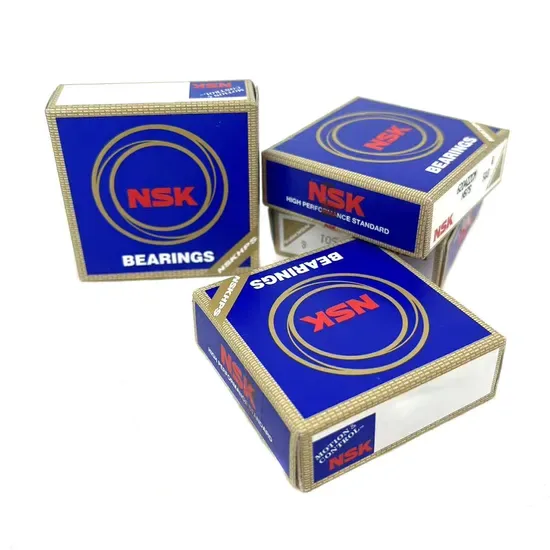 Deep Groove Ball Bearings NSK 6004 6007 6008 6010 6011 Deep Groove Ball Bearing 2RS Zz Auto Motorcycle Part
 Deep Groove Ball Bearings X&S 6007 608 Zz Deep Groove Ball Bearing for Auto Spare Part
Target Industries
Any alternative is marked separately on the quote and requires buyer approval.
