

Matching the drawing dimensions is not enough to guarantee performance.
The core answer for sourcing an NSK NH25 linear guide is that dimensional compatibility is merely the entry ticket; the decisive factors for reliability are the correct preload class and accuracy grade matched to your specific operating conditions, verified through strict original manufacturer traceability. Without this alignment, even a perfectly sized rail will fail prematurely under load or cause jitter in high-speed applications.
I still remember the humidity in the Binh Duong industrial zone in Vietnam. The air was thick, and the noise from the assembly line was deafening until it wasn’t. A local automation factory had decided to cut costs by mixing a batch of counterfeit NH25 guides into their latest pick-and-place robot series. On paper, the width, height, and mounting hole spacing were identical to the genuine article. But within weeks, the sliders began to stick. The micro-jitter caused by inconsistent ball contact angles meant the robots missed their targets by fractions of a millimeter. The entire production line halted. I spent days with a micrometer measuring the clearance, realizing that while the outer shell looked right, the internal geometry was a disaster. That incident changed how I approach every inquiry for an NSK NH25 linear guide today. It is not just about the part number; it is about the physics inside the block.
To avoid such costly downtime, buyers must look beyond the catalog dimensions. The following sections detail how to select the right specification and verify authenticity, ensuring your machinery runs smoothly.
Why Focusing Only on NH25 Dimensions Leads to Costly Mistakes
Dimensions define fit, but preload and accuracy define life.
Many procurement officers assume that if the H25 rail fits the mounting surface and the block slides on, the job is done. This is a dangerous oversimplification. The NH25 series is designed for high rigidity and heavy loads, but its performance envelope is dictated by the internal preload. If you select a standard clearance unit for a high-vibration environment, the balls will shift excessively, leading to early wear. Conversely, choosing a medium preload for a ultra-precision machining center might introduce too much friction, causing heat buildup and positioning errors.
In my experience, the most common failure mode I see in Southeast Asian manufacturing hubs is not breakage, but subtle degradation. A client once reported that their packaging machines were losing synchronization. We inspected the guides and found that the “genuine” parts they had sourced from a non-authorized trader had no consistent preload. Some blocks were loose, others tight. This inconsistency is a hallmark of counterfeit or substandard manufacturing where quality control is absent. The result was not immediate catastrophic failure, but a gradual increase in maintenance frequency that eventually cost several times the initial savings.
When evaluating an NSK NH25 linear guide, you must consider the application’s dynamic requirements. Is the load constant or fluctuating? Are there shock loads? These factors determine whether you need a Z1 (micro clearance), Z2 (light preload), or Z3 (medium preload) configuration. Ignoring this distinction turns a precision component into a commodity part, stripping it of its value proposition.
How to Reverse-Engineer Preload and Accuracy from Site Conditions
Match the specification to the stress, not just the space.
Selecting the right NSK NH25 linear guide requires a reverse-engineering approach starting from the operational environment. You cannot simply pick the highest accuracy grade available; you must match it to the machine’s capability and the environmental stresses it will face. For heavy-duty applications such as material handling or construction equipment, the priority is rigidity. Here, a medium preload is often necessary to absorb shock loads without deformation. However, for high-speed automation or semiconductor equipment, the focus shifts to smoothness and minimal heat generation, where light preload or even micro clearance is preferred.
I recall a project involving a large-scale textile machine in Turkey. The initial design specified a high-precision grade with medium preload. After installation, the motors were overheating. Upon review, we realized the load was primarily vertical with minimal lateral shock. The medium preload was creating unnecessary resistance. Switching to a light preload variant resolved the thermal issue and extended the motor life significantly. This case highlights that “higher” is not always “better.” The correct specification is the one that balances rigidity with efficiency for your specific kinematic chain.
Accuracy grades also play a critical role. Standard grade is sufficient for most general industrial machinery. However, if your application involves precise positioning over long travel distances, such as in CNC gantries, you may need a high-precision grade. It is crucial to note that high precision requires a correspondingly high-quality mounting surface. Installing a high-precision NSK NH25 linear guide on a warped or poorly machined base will negate the benefits and potentially damage the block. Always verify the flatness and parallelism of the mounting surface before finalizing the accuracy grade.
Three Steps to Verify Authenticity When Procuring NSK NH25
Traceability is your only defense against high-cost counterfeits.
The market is flooded with look-alike products. To ensure you are receiving a genuine NSK NH25 linear guide, you must implement a rigorous verification process. Relying solely on the supplier’s word is insufficient. Here is the three-step method I use to validate every shipment.
First, check the original traceability documentation. Genuine NSK products come with specific batch numbers that can be traced back to the manufacturing facility. As a global supplier, we ensure that every unit shipped includes these documents. If a supplier cannot provide verifiable traceability papers, treat the goods as suspect.
Second, inspect the physical details of the slider. Genuine NH25 blocks have distinct features in their sealing and marking. The laser engraving on the metal cap should be sharp, deep, and uniform. Counterfeit parts often have shallow, fuzzy, or misaligned markings. Additionally, examine the end seals. Original NSK seals are made from specific synthetic rubber compounds designed to resist dust and lubricant leakage. Fake seals often feel harder or cheaper and may show irregular molding lines.
Third, verify the cage material and ball circulation. While you cannot disassemble a new unit, you can observe the movement. A genuine NH25 slider moves with a consistent, smooth resistance. Counterfeit units may feel gritty or have uneven resistance points due to poor ball sizing or contaminated raceways. In one instance, a buyer in the Middle East noticed that the keepers in the suspicious units were made of a different plastic color than the standard. This small detail revealed a complete batch of fakes.
The Hidden Costs of Mixing Counterfeit Guides in Production
False savings lead to real losses in downtime and reputation.
The temptation to buy cheaper alternatives is strong, especially when budgets are tight. However, the hidden costs of using counterfeit or substandard NSK NH25 linear guide units far outweigh the initial price difference. The primary risk is material and heat treatment inferiority. Genuine NSK rails undergo precise hardening processes to achieve the required surface hardness and core toughness. Counterfeit parts often skip these steps or use inferior steel, leading to rapid wear, pitting, and eventual seizure.
Consider the case of a automotive parts manufacturer in Latin America. They switched to a non-verified supplier to save on component costs. Within months, the failure rate of their robotic arms increased dramatically. Each failure required hours of downtime to replace the guide and recalibrate the robot. The cost of lost production, emergency shipping for replacements, and labor quickly surpassed the savings from the cheaper guides. Moreover, the inconsistent performance affected the quality of the finished parts, leading to customer complaints.
Beyond direct financial loss, there is the reputational damage. If your machinery fails frequently due to component issues, your brand’s reliability is questioned. In the B2B world, trust is hard to earn and easy to lose. Using verified, genuine components like the NSK NH25 linear guide is an insurance policy for your brand’s integrity. It signals to your customers that you do not compromise on quality, even in unseen parts.
As a supplier who has seen these failures firsthand, I prioritize consistency. We do not just sell parts; we provide the assurance that comes from strict sourcing controls. When you order from us, you are not just getting a metal block; you are getting the peace of mind that comes from knowing the part will perform as engineered.
Conclusion
Precision requires more than just the right size.
Sourcing an NSK NH25 linear guide demands a holistic approach that combines technical understanding with rigorous verification. By focusing on preload and accuracy matching, and insisting on full traceability, you protect your operations from the severe risks of counterfeit components. Trust in verified supply chains to keep your machinery running efficiently and your business reputation intact.
NSK Bearings Mentioned in This Article
Deep Groove Ball Bearings Genuine NSK 6303-6317 Deep Groove Ball Bearings for Excavators 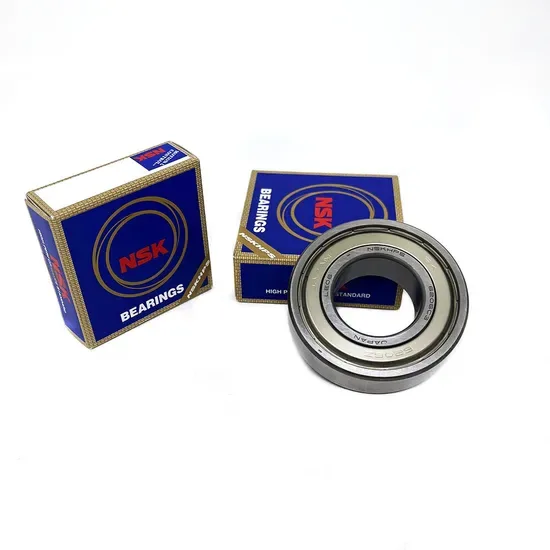 Deep Groove Ball Bearings X&S NSK 6202 6203 6301 Deep Groove Ball Bearings for Auto Parts Deep Groove Ball Bearings NSK High-Temperature Deep Groove Ball Bearing 608zz 6302 6910 6319-2RS Automotive Bearings and Parts NSK Deep Groove Ball Bearing 608 6204 6301 for Electric Motor Automotive
Target Industries
Any alternative is marked separately on the quote and requires buyer approval.
