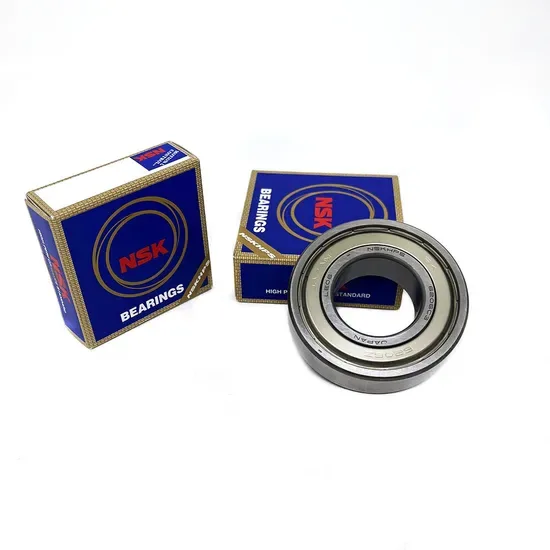
NSK 7014CTYNSULP4 Angular Contact Ball Bearing Wholesale Supplier

Most buyers fixate on inner and outer diameters, but P4 precision and UL pairing preload are the true determinants of thermal stability in heavy-duty spindles.
The core specification for the NSK 7014CTYNSULP4 angular contact ball bearing is not merely its dimensional fit, but its P4 precision class and universal (UL) matched pairing. These features ensure microscopic dimensional stability under heavy radial loads and prevent thermal seizure by optimizing internal clearance. For MRO operators and machine-tool OEMs, verifying these specific attributes is critical to preventing unplanned downtime in high-speed applications.
I still recall the humid air inside the pump station at the Dangote refinery. The maintenance team had sourced a batch of angular contact bearings based solely on part numbers, ignoring the pairing codes. They assumed any 7014C would fit the spindle housing. Within weeks, the main drive shaft seized. The heat generated by unmatched internal clearances had welded the rolling elements to the raceways. That shutdown cost far more than the price difference between standard and precision-matched units. It was a harsh lesson in why the NSK 7014CTYNSULP4 specs demand attention to detail beyond basic geometry.
Understanding these nuances separates a routine replacement from a reliable long-term solution. Let us dissect the technical requirements that define this component.
What Are the Core Dimensions and Tolerances of 7014CTYNSULP4?
P4 precision ensures microscopic dimensional stability under heavy radial loads, distinguishing it from standard commercial grades.
When procuring an NSK 7014CTYNSULP4 angular contact ball bearing, the dimensional tolerances are the first line of defense against vibration and premature failure. The “P4” designation refers to a precision class that is significantly tighter than the standard P0 or P6 classes found in general industrial applications. This level of accuracy is not optional for high-speed spindles; it is a necessity.
The bearing features a bore diameter of 70 mm, an outer diameter of 110 mm, and a width of 20 mm. However, the critical value lies in the allowable deviation. In a P4 class bearing, the runout of the inner and outer rings is controlled to micron-level precision. This minimizes the variation in load distribution across the rolling elements. If the tolerance is loose, even by a fraction of a millimeter, the load concentrates on fewer balls, leading to localized stress and early fatigue.
| Parameter | Standard Class (P0/P6) | P4 Precision Class (NSK 7014CTYNSULP4) | Impact on Performance |
|---|---|---|---|
| Bore Diameter Tolerance | Standard | Micron-level tight control | Ensures consistent fit on spindle shaft |
| Outer Diameter Tolerance | Standard | Micron-level tight control | Maintains alignment in housing |
| Radial Runout | Higher allowance | Significantly reduced | Minimizes vibration at high speeds |
| Axial Runout | Higher allowance | Significantly reduced | Enhances axial rigidity |
A European wind farm operator once reported erratic vibration readings on their gearbox test stands. The issue was traced back to a mix of P0 and P4 bearings in the assembly. The inconsistency in runout caused uneven load sharing. Switching to strictly verified P4 units resolved the vibration issues without changing the fundamental design.
For buyers sourcing an NSK 7014CTYNSULP4 angular contact ball bearing, requesting certification that confirms P4 compliance is non-negotiable. Visual inspection cannot detect these tolerances; only calibrated metrology can verify them.
Why Does the 15° Contact Angle and Resin Cage Matter?
The 15° contact angle optimizes high-speed axial rigidity while minimizing frictional heat, making it ideal for precision applications.
The “C” in the NSK 7014CTYNSULP4 designation indicates a contact angle of 15 degrees. This geometric feature dictates how the bearing handles combined radial and axial loads. A smaller contact angle like 15 degrees is designed for higher rotational speeds compared to larger angles such as 25 or 40 degrees. It provides sufficient axial rigidity for most spindle applications while keeping the generation of frictional heat to a minimum.
Equally important is the cage material. The “TYN” suffix denotes a polyamide resin cage. Unlike traditional brass cages, resin is lighter and has better sliding properties. This reduces the centrifugal force acting on the cage at high speeds, allowing for smoother operation and lower temperature rise. In harsh environments where thermal load is a concern, the choice between resin and brass can determine the operational ceiling of the machinery.
Consider a CNC machine-tool upgrade project where the manufacturer switched from brass-caged bearings to resin-caged P4 units. The reduction in frictional heat allowed the spindle to maintain precision for longer periods before requiring thermal compensation adjustments. The maintenance intervals extended noticeably, reducing the total cost of ownership.
When evaluating an NSK 7014CTYNSULP4 angular contact ball bearing, ensure the cage material matches the speed and thermal requirements of your application. Resin is superior for high-speed, moderate-temperature scenarios, while brass may be preferred for extremely high-temperature or chemically aggressive environments.
How Does UL Pairing Preload Prevent Spindle Seizure?
Universal matching guarantees optimal internal clearance, avoiding thermal lock-up by ensuring consistent preload across paired bearings.
The “UL” in NSK 7014CTYNSULP4 stands for Universal Light preload, and it signifies that the bearings are matched in pairs. Single angular contact bearings cannot handle axial loads in both directions effectively. By pairing them, usually in a back-to-back or face-to-face configuration, the system gains bidirectional axial rigidity. However, if the two bearings have different internal clearances, one will carry more load than the other, leading to uneven wear and heat generation.
UL pairing means the manufacturer has measured and selected pairs with nearly identical internal clearance. This ensures that when preload is applied, it is distributed evenly. Excessive preload without proper matching causes rapid heat generation, while insufficient preload leads to play and vibration. The universal match eliminates the guesswork for the assembler.
In a refinery pump station, unmatched bearings caused spindle seizure within weeks. The lack of pairing meant that as the shaft heated up, the clearance in one bearing closed faster than the other, creating a binding effect. Proper UL pairing prevents this by ensuring both bearings expand and contract in unison.
For any critical application, specifying an NSK 7014CTYNSULP4 angular contact ball bearing with UL pairing is essential. It removes the risk of human error in selection and ensures the spindle operates within its designed thermal envelope.
How to Verify Authenticity and Specs During Procurement?
Traceability docs and batch consistency are non-negotiable for critical applications, protecting against counterfeit or substandard parts.
The market for precision bearings is flooded with counterfeits and refurbished units sold as new. Verifying the authenticity of an NSK 7014CTYNSULP4 angular contact ball bearing requires more than checking the packaging. Genuine products come with complete traceability documentation, including batch numbers and material certificates. These documents allow you to track the bearing back to the manufacturer’s production facilities.
Batch consistency is another critical factor. Even genuine bearings can vary slightly between production runs. For paired applications, it is vital to source bearings from the same batch to ensure uniform performance. Mixing batches can introduce subtle differences in hardness or surface finish that compromise the pairing effectiveness.
A Middle East steel mill once faced repeated failures in their continuous casting machines. The root cause was traced to mixed batches of bearings installed during different maintenance windows. The slight variations in material properties led to uneven load distribution. Implementing a strict batch-tracking protocol resolved the issue.
When sourcing an NSK 7014CTYNSULP4 angular contact ball bearing, insist on full documentation. Verify the batch numbers and ensure that paired units come from the same production lot. This diligence protects your equipment and your reputation.
Conclusion
Precision and pairing are the pillars of reliability for the NSK 7014CTYNSULP4 angular contact ball bearing.
Mastering the specs of this component requires looking beyond basic dimensions. P4 precision and UL pairing are critical to preventing thermal seizure in heavy-duty spindles. By focusing on these technical details and verifying authenticity through traceability, operators can ensure long-term performance and minimize unplanned downtime.
NSK Bearings Mentioned in This Article
Self-Aligning Ball Bearings NSK 2217M Self Aligning Ball Bearing Genuine Wholesale Supplier  Tapered Roller Bearings Genuine NSK Tapered Roller Bearings 33205 33005 33108 32904 Wholesale Supplier
 Deep Groove Ball Bearings Genuine NSK 6211 Deep Groove Ball Bearing Wholesale Supplier
 Cylindrical Roller Bearings NSK N2304e Cylindrical Roller Bearing Genuine Original Wholesale Supplier
Target Industries
Any alternative is marked separately on the quote and requires buyer approval.