
NSK 6203DDU Bearing Wholesale Supplier | Genuine Stock & Bulk Orders
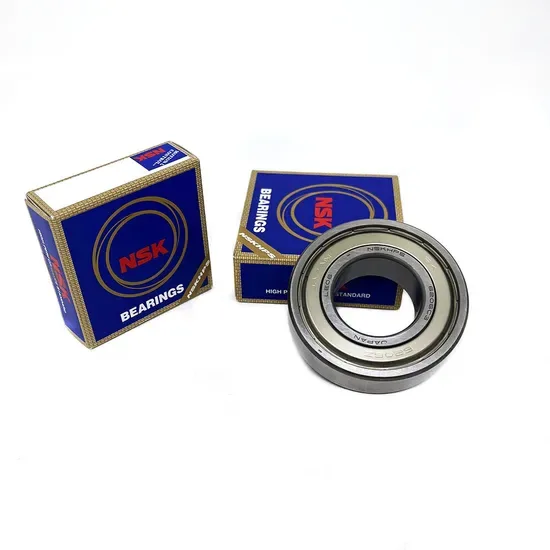
Most buyers assume DDU just means sealed, but it specifically denotes a contact rubber seal that behaves fundamentally differently from non-contact variants.
The core specification for an NSK 6203DDU is a deep groove ball bearing with a 17mm bore, 40mm outer diameter, and 12mm width, featuring dual contact rubber seals on both sides. Authentic units require verification of the seal material composition and grease quality to prevent premature motor seizure, making traceable sourcing from a reliable NSK 6203DDU supplier critical for industrial continuity.
Walking through the aisles of the Chicago industrial trade show years ago, I watched a German procurement manager unravel a sample bearing he had sourced at a discount. The seal detached with a simple pull, revealing dry, gritty grease inside. It was not an NSK 6203DDU; it was a counterfeit stamped with the logo. That single inspection saved his company from a full-container return and the massive freight losses that would have followed. In the bearing trade, the difference between a functional motor and a catastrophic shutdown often lies in the authenticity of that suffix.
Understanding these nuances is not just about technical specs; it is about protecting your supply chain from invisible risks. Let us break down what truly matters when sourcing these components.
What Are the Core Dimensions of NSK 6203DDU?
The physical envelope of the 6203 series is standardized globally, but the internal clearance and seal geometry define its performance.
When you search for NSK 6203DDU dimensions, you are looking for more than just the outer measurements. The standard boundary dimensions are indeed 17mm for the bore, 40mm for the outside diameter, and 12mm for the width. However, the critical differentiator for the DDU variant is the internal space occupied by the contact seals. Unlike open bearings, the DDU design sacrifices a small amount of internal volume to accommodate the rubber sealing lips that press against the inner ring.
This contact pressure creates higher friction torque compared to shielded versions, which must be accounted for in high-speed applications. For MRO operators replacing motors, verifying these dimensions is only the first step. The real challenge is ensuring the internal radial clearance matches the original equipment manufacturer’s requirement, typically C3 for electric motors to handle thermal expansion. A bearing with the correct 17x40x12mm footprint but the wrong internal clearance will fail prematurely, regardless of the brand name on the box.
| Feature | Specification Detail | Verification Method |
|---|---|---|
| Bore Diameter | 17 mm | Caliper measurement |
| Outer Diameter | 40 mm | Caliper measurement |
| Width | 12 mm | Micrometer measurement |
| Seal Type | Contact Rubber (DDU) | Visual and tactile inspection |
| Internal Clearance | Standard or C3 (Context dependent) | Feeler gauge or specialized tool |
Sourcing from a verified NSK 6203DDU supplier ensures that these tolerances are not just nominal but actual. Counterfeit parts often meet the outer dimensions to fit into the housing but fail on the internal geometry, leading to vibration and noise that can damage precision equipment.
DDU vs. ZZ vs. VV: Which Seal Fits Your Application?
Choosing the wrong seal type is a frequent error that leads to either contamination ingress or excessive heat generation.
The suffix code is not arbitrary. DDU stands for double contact rubber seals. This means the rubber lip physically touches the inner ring, creating a barrier that is highly effective against dust, water, and other contaminants. In contrast, ZZ denotes metal shields that do not contact the inner ring, offering lower friction but minimal protection against liquids. VV represents non-contact rubber seals, which provide better protection than ZZ but less than DDU, with lower friction than DDU.
Many buyers mistakenly believe that any sealed bearing will work for their motor replacement. This is a dangerous assumption. If you replace a DDU bearing with a ZZ shielded unit in a dusty environment, contaminants will enter the raceway, causing abrasive wear. Conversely, using a DDU bearing in a very high-speed application where heat dissipation is critical might lead to overheating due to the friction from the contact seals.
| Seal Type | Contact Level | Contamination Protection | Friction Torque | Best Use Case |
|---|---|---|---|---|
| DDU | High (Contact) | Excellent | Higher | Dirty, wet, or moderate speed environments |
| VV | Low (Non-contact) | Good | Medium | Clean environments with some moisture risk |
| ZZ | None (Shield) | Poor | Low | High-speed, clean, indoor applications |
A European wind farm operator once reported inconsistent vibration levels across a batch of generators. The issue traced back to mixed batches where some units had VV seals instead of the specified DDU. The non-contact seals allowed fine dust to ingress during maintenance windows, leading to premature degradation. Understanding the specific environmental demands of your application is key to selecting the right variant from your NSK 6203DDU supplier.
How to Spot Fake NSK 6203DDU Bearings?
Counterfeit bearings often look perfect on the outside but fail catastrophically due to substandard materials and poor manufacturing processes.
Identifying a genuine product requires a multi-layered approach. First, inspect the packaging. Authentic NSK boxes have high-quality printing, clear batch numbers, and specific security features that are difficult to replicate. Next, examine the bearing itself. The laser etching on the side face should be crisp, deep, and evenly spaced. Counterfeits often use shallow stamping or ink printing that smudges easily.
The most telling sign, however, is the seal and grease. As seen in the Chicago case, fake DDU seals are often made from inferior rubber that lacks the elasticity and durability of the original. They may feel hard or brittle. Furthermore, the grease inside counterfeit bearings is frequently dry, contaminated, or of the wrong viscosity. This leads to rapid temperature rise and seizure.
| Inspection Point | Genuine Characteristic | Counterfeit Warning Sign |
|---|---|---|
| Packaging | High-quality print, security labels | Blurry text, missing batch codes |
| Marking | Crisp laser etching | Shallow stamping, ink printing |
| Seal Material | Flexible, high-quality rubber | Hard, brittle, or uneven texture |
| Grease | Clean, consistent, correct color | Dry, gritty, or discolored |
| Rotation | Smooth, quiet, consistent resistance | Rough, noisy, or uneven resistance |
A Middle East steel mill experienced a series of motor failures after switching to a cheaper source. The bearings appeared identical, but the seals detached during installation, and the grease was already degraded. This resulted in a complete line replacement and significant production downtime. Relying on a trusted NSK 6203DDU supplier with verifiable traceability is the only way to mitigate this risk.
Sourcing Genuine NSK 6203DDU: Avoiding Trade Pitfalls
The lowest unit price often carries the highest hidden cost in terms of freight, downtime, and replacement labor.
Sourcing industrial components is not just about finding the lowest bid. It is about securing a supply chain that guarantees authenticity and consistency. Many distributors mix genuine and counterfeit stock, or they source from unauthorized channels where batch integrity cannot be assured. This poses a severe risk for MRO operators who need reliable replacements for critical equipment.
When evaluating a potential partner, look for transparency in documentation. A reputable supplier will provide full traceability, including original manufacturer certificates and batch numbers that can be verified. They should also offer technical support to help you select the correct specifications for your application. Flexibility in order quantities is another key factor, allowing you to order single units for emergency repairs or full containers for stock replenishment without compromising on authenticity.
Consider the case of a Latin American distributor who consolidated a mixed-brand order for a large mining project. By working with a supplier who offered complete traceability and technical consultation, they avoided the pitfalls of inconsistent quality that had plagued previous shipments. This ensured that every NSK 6203DDU unit performed as expected, minimizing unplanned downtime for their client.
Choosing the right NSK 6203DDU supplier means prioritizing long-term reliability over short-term savings. It involves verifying the supplier’s ability to provide genuine products, supporting documentation, and technical expertise. This approach protects your operations from the exponential losses associated with counterfeit components.
Conclusion
Authenticity in bearing sourcing is non-negotiable for maintaining operational integrity.
Mastering the specifics of the NSK 6203DDU, from its contact seal mechanics to its dimensional tolerances, is essential for preventing equipment failure. By prioritizing verified suppliers and understanding the critical differences between seal types, you safeguard your operations against the hidden costs of counterfeit parts. Ensure every component you procure is backed by traceability and technical certainty.
NSK Bearings Mentioned in This Article
Deep Groove Ball Bearings X&S NSK 6202 6203 6301 Deep Groove Ball Bearings for Auto Parts Deep Groove Ball Bearings Genuine NSK Deep Groove Ball Bearing 608 6204 6203 for Small Rotary Motors 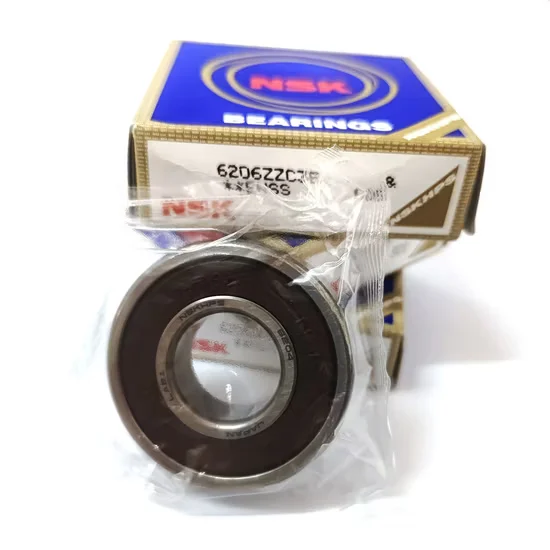 Deep Groove Ball Bearings NSK 6204 6206 6203 6205 Deep Groove Ball Bearing for Spare Parts
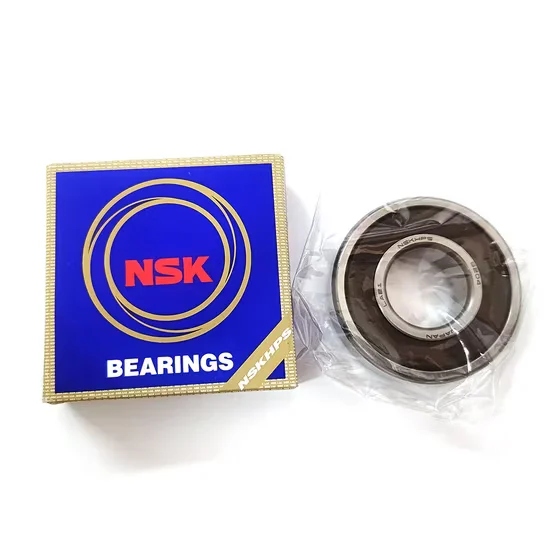 Deep Groove Ball Bearings X&S 627 6203 6301 6201 6206 Deep Groove Ball Bearing for Machine Tool Spindle
Target Industries
Any alternative is marked separately on the quote and requires buyer approval.
