
NSK 51107 Thrust Bearing Wholesale Supplier for Sale

Most buyers fixate on the outer diameter, but the cage material is what actually kills the bearing in high-speed applications.
The NSK 51107 Specs define a single-row thrust ball bearing with an inner diameter of 35 mm, an outer diameter of 52 mm, and a thickness of 12 mm. Its dynamic load rating is approximately 22.1 kN, while the static load rating reaches 49.5 kN. These dimensions and load capacities are standardized under ISO norms, ensuring physical interchangeability across major brands. However, selecting the correct variant requires matching the limit speed to your lubrication method—grease or oil—and verifying the cage construction to prevent thermal failure under continuous axial loads.
Understanding these baseline parameters is only the starting point. The real challenge lies in interpreting how these specs translate to actual machinery performance, especially when sourcing from a global NSK 51107 thrust bearing wholesale supplier for sale.
What Are the Core Dimensions of NSK 51107?
Physical interchangeability relies entirely on strict adherence to the 35x52x12 mm envelope.
When replacing a failed unit in a gearbox or pump assembly, the first check is always dimensional. The NSK 51107 Specs are not arbitrary; they follow the international standard for light-duty thrust ball bearings. The bore diameter of 35 mm fits standard shaft sizes, while the 52 mm outside diameter allows for compact housing designs. The 12 mm width is critical because it determines the axial space required within the assembly. If the replacement bearing is even slightly thicker due to manufacturing tolerances or incorrect series selection (such as confusing it with a heavier 512 series), it can cause pre-load issues that lead to immediate overheating.
I once inspected a batch of returned bearings from a textile machinery plant in Southeast Asia. The maintenance team had swapped a 51107 with a visually similar bearing from a non-premium brand. The outer dimensions matched, but the internal geometry of the raceways was slightly off. This minor deviation caused uneven load distribution among the balls. Within weeks, the noise level increased noticeably, and vibration analysis revealed early-stage fatigue.
For distributors and OEMs, verifying these dimensions against the original equipment manufacturer’s drawing is non-negotiable. A reliable NSK 51107 thrust bearing wholesale supplier for sale will provide certified dimensional reports that confirm compliance with ABEC or ISO tolerance classes. This documentation is vital for quality assurance, especially when supplying to industries like mining or steel production where downtime costs are exponential.
How Do Load Ratings Dictate 51107 Lifespan?
Matching actual axial loads to the rated capacity prevents premature fatigue and spalling.
The NSK 51107 Specs list a dynamic load rating (Cr) of roughly 22.1 kN and a static load rating (Cor) of 49.5 kN. These numbers are not just marketing figures; they are the threshold for calculating theoretical service life. In applications where the bearing supports heavy axial loads, such as in vertical pumps or screw compressors, exceeding the static limit can cause permanent deformation of the raceways. Even if the bearing continues to rotate, the damaged surface will generate heat and debris, accelerating failure.
A common mistake I see in procurement is ignoring the direction of the load. Thrust ball bearings like the 51107 are designed to handle axial loads in one direction only. If radial loads are present, they must be supported by a separate radial bearing. Combining radial and axial loads on a single thrust bearing leads to edge loading, which drastically reduces the effective load capacity.
Consider a case involving a heavy-duty crusher in Africa. The operator reported frequent bearing failures every few months. Upon review, we found that the actual axial load during peak operation exceeded the dynamic rating by a significant margin. The solution was not just to replace the bearing with another NSK 51107, but to re-evaluate the system design. In some cases, upgrading to a larger series or using a double-direction thrust bearing was necessary. For those sticking with the 51107, ensuring the load remains well within the rated limits is key to achieving the expected service life.
Why Do Cage Materials Matter for Limit Speeds?
The choice between pressed steel and machined brass cages determines thermal stability at high RPMs.
Many buyers assume that all NSK 51107 Specs are identical regardless of the suffix. This is a dangerous assumption. The cage material plays a pivotal role in determining the limiting speed. Standard versions often come with pressed steel cages, which are cost-effective and suitable for moderate speeds. However, in high-speed applications, such as machine tool spindles or fast-acting actuators, the friction generated by a steel cage can lead to excessive heat buildup.
Machined brass cages, on the other hand, offer better guidance and lower friction. They allow for higher limit speeds, particularly when used with oil lubrication. I recall a scenario with a European automation client who experienced repeated cage fractures in their robotic arm joints. The root cause was not the load, but the speed. The application ran at a rotational speed that pushed the pressed steel cage beyond its thermal limit. Switching to a variant with a machined brass cage resolved the issue, extending the maintenance interval significantly.
When sourcing from a NSK 51107 thrust bearing wholesale supplier for sale, it is essential to specify the required cage type based on your operating conditions. If your application involves continuous high-speed rotation, opting for the brass cage version is a small investment that prevents costly unplanned downtime. Always check the manufacturer’s catalog for the specific speed ratings associated with each cage material, as these values can vary based on lubrication type.
How to Install and Maintain for Maximum Durability?
Proper separation installation and lubrication management minimize unplanned downtime.
The NSK 51107 Specs describe a separable bearing, meaning the shaft washer, housing washer, and ball-cage assembly can be installed independently. This feature simplifies mounting but also introduces room for error. Incorrect alignment during installation can cause the balls to run off-center, leading to rapid wear. It is crucial to ensure that the shaft and housing seats are perpendicular to the axis of rotation. Any misalignment will result in uneven load distribution, reducing the bearing’s effective life.
Lubrication is another critical factor. While the 51107 can operate with grease or oil, the choice affects the limit speed and maintenance frequency. Grease lubrication is simpler and seals out contaminants, making it ideal for harsh environments. However, it generates more heat at higher speeds. Oil lubrication provides better cooling and is preferred for high-speed applications, but it requires a more complex sealing system to prevent leaks.
In my experience, many failures stem from over-greasing. Excess grease churning inside the bearing creates drag and heat. A thin, even film is sufficient. Regular monitoring of temperature and vibration can help detect early signs of lubrication failure. For MRO professionals managing large fleets of equipment, establishing a consistent maintenance schedule based on operating hours rather than calendar time is more effective. Partnering with a knowledgeable NSK 51107 thrust bearing wholesale supplier for sale can provide access to technical datasheets that outline recommended lubrication intervals and types for specific operating conditions.
Conclusion
Precision in specification matching is the difference between a reliable asset and a recurring liability.
The NSK 51107 Specs provide a robust foundation for axial load support, but their successful application depends on understanding the nuances of cage materials, load ratings, and installation practices. By focusing on these technical details rather than just the part number, buyers can ensure optimal performance and longevity. Whether you are stocking inventory for resale or specifying components for new machinery, verifying these parameters with a trusted source is essential.
NSK Bearings Mentioned in This Article
Thrust Ball Bearings NSK 51104 51105 51106 51107 Thrust Ball Bearing Genuine Japan  Deep Groove Ball Bearings Genuine NSK 6303-6317 Deep Groove Ball Bearings for Excavators
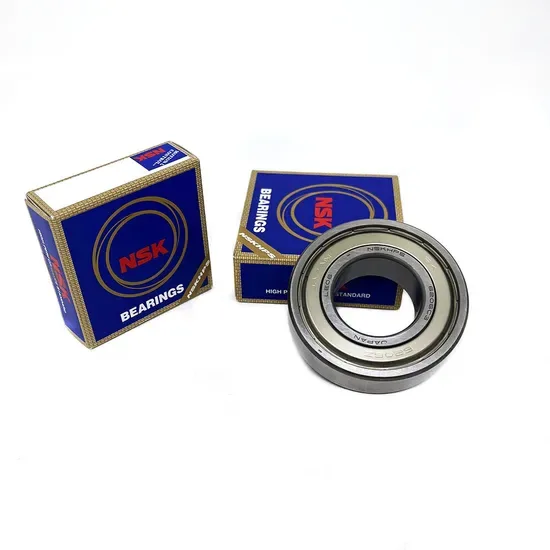 Deep Groove Ball Bearings X&S NSK 6202 6203 6301 Deep Groove Ball Bearings for Auto Parts Deep Groove Ball Bearings NSK High-Temperature Deep Groove Ball Bearing 608zz 6302 6910 6319-2RS
Target Industries
Any alternative is marked separately on the quote and requires buyer approval.
