NSK vs Timken Tapered Bearings: Genuine Wholesale Supplier for Bulk Orders

Premium brand prestige does not guarantee performance.
Choosing between NSK and Timken tapered roller bearings depends entirely on specific load conditions, strict authenticity verification to avoid counterfeit failures, and the reliability of your supply chain rather than brand loyalty alone. For heavy machinery operators and regional distributors, the decision is not about which brand is universally superior, but which component matches the dynamic versus static load calculations of your specific application while ensuring 100% traceability.
Back in my quality control days, I never imagined I’d be sourcing bearings across Southeast Asia. But here I am, stationed in Jakarta. A few years ago, a nickel mine in Sulawesi had their crusher spindle burn out because they bought fake Timken tapered roller bearings from a local middleman. They were furious. Relying on my technical background, I inspected the failed parts and proved they were refurbished fakes. I then proposed a genuine NSK alternative with full traceability, which survived their harsh conditions perfectly. That wake-up call shaped how I do business today. I don’t just sell part numbers; I look at the actual application. When buyers complain about lead times or price gaps between premium brands, I always start by checking the real working environment and offering solid, traceable alternatives. This experience underscores why verifying the source is as critical as selecting the specification when acting as a NSK vs Timken tapered bearings supplier.
How Do NSK and Timken Tapered Bearings Compare in Heavy Loads?
Timken excels in extreme shock loads, while NSK offers superior precision and longevity in continuous operations.
The core engineering philosophy behind these two giants differs significantly, impacting how they perform under stress. Timken, having invented the tapered roller bearing, focuses heavily on robustness and capacity for high-impact scenarios. Their designs often prioritize material purity and heat treatment processes that enhance resistance to spalling under sudden, heavy shocks. In contrast, NSK leverages its expertise in precision manufacturing to deliver bearings with tighter dimensional tolerances and smoother running characteristics, which translates to lower heat generation and extended service life in high-speed, continuous rotation applications.
| Feature | Timken Tapered Roller Bearings | NSK Tapered Roller Bearings |
|---|---|---|
| Primary Strength | Extreme shock load capacity | High precision and rotational stability |
| Typical Application Focus | Mining crushers, heavy construction gearboxes | Machine tool spindles, continuous industrial drives |
| Material Approach | Robust steel alloys for impact resistance | High-purity steel for fatigue resistance |
| Operational Characteristic | Handles misalignment well under heavy load | Superior performance in controlled, high-speed environments |
| Availability Strategy | Strong global OEM presence | Extensive distribution network for MRO |
A European wind farm operator once faced repeated gearbox failures using a single-brand strategy that didn’t account for variable wind loads. By switching to a mixed-brand approach—using Timken for the main shaft due to its shock absorption capabilities and NSK for the generator end for its precision—they reduced unplanned downtime noticeably. This case highlights that relying on a single brand for all positions is rarely optimal. As a NSK vs Timken tapered bearings supplier, understanding these nuances allows for better technical selection support.
What Are the Key Technical Differences in Tolerance and Materials?
Compare steel purity, heat treatment, and internal clearance specifications for harsh environments.
While both manufacturers adhere to ISO standards, their execution of tolerance classes and material science varies. Timken often utilizes proprietary heat treatment techniques that create a deeper case hardness, beneficial for applications where surface distress is a primary failure mode. NSK, on the other hand, is renowned for its Super-TF and other advanced materials that offer improved resistance to seizure and wear under poor lubrication conditions.
When evaluating these components, buyers must look beyond the brand name to the specific tolerance class required. For general industrial use, P0 class may suffice, but for precision machinery, P6 or higher is necessary. The internal clearance (C2, C3, C4) must also match the operating temperature and fit requirements. A mismatch here can lead to premature failure regardless of the brand’s reputation.
Consider a steel mill in the Middle East that experienced frequent roll neck bearing failures. The initial investigation pointed to load issues, but a deeper analysis revealed that the internal clearance was too tight for the high operating temperatures, causing thermal expansion to seize the rollers. Switching to a bearing with appropriate C3 clearance from a verified source resolved the issue. This demonstrates that technical parameters matter more than brand prestige. When sourcing from a NSK vs Timken tapered bearings supplier, ensure you receive detailed technical datasheets that specify these exact parameters.
How Can Buyers Verify Authenticity and Avoid Counterfeits?
Rely on full traceability documentation, mill certificates, and authorized channel verification.
The market is flooded with counterfeit bearings that look identical to genuine products but fail catastrophically under load. These fakes often use inferior steel and lack proper heat treatment, leading to rapid spalling and seizure. Verifying authenticity is not just about checking the logo; it requires a rigorous documentation process. Genuine products come with mill certificates that trace the steel batch back to the manufacturer, along with unique serial numbers or batch codes that can be verified with the brand.
A common mistake is trusting suppliers who offer prices significantly below market average. Lower initial procurement price often means multiple times the lifecycle cost due to premature failure. A US buyer once purchased a bulk order of what they believed were genuine Timken bearings at a discount. Within months, several units failed, causing extensive damage to the housing and shaft. The cost of repair and downtime far exceeded the savings from the initial purchase.
To avoid this, always request full traceability docs. A reliable NSK vs Timken tapered bearings supplier will provide these documents without hesitation. Look for holographic labels, precise engraving quality, and consistent packaging. If any of these elements seem off, verify directly with the manufacturer. Counterfeit detection is a critical skill for any procurement professional dealing with premium brands.
Why Choose a Multi-Brand Sourcing Strategy Over Single-Brand?
Consolidating NSK, Timken, and other premium brands optimizes lead times, reduces freight costs, and ensures operational continuity.
Relying on a single brand for all bearing needs creates vulnerability in the supply chain. Disruptions in production, shipping delays, or allocation issues can halt operations. By adopting a multi-brand sourcing strategy, buyers can mitigate these risks. This approach allows for flexibility in selecting the best brand for each specific application while maintaining a consolidated supply chain.
For regional distributors and MRO operators, this strategy offers significant advantages. It enables mixed-container consolidation, reducing freight costs and simplifying logistics. Instead of managing multiple shipments from different official channels, buyers can source from a single partner who stocks genuine products from SKF, FAG, INA, NSK, NTN, TIMKEN, KOYO, NACHI, IKO, and others. This not only streamlines procurement but also ensures that spare parts are available when needed most.
A mining operation in Latin America implemented this strategy after facing prolonged lead times for a specific Timken size. By qualifying an equivalent NSK model and stocking both, they ensured that maintenance schedules were never delayed due to part availability. This flexibility is crucial for minimizing unplanned production downtime. Working with a NSK vs Timken tapered bearings supplier who offers full-range global sourcing makes this strategy feasible and efficient.
Conclusion
Correct application matching and strict authenticity verification outweigh brand prestige.
Selecting between NSK and Timken tapered roller bearings requires a deep understanding of your specific operational demands, from load types to environmental conditions. Neither brand is universally superior; each excels in different scenarios. Timken’s robustness suits heavy shock loads, while NSK’s precision benefits continuous, high-speed operations. However, the best specification is useless if the product is counterfeit. Prioritize suppliers who provide full traceability and technical support. By adopting a multi-brand sourcing strategy, you can optimize costs, reduce lead times, and ensure the reliability of your heavy machinery.
NSK Bearings Mentioned in This Article
Deep Groove Ball Bearings Genuine NSK 6303-6317 Deep Groove Ball Bearings for Excavators 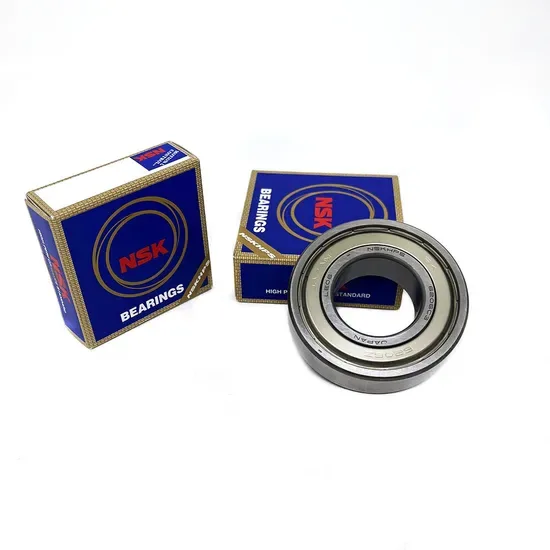 Deep Groove Ball Bearings X&S NSK 6202 6203 6301 Deep Groove Ball Bearings for Auto Parts Deep Groove Ball Bearings NSK High-Temperature Deep Groove Ball Bearing 608zz 6302 6910 6319-2RS Automotive Bearings and Parts NSK Deep Groove Ball Bearing 608 6204 6301 for Electric Motor Automotive
Target Industries
Any alternative is marked separately on the quote and requires buyer approval.