
NSK vs THK Ball Screws: Wholesale Supplier for Bulk Orders

Choosing the cheapest label is the most expensive mistake in linear motion sourcing.
The decision between NSK and THK ball screws for bulk procurement is not a matter of brand loyalty, but of matching specific engineering duty cycles to machine lifespan requirements. NSK typically excels in high-rigidity applications requiring heavy load distribution, while THK often provides superior thermal stability for high-speed continuous automation. A wholesale supplier for bulk orders must prioritize traceability and specification alignment over unit price to prevent catastrophic precision loss and spindle failures.
I started my career on the factory floor in Dongguan, handling components that would eventually end up in machines across multiple regions. Dealing with NSK and THK ball screws daily, I learned quickly that the real cost of a component is not found on the invoice, but in the downtime it causes when mismatched. One automation client insisted on the lowest bid for a bulk order, ignoring warnings about load capacity. They selected a mismatched brand, and within months, precision dropped noticeably and half the spindles failed. This experience shaped how I approach every inquiry today. When buyers ask me to compare these premium brands, I do not just quote prices. I look at their actual runtime data and duty cycles first. Real bulk sourcing is about matching the right engineering specs to the machine’s operational reality.
Understanding these distinctions is critical for any buyer looking to optimize their supply chain. Let us break down the engineering differences that matter most in high-volume procurement.
How Do NSK and THK Ball Screws Differ in Core Engineering?
Both brands excel in precision, but they diverge significantly in load distribution and thermal management under continuous duty.
While both NSK and THK meet rigorous international standards for precision grades, their internal engineering philosophies address different mechanical stresses. NSK often focuses on rigid preloading techniques that enhance resistance to axial loads, making them a strong candidate for heavy cutting applications. THK, conversely, has developed proprietary circulation paths that reduce friction heat generation, which is vital for machines running at high speeds for extended periods.
| Feature | NSK Approach | THK Approach |
|---|---|---|
| Load Distribution | High-rigidity preload options | Balanced load capacity with low friction |
| Thermal Management | Standard heat dissipation | Optimized for reduced thermal displacement |
| Precision Retention | Robust under heavy static loads | Stable under high-speed dynamic cycles |
| Ideal Application | Heavy-duty CNC machining centers | High-speed automation and assembly lines |
A European machine tool builder once faced issues with thermal deformation during continuous high-speed runs. The initial design used a brand focused solely on static load capacity, ignoring the heat generated by rapid acceleration. Switching to a THK-based solution for the high-speed axes reduced micron-level deviation significantly. This was not because one brand was universally better, but because the thermal characteristics matched the duty cycle.
For a wholesale supplier for bulk orders, understanding this distinction allows for smarter inventory planning. Stocking only one type limits your ability to serve diverse OEM needs. By recognizing that NSK may be preferred for heavy milling heads while THK suits rapid pick-and-place robots, you can offer tailored solutions rather than generic parts.
Which Brand Suits Your Specific Machine Duty Cycle?
Match NSK for high-rigidity heavy cutting and THK for high-speed continuous automation.
Selecting the right brand requires a deep dive into the machine’s intended use. A common error is assuming that a higher precision grade automatically translates to better performance in all scenarios. In reality, a P5 grade screw that overheats due to poor thermal design will lose its accuracy faster than a slightly lower grade screw designed for heat dissipation.
Consider a heavy-duty CNC scenario where the machine performs deep cavity milling. The axial loads are immense, and vibration is a constant threat. Here, the rigid preload structure of NSK provides the stability needed to maintain surface finish quality. Conversely, in a 24/7 packaging line, the primary stress is not heavy load but repetitive, high-frequency movement. THK’s design minimizes the friction heat that builds up during such operations, preventing the expansion that leads to positioning errors.
A Middle East steel mill operator once reported premature wear on their automated inspection arms. The original equipment used a standard ball screw that could not handle the continuous start-stop cycles. After analyzing the duty cycle, we recommended a switch to a model better suited for high-frequency motion. The result was a substantial extension in service life and a noticeable reduction in maintenance intervals. This highlights why a wholesale supplier for bulk orders must act as a technical consultant, not just a logistics provider.
What Are the Hidden Costs of Choosing the Wrong Brand?
Ignoring load specs leads to rapid precision loss and spindle failures, destroying ROI.
The most dangerous metric in procurement is the unit price. A lower upfront cost often masks the potential for catastrophic hidden downtime costs. When a ball screw fails due to mismatched specifications, the consequences extend far beyond the cost of the replacement part. Production halts, labor hours are wasted on emergency repairs, and customer deadlines are missed.
In the earlier case of the automation client who ignored load warnings, the failure rate reached fifty percent within six months. The cost of replacing the spindles and recalibrating the machines was several times the savings they had achieved by choosing the cheaper option. This is a classic example of false economy. For B2B buyers, the focus must shift from purchase price to total cost of ownership.
A wholesale supplier for bulk orders plays a crucial role in mitigating these risks. By providing genuine traceability documentation and technical selection support, suppliers help buyers avoid these pitfalls. Offering mixed-brand consolidation allows clients to source the right component for each axis without being locked into a single vendor’s limitations. This approach ensures that core accuracy is maintained while optimizing procurement costs.
How to Source NSK and THK for Bulk Wholesale Orders?
Leverage mixed-brand consolidation and traceability to optimize procurement costs and lead times.
Sourcing premium brands like NSK and THK in bulk requires a strategy that balances availability, authenticity, and cost. Direct official channels often have rigid minimum order quantities and long lead times, which can disrupt production schedules. A professional global full-range bearing supplier based in China can offer a flexible alternative by consolidating orders from multiple brands.
Our portfolio covers genuine products from mainstream international brands, ensuring that every item comes with complete traceability documentation. This is essential for industries where certification and material verification are mandatory. By stocking thousands of standard and special part numbers, we can fulfill urgent maintenance requirements and bulk project orders alike. The ability to mix NSK and THK orders in a single shipment reduces shipping costs and simplifies customs clearance for buyers in over eighty countries worldwide.
For regional industrial distributors, this means access to wholesale-tier pricing without the burden of managing multiple supplier relationships. For OEM manufacturers, it ensures batch-to-batch consistency and stable long-term supply capacity. The key is to work with a partner who understands the technical nuances of each brand and can provide cross-brand equivalent model consultation when necessary.
When evaluating a wholesale supplier for bulk orders, look for those who offer technical datasheets for local market promotion and flexible MOQ ranging from single-unit emergency spare-part orders to full container consolidation shipments. This flexibility is vital for adapting to fluctuating market demands and unexpected breakdowns.
Conclusion
Precision sourcing is about engineering alignment, not just brand preference.
Choosing between NSK and THK requires a clear understanding of your machine’s duty cycle and load requirements. By focusing on total cost of ownership and leveraging mixed-brand consolidation, buyers can optimize both performance and procurement efficiency. Partnering with a knowledgeable wholesale supplier for bulk orders ensures access to genuine components and technical expertise, safeguarding your operations against hidden downtime costs.
NSK Bearings Mentioned in This Article
Deep Groove Ball Bearings Genuine NSK 6303-6317 Deep Groove Ball Bearings for Excavators 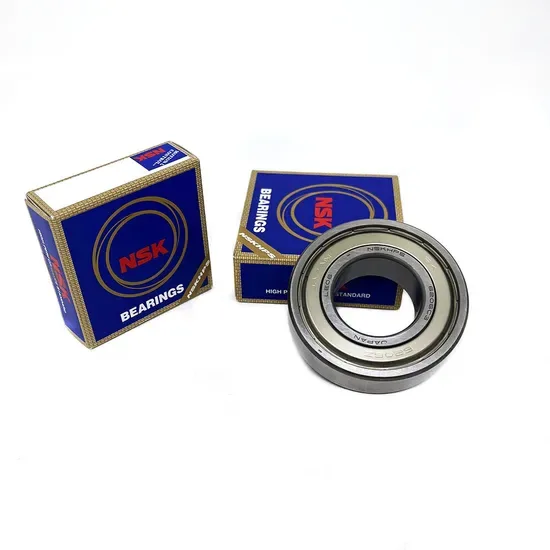 Deep Groove Ball Bearings X&S NSK 6202 6203 6301 Deep Groove Ball Bearings for Auto Parts Deep Groove Ball Bearings NSK High-Temperature Deep Groove Ball Bearing 608zz 6302 6910 6319-2RS Automotive Bearings and Parts NSK Deep Groove Ball Bearing 608 6204 6301 for Electric Motor Automotive
Target Industries
Any alternative is marked separately on the quote and requires buyer approval.