NSK vs NACHI Ball Bearings: Genuine Wholesale Supplier for Bulk Orders

Brand specifications are secondary to customs documentation.
When sourcing NSK vs NACHI ball bearings for industrial resale or MRO, the decisive factor is not just dimensional tolerance but the integrity of traceability documents and customs clearance protocols. A genuine NSK vs NACHI ball bearings procurement strategy must prioritize separate invoicing, independent palletizing, and verifiable origin certificates to avoid port delays, regardless of the technical superiority of either brand.
I still remember the humidity at the Manzanillo port in Mexico, where a container sat idle for three weeks. The cargo inside was perfectly good: a mixed batch of high-precision deep-groove ball bearings from two reputable Japanese manufacturers. The problem was not the steel quality or the ABEC rating. The issue was that the commercial invoice listed them as a single line item without distinguishing the brands, and they were shrink-wrapped together on shared pallets. Customs officials could not verify the origin certificates for each brand separately. That delay nearly halted a mining client’s production line. Since then, I have learned that in global bearing distribution, paperwork is as critical as the product itself.
This experience reshaped how I approach bulk orders. While engineers debate load ratings, logistics managers worry about demurrage charges. For distributors and MRO buyers, understanding the operational differences between these brands is essential, but mastering the supply chain mechanics is what ensures the goods actually reach the site.
What Are the Core Differences Between NSK and NACHI Ball Bearings?
NSK focuses on high-precision stability, while NACHI emphasizes robust heavy-load durability.
Both brands are pillars of the Japanese bearing industry, yet their engineering philosophies diverge in ways that matter for specific applications. NSK is often associated with ultra-high precision and low-noise performance, making it a preferred choice for machine tools and electric motors. NACHI, with its strong background in special steel manufacturing, tends to offer exceptional toughness and resistance to harsh environments, which appeals to heavy machinery and mining sectors.
When comparing NSK vs NACHI ball bearings, it is useful to look at their typical application strengths rather than just raw dimensions. Both adhere to strict ISO standards, but their material treatments and cage designs often reflect their target markets.
| Feature | NSK Typical Focus | NACHI Typical Focus |
|---|---|---|
| Primary Strength | High-precision, low vibration | Heavy-load capacity, durability |
| Material Heritage | Advanced heat treatment for stability | Proprietary steel manufacturing expertise |
| Ideal Application | Machine tools, precision motors, robotics | Mining equipment, construction machinery, agricultural gear |
| Noise Level | Optimized for quiet operation | Standard industrial noise levels |
| Load Rating | High dynamic load capacity | Robust static and dynamic load handling |
A European wind farm operator once switched from a standard European brand to NACHI for their gearbox repairs because of the latter’s reputation for handling shock loads better in remote locations. Conversely, a precision automotive parts manufacturer in Southeast Asia insisted on NSK for their spindle assemblies due to the consistent micron-level precision required for high-speed machining.
Understanding these distinctions helps in matching the right brand to the right job. However, even the best technical match fails if the supply chain cannot deliver it efficiently. This is where the concept of a reliable NSK vs NACHI ball bearings supplier becomes vital, not just for product availability but for logistical competence.
How Do NSK and NACHI Compare in Key Industrial Applications?
Match the bearing type to the operational stress profile, not just the brand name.
Selecting between these brands requires a clear view of the operating environment. In automotive after-market scenarios, both brands offer wide compatibility, but the choice often comes down to availability and price sensitivity. For heavy-equipment OEMs, the decision is driven by lifecycle costs and failure modes.
In the mining sector, where dust and impact loads are constant, NACHI’s robust construction often provides a longer service life. The steel quality derived from their integrated manufacturing process offers resistance to contamination-induced fatigue. On the other hand, in the machine tool industry, where thermal stability and rotational accuracy are paramount, NSK’s precision grades are frequently specified.
Consider a scenario involving a large cement plant in the Middle East. During an emergency overhaul, the maintenance team needed a mix of spherical roller bearings and deep-groove ball bearings. They sourced NACHI for the crusher units due to their heavy-load capability and NSK for the conveyor motor drives to ensure smooth, low-vibration operation. This mixed-brand approach optimized performance across different subsystems. However, the real challenge was not the selection but the consolidation. A competent NSK vs NACHI ball bearings distributor must be able to source both lines authentically and ship them together without compromising traceability.
For MRO buyers, this means working with suppliers who understand cross-brand equivalence and can provide technical datasheets for both lines. It is not about picking a winner but about picking the right tool for each part of the machine.
Why Do Mixed-Brand Shipments Fail at Customs?
Separate invoices and independent palletizing are non-negotiable for mixed Japanese brands.
The most common mistake in bulk procurement is treating a mixed container as a single homogeneous shipment. Customs authorities in many regions, particularly in Latin America and Southeast Asia, require clear differentiation between brands from the same country of origin. If NSK and NACHI bearings are mixed on the same pallet or listed under a generic “Japanese Bearings” description, inspectors may flag the shipment for potential counterfeit verification or misclassification.
I have seen shipments delayed because the HS codes were not broken down by brand-specific nuances, or because the origin certificates did not match the physical packaging labels. In one instance, a distributor in Brazil faced a mid-six-figure loss in penalties and storage fees because the packing list did not explicitly separate the NSK and NACHI items. The customs broker could not verify the authenticity of each brand independently.
To avoid this, every order must follow strict documentation protocols:
- Separate Line Items: Each brand and model number must have its own line on the commercial invoice and packing list.
- Independent Palletizing: NSK and NACHI products should be palletized separately, with clear branding visible on the outer wrapping.
- Specific Origin Certificates: Provide distinct certificates of origin for each brand if required by the destination country.
This level of detail is what separates a basic trader from a professional NSK vs NACHI ball bearings supplier. It is not enough to have the stock; you must have the administrative rigor to move it across borders smoothly. For buyers, verifying that your supplier follows these practices is as important as checking the bearing dimensions.
How to Verify Genuine NSK and NACHI Bearings?
Traceability documents and anti-counterfeit checks are your first line of defense.
Counterfeit bearings are a persistent risk in the global market, especially for high-demand brands like NSK and NACHI. Genuine products come with a chain of custody that can be verified. Relying solely on price or packaging appearance is insufficient.
Verification starts with the documentation. A genuine supplier will provide original mill certificates or authorized distribution proofs. For NSK, this might include specific batch numbers that can be cross-referenced with the manufacturer’s records. For NACHI, the steel grade markings on the bearing rings should match the technical specifications provided in the catalog.
Physical inspection also plays a role. Look for:
- Laser Etching: Genuine bearings often have precise, deep laser etching for brand and model numbers, whereas counterfeits may use shallow stamping or ink printing.
- Packaging Quality: Original packaging uses high-quality materials with consistent printing. Blurry logos or misspelled words are immediate red flags.
- Surface Finish: Genuine bearings have a uniform, smooth finish. Rough spots or discoloration can indicate poor manufacturing or refurbishment.
A distributor in Africa once received a batch of bearings that looked correct but failed prematurely. Upon investigation, the laser etching was slightly off-center, and the origin certificate was a photocopy without a verifiable serial number. This incident reinforced the need for rigorous document verification before payment.
When sourcing NSK vs NACHI ball bearings, always demand full traceability. A reputable supplier will not hesitate to provide these documents, as they are confident in the authenticity of their stock. This transparency builds trust and ensures that the bearings you install will perform as expected.
Conclusion
Documentation determines delivery, not just specifications.
Choosing between NSK and NACHI depends on your application’s specific needs for precision or durability. However, the success of your procurement lies in ensuring genuine traceability and flawless customs documentation. By prioritizing suppliers who offer mixed-brand consolidation with rigorous administrative support, you secure both product quality and supply chain reliability.
NSK Bearings Mentioned in This Article
Deep Groove Ball Bearings Genuine NSK 6303-6317 Deep Groove Ball Bearings for Excavators 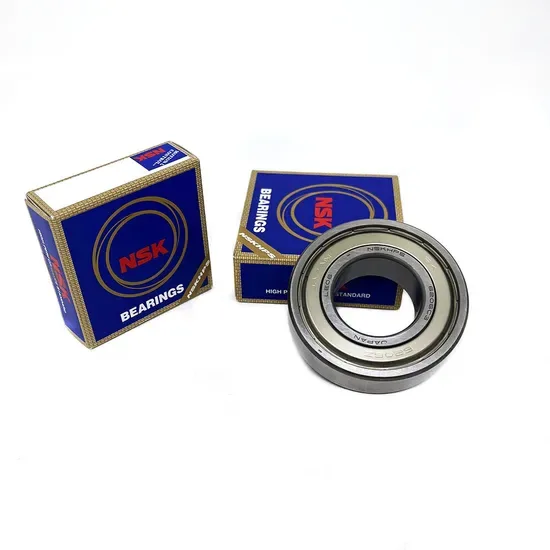 Deep Groove Ball Bearings X&S NSK 6202 6203 6301 Deep Groove Ball Bearings for Auto Parts Deep Groove Ball Bearings NSK High-Temperature Deep Groove Ball Bearing 608zz 6302 6910 6319-2RS Automotive Bearings and Parts NSK Deep Groove Ball Bearing 608 6204 6301 for Electric Motor Automotive
Target Industries
Any alternative is marked separately on the quote and requires buyer approval.