
NSK vs Koyo Gearbox Bearings: Genuine Wholesale Supplier

Choosing between NSK and Koyo for gearboxes is not about catalog prices, but matching specific brand strengths to exact operating conditions like extreme heat and heavy loads.
The decision often hinges on internal clearance specifications and metallurgical treatments rather than brand loyalty alone. For industrial distributors and MRO buyers, selecting the wrong series for high-ambient environments leads to premature inner ring spalling and catastrophic downtime. Understanding the nuanced differences in thermal limits and cage designs is critical for maintaining operational continuity in heavy-duty applications.
I remember standing in a warehouse in Jebel Ali, watching a procurement manager from a Riyadh cement plant argue over a minor price difference per unit. He had swapped out the specified high-temperature heavy-duty series for standard spherical roller bearings to cut costs. The ambient temperature on site regularly exceeded 40°C, and the gearbox ran continuously under heavy load. Within three months, the inner rings suffered severe spalling, causing the entire production line to halt. The cost of that unplanned downtime dwarfed the initial savings by a wide margin. That incident reinforced a simple truth: gearbox selection requires precise technical alignment, not just budget approval.
This guide breaks down the technical distinctions between these two premium brands, helping you make informed sourcing decisions for harsh industrial environments. When evaluating NSK vs Koyo in Gearbox Applications, the focus must remain on performance data and traceability.
What Are the Core Differences Between NSK and Koyo in Gearboxes?
While both brands meet ISO standards, their approach to load capacity and thermal management differs significantly in heavy-duty scenarios.
A direct comparison reveals that neither brand is universally superior; instead, each excels in specific operational contexts. Distributors often assume interchangeability, but subtle differences in cage material and heat treatment can dictate service life in extreme conditions.
| Feature | NSK Heavy-Duty Series | Koyo Standard Spherical Rollers | Application Context |
|---|---|---|---|
| Thermal Stability | Controlled metallurgy for high heat | Standard heat treatment | High ambient temperature zones |
| Cage Design | Reinforced for shock loads | Standard steel or brass | Mining crushers and vibratory screens |
| Clearance Options | Extensive C3/C4 availability | Standard C3 common | Thermal expansion compensation |
| Traceability | Full batch-level documentation | Sample-level verification | Critical infrastructure projects |
In mining crusher reducers, for instance, the requirement for specific clearance to handle shock loads is paramount. NSK often provides specialized options for these high-stress environments, while Koyo offers robust standard solutions that perform well in general industrial settings.
When sourcing NSK vs Koyo in Gearbox Applications, buyers must verify the specific series rather than relying on brand names alone. A standard Koyo bearing might suffice for a pump in a temperate climate, but the same choice could fail in a steel mill reheating furnace gearbox.
How Does Ambient Temperature Affect Brand Selection?
Standard spherical rollers are not interchangeable in high-temperature environments due to drastic differences in thermal expansion behavior.
In regions with high ambient temperatures, such as the Middle East or parts of Southeast Asia, the operating temperature inside a gearbox can rise significantly above the surrounding air. This heat affects the viscosity of the lubricant and the dimensional stability of the bearing components. If the internal clearance is insufficient, thermal expansion can lead to preload, causing rapid overheating and failure.
I have seen multiple cases where general MRO replacements used standard lines to save costs, only to face significantly shorter lifecycles. The key is selecting the correct clearance class, such as C3 or C4, which allows for adequate expansion without compromising structural integrity.
For a cement plant gearbox operating in 40°C+ ambient conditions, switching from a high-temp heavy-duty series to a standard spherical roller is a risky move. The specialized metallurgy in high-temperature series helps maintain hardness and structural integrity when standard materials might soften or degrade. This is where the total cost of ownership becomes a more relevant metric than the initial purchase price.
Understanding these thermal dynamics is essential when comparing NSK vs Koyo in Gearbox Applications. It is not just about the brand, but about selecting the right product line within that brand to match the environmental stressors.
Why Do “Cheaper” Alternatives Cause Catastrophic Gearbox Failures?
Inner ring spalling is often a symptom of mismatched clearances rather than material defects, leading to hidden costs far beyond the part price.
When buyers opt for lower-cost alternatives without verifying technical specifications, they often overlook the importance of internal clearance and cage design. In high-shock load scenarios, a standard cage may not withstand the repetitive stress, leading to deformation and eventual seizure.
A European wind farm operator once reported repeated failures in their main shaft gearboxes. Upon inspection, it was revealed that the replacement bearings lacked the necessary C4 clearance specified for the high-torque application. The resulting friction generated excessive heat, accelerating wear and causing premature failure. The cost of replacing the gearbox housing and lost energy production was substantial.
This highlights why NSK vs Koyo in Gearbox Applications should be evaluated based on lifecycle performance. A slightly higher initial investment in the correct specification can prevent mid-six-figure losses associated with unplanned downtime. Technical selection support is crucial here to ensure that the chosen bearing matches the exact operational demands.
How to Verify Authenticity and Traceability for Heavy-Duty Orders?
Genuine parts come with complete traceability documentation, which is non-negotiable for critical industrial applications.
Counterfeit bearings are a significant risk in the global market, often appearing identical to genuine products but lacking the precise manufacturing tolerances and material quality. For distributors and end-users, verifying authenticity is a critical step in the procurement process.
Key verification steps include:
- Check Packaging: Genuine products feature high-quality printing and specific security labels.
- Review Documentation: Request full batch-level traceability documents that link the bearing to its production facility.
- Inspect Physical Attributes: Look for precise engraving and smooth surface finishes, which are difficult for counterfeiters to replicate.
When sourcing NSK vs Koyo in Gearbox Applications, ensuring that you receive genuine products with verifiable documentation protects your operation from the risks of substandard components. Our approach involves rigorous checks to guarantee that every unit meets the highest standards of authenticity and performance.
Conclusion
Selecting the right bearing for gearbox applications requires a deep understanding of operating conditions and technical specifications.
By focusing on thermal limits, load capacity, and traceability, buyers can avoid costly failures and ensure long-term reliability. Whether choosing NSK or Koyo, the key is matching the specific product series to the unique demands of the application. Proper selection and verification are essential for maintaining operational efficiency in heavy-duty industrial environments.
NSK Bearings Mentioned in This Article
Deep Groove Ball Bearings Genuine NSK 6303-6317 Deep Groove Ball Bearings for Excavators 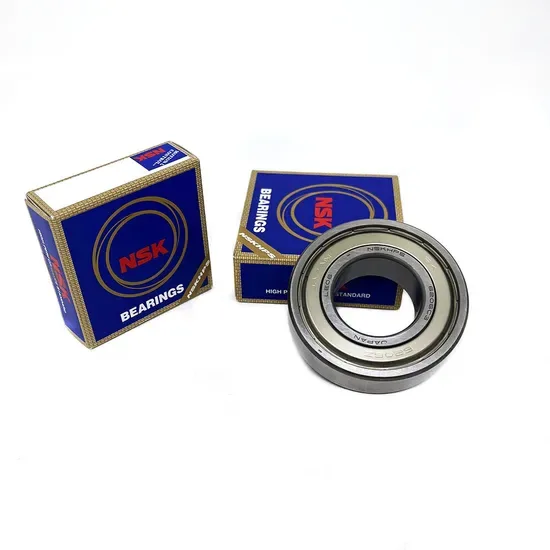 Deep Groove Ball Bearings X&S NSK 6202 6203 6301 Deep Groove Ball Bearings for Auto Parts Deep Groove Ball Bearings NSK High-Temperature Deep Groove Ball Bearing 608zz 6302 6910 6319-2RS Automotive Bearings and Parts NSK Deep Groove Ball Bearing 608 6204 6301 for Electric Motor Automotive
Target Industries
Any alternative is marked separately on the quote and requires buyer approval.