NSK vs Bosch Rexroth Linear Guides: Genuine Wholesale Supplier

Visual similarity does not guarantee interchangeability.
Choosing between NSK and Bosch Rexroth linear guides requires matching application specifications with verified supply chains, as counterfeit rails cause catastrophic failures. The core decision is not merely about brand preference but about aligning precision grades and load capacities with authentic sourcing channels to prevent premature wear and unplanned downtime.
I still remember the silence in a Shenzhen 3C assembly plant. It was not the peaceful quiet of efficient production, but the heavy, expensive silence of a halted line. A client had swapped out specified components for what appeared to be identical Bosch Rexroth rails from an unverified source. For five months, the high-speed reciprocating motion ran smoothly. Then, without warning, the滑块 (sliders) began to stutter. The precision was lost. The entire line stopped. The cost of that downtime far exceeded the savings from the cheaper parts. That incident shifted my focus from simple sales to rigorous supply chain verification. Now, when I evaluate NSK vs Bosch Rexroth linear guides, I look beyond the catalog specs. I look at the traceability documents and the machining marks on the raceway. Many buyers assume that if the outer dimensions match, the parts are interchangeable. This is a dangerous misconception. The internal grinding of the raceway and the quality of the steel determine the life of the guide, not just the external profile.
To make the right choice, you must understand where each brand excels and how to secure genuine products. This guide breaks down the technical differences, identifies the risks of counterfeits, and outlines a strategy for sourcing authentic components for industrial applications.
What are the core spec differences between NSK and Rexroth?
NSK excels in compact precision, while Rexroth dominates heavy-load system integration.
When comparing these two giants, it is essential to look at their design philosophies. NSK has long been associated with high-precision, compact solutions ideal for fast-moving automation. Bosch Rexroth, on the other hand, is renowned for robustness and modularity in heavy machinery. Understanding these strengths helps in selecting the right tool for the job.
| Feature | NSK Linear Guides | Bosch Rexroth Linear Guides |
|---|---|---|
| Primary Strength | High-speed precision & compact design | Heavy-load capacity & modular system integration |
| Ideal Application | 3C electronics, semiconductor equipment, CNC tooling | Heavy machinery, construction equipment, large-scale automation |
| Precision Focus | Excellent rigidity in smaller profiles | Consistent performance under extreme loads |
| Noise Characteristics | Low-noise options available for cleanrooms | Robust design prioritizes durability over silence |
| Material Treatment | Advanced surface treatments for corrosion resistance | High-grade steel with optimized heat treatment |
In a recent project for a CNC machine tool manufacturer, the requirement was for heavy cutting operations. The spindle loads were significant, and vibration control was critical. We selected NSK’s high-rigidity series. The result was improved precision retention over extended periods. Conversely, for a large gantry system in a steel processing plant, Bosch Rexroth modules provided the necessary structural integrity and load distribution. The key is not to force a brand into an application where it is not optimized.
Another critical aspect is the internal geometry. While both brands adhere to international standards for mounting dimensions, the internal ball circulation and raceway curvature differ. These differences affect friction, heat generation, and ultimate service life. Assuming interchangeability based solely on external measurements can lead to suboptimal performance or early failure.
How to identify counterfeit linear guides during procurement?
Check batch traceability, packaging, and raceway machining marks.
The market is flooded with counterfeit linear guides. They look convincing. The logos are sharp, and the packaging mimics the original. However, the internal quality is often inferior, using lower-grade steel and less precise grinding. Identifying these fakes requires a keen eye and a strict verification process.
First, examine the packaging. Genuine products come with specific security features, including holographic labels and unique serial numbers. Cross-reference these numbers with the manufacturer’s database. If the supplier cannot provide this verification, proceed with caution. Second, inspect the physical component. Look at the raceway. Genuine guides have smooth, consistent machining marks. Counterfeits often show irregularities, rough spots, or inconsistent polishing. The steel color may also differ, appearing duller or uneven.
A European distributor once shared a case where a batch of “genuine” guides failed within weeks. Upon inspection, the steel hardness was significantly lower than specified. The balls had deformed, causing severe backlash. The supplier had provided fake certificates. This highlights the importance of verifying the source, not just the product.
| Verification Step | Genuine Product Indicators | Counterfeit Warning Signs |
|---|---|---|
| Packaging | High-quality printing, holographic seals, clear serial numbers | Blurry text, missing seals, generic boxes |
| Serial Number | Verifiable via manufacturer’s online portal | Invalid or duplicate numbers |
| Raceway Surface | Smooth, uniform grinding marks | Rough patches, irregular polishing, visible tool marks |
| Steel Quality | Consistent color and finish | Dull, uneven, or discolored metal |
| Documentation | Complete mill certificates and test reports | Missing, vague, or photocopied documents |
Always request mill certificates and test reports. These documents should match the batch number on the product. If the paperwork seems generic or lacks specific details, it is likely forged. Trust your instincts. If the price is too good to be true, it probably is.
Which brand suits your specific industry application?
Match 3C and semiconductor needs to NSK, and heavy machinery to Rexroth.
Selecting the right brand depends heavily on the industry and the specific operational demands. In the 3C electronics sector, speed and precision are paramount. Assembly lines run at high velocities, with frequent start-stop cycles. NSK’s design optimizes for these conditions, offering low friction and high accuracy. A failure here means lost production time and potential damage to delicate components.
In semiconductor manufacturing, cleanliness is critical. Contamination from lubricants or wear particles can ruin entire batches of wafers. NSK offers stainless steel options and low-noise specifications that minimize particle generation. Their guides are designed to operate smoothly in cleanroom environments, reducing the risk of contamination.
On the other hand, heavy industries like mining and construction require durability above all else. Equipment faces harsh conditions, including dust, moisture, and extreme loads. Bosch Rexroth’s robust construction and superior load capacity make it the preferred choice. Their guides can withstand the shock and vibration inherent in these applications, ensuring reliable operation over long periods.
Consider a case in the automotive welding sector. A manufacturer switched from a standard guide to a Bosch Rexroth model for their robotic arms. The increased rigidity reduced vibration during welding, improving weld quality and consistency. The initial investment was higher, but the reduction in rework and maintenance costs justified the expense.
Understanding these nuances helps in making informed decisions. Do not simply choose the most famous brand. Choose the brand that aligns with your specific operational requirements.
How to secure genuine products with flexible MOQ?
Verify supplier channel backgrounds and original mill certificates.
Sourcing genuine linear guides is challenging, especially for small to medium-sized orders. Large distributors often have high minimum order quantities (MOQs), leaving smaller buyers vulnerable to unauthorized sellers. To secure authentic products, you must verify the supplier’s channel background.
Ask for proof of authorization. Legitimate suppliers have direct relationships with manufacturers or authorized master distributors. They can provide original mill certificates and traceability documents for every batch. Be wary of suppliers who hesitate to provide this information or offer vague explanations.
Flexibility in MOQ is also crucial. Many projects require mixed batches or urgent spare parts. A reliable supplier should be able to consolidate orders from different brands and sizes, providing a one-stop solution. This reduces logistics complexity and ensures that you receive genuine products for all your needs.
Our approach involves rigorous verification of every supplier in our network. We maintain complete traceability documentation for all products, ensuring that every item can be traced back to the manufacturer. This commitment to authenticity protects our clients from the risks of counterfeit components.
For industrial buyers, this means peace of mind. You can focus on your operations, knowing that your supply chain is secure. Whether you need a single emergency spare part or a full container load, the priority remains the same: genuine quality, verified origin.
Conclusion
Authenticity is the foundation of reliability.
Choosing between NSK and Bosch Rexroth linear guides is not just a technical decision; it is a supply chain strategy. By understanding the core differences, identifying counterfeits, and securing genuine sources, you protect your operations from costly failures. Prioritize verified channels and demand transparency. Your machinery deserves nothing less.
NSK Bearings Mentioned in This Article
Deep Groove Ball Bearings Genuine NSK 6303-6317 Deep Groove Ball Bearings for Excavators 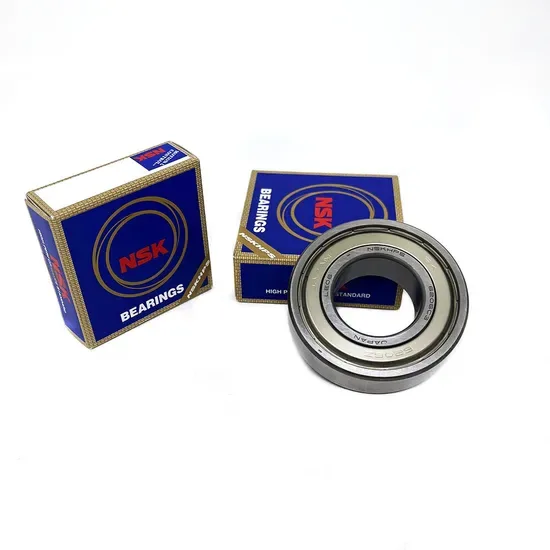 Deep Groove Ball Bearings X&S NSK 6202 6203 6301 Deep Groove Ball Bearings for Auto Parts Deep Groove Ball Bearings NSK High-Temperature Deep Groove Ball Bearing 608zz 6302 6910 6319-2RS Automotive Bearings and Parts NSK Deep Groove Ball Bearing 608 6204 6301 for Electric Motor Automotive
Target Industries
Any alternative is marked separately on the quote and requires buyer approval.