NSK ROBUST vs SKF Super-Precision Bearings Wholesale Supplier

Blind loyalty to a single Swedish brand for machine tool spindles often ignores the actual thermal limits and delivery risks.
The optimal choice between NSK ROBUST and SKF super-precision bearings depends not on brand prestige, but on matching the specific dmn value requirements, thermal management needs, and supply chain urgency of your spindle application. A wholesale strategy that relies solely on one manufacturer exposes operations to unnecessary downtime and inflated costs when alternative high-performance series can meet or exceed technical specifications with better availability.
I still recall the silence in a Qingdao machine tool factory where a critical spindle project had stalled for months. The procurement team was fixated on a specific Swedish brand’s double-row cylindrical roller bearing, waiting for a shipment that kept getting delayed. The production line stood idle, burning through overheads while engineers debated whether to wait or switch. I brought data from a Japanese manufacturer’s ROBUST series, highlighting its SHX material and PEEK cage construction. The switch wasn’t about abandoning quality; it was about recognizing that the alternative could handle the required 2.2 million dmn value while reducing operating temperatures significantly. This experience reinforced a simple truth: spindle bearing selection must prioritize field performance metrics over brand mythology.
Transitioning from this local workshop lesson to global trade, I have seen countless buyers repeat the same mistake. They assume that super-precision automatically means one specific European label, failing to evaluate the actual operational demands. Let us dissect the technical and commercial realities behind these two major players.
What Are the Core Differences Between These Two High-Precision Series?
Material science and cage design drive the performance gap, not just the brand name.
When comparing NSK ROBUST and SKF super-precision bearings, the divergence lies in how each manufacturer addresses the twin enemies of high-speed spindles: heat generation and centrifugal force. Understanding these differences is crucial for any NSK ROBUST vs SKF Super-Precision Bearings Wholesale Supplier aiming to provide accurate technical guidance.
SKF has long been associated with ultra-precision grinding and strict tolerance classes. Their super-precision angular contact ball bearings are renowned for consistent geometry and high rigidity. However, in extreme high-speed scenarios, the traditional steel cages used in some standard precision lines can become a liability due to weight and friction.
NSK’s ROBUST series, conversely, was engineered specifically for high-speed machining centers. The use of SHX steel, a proprietary material with enhanced fatigue life and heat resistance, allows these bearings to operate at higher speeds without the rapid degradation seen in conventional bearing steels. Furthermore, the integration of PEEK (Polyether ether ketone) cages reduces weight and improves lubrication flow, directly impacting thermal stability.
| Feature | NSK ROBUST Series | SKF Super-Precision Series |
|---|---|---|
| Primary Material | SHX Steel (High fatigue resistance) | Standard High-Carbon Chromium Steel |
| Cage Material | PEEK (Lightweight, high temp resistant) | Steel or Phenolic Resin (varies by model) |
| Speed Capability | Optimized for very high dmn values | High, but may require derating at extremes |
| Thermal Management | Superior heat dissipation via cage design | Standard, relies heavily on external cooling |
| Precision Class | Reaches P4/P2 levels | Reaches P4/P2 levels |
A buyer in Southeast Asia once struggled with recurring spindle failures in high-speed milling machines. The original specification called for a well-known European brand. Upon switching to the ROBUST series, the primary improvement was not just in longevity, but in the consistency of thermal growth. The spindle maintained its position accuracy over longer shifts because the bearing itself generated less heat. This is not a matter of one brand being “better” universally, but of one being better suited for specific high-thermal-load environments.
For a NSK ROBUST vs SKF Super-Precision Bearings Wholesale Supplier, the key is to identify which factor is more critical for the end-user: absolute geometric rigidity at moderate speeds, or thermal stability at extreme speeds.
How to Determine the Required dmn Value for Your Spindle?
Selecting the right bearing requires calculating the dmn value, not just matching the bore size.
The dmn value (pitch diameter multiplied by rotational speed) is the definitive metric for assessing whether a bearing can survive in a high-speed application. Many procurement errors stem from ignoring this calculation and simply ordering based on dimensional compatibility.
If your spindle operates at a dmn value exceeding 1.5 million, standard precision bearings may fail prematurely due to centrifugal forces acting on the rolling elements and cage. In such cases, the lightweight PEEK cages found in the NSK ROBUST series offer a distinct advantage. They reduce the centrifugal load, allowing the bearing to maintain integrity at speeds where heavier cages might deform or fail.
Conversely, for applications with lower dmn values but high radial loads, the robust construction of SKF’s super-precision series might provide the necessary rigidity. The decision matrix should look like this:
- Low dmn, High Load: Prioritize rigidity and load capacity. Both brands perform well, but verify the specific load ratings.
- High dmn, Moderate Load: Prioritize heat generation and cage stability. NSK ROBUST often has the edge here due to material and cage design.
- Ultra-High Precision, Low Speed: Prioritize geometric accuracy. SKF’s reputation in grinding precision is strong here.
I once consulted for a manufacturer of dental milling machines. They were experiencing premature bearing failures despite using top-tier brands. The issue was not the brand, but the fact that they were pushing a standard precision series beyond its thermal limit. By recalculating the dmn value and switching to a series designed for high-speed thermal management, the failure rate dropped noticeably. This underscores the importance of technical validation over brand recognition.
As a NSK ROBUST vs SKF Super-Precision Bearings Wholesale Supplier, providing this level of technical insight helps clients avoid costly mismatches. It transforms the transaction from a simple parts order to a strategic engineering solution.
What Are the Hidden Costs of Brand Monoculture?
Relying on a single supplier creates vulnerability to supply chain disruptions and price volatility.
The myth of the “perfect brand” often blinds buyers to the reality of global logistics. During recent years, many European manufacturers faced extended lead times due to various logistical and production constraints. For a machine tool OEM, a three-month delay in bearing delivery can mean halted assembly lines, missed delivery deadlines, and penalty clauses.
In contrast, Asian manufacturers like NSK often have more flexible production networks and inventory buffers for certain series. This does not imply lower quality; it reflects a different supply chain structure. By diversifying sources and validating alternatives like the ROBUST series, buyers can mitigate the risk of total production stoppage.
Consider the cost of downtime. A mid-six-figure loss from a week of stalled production far outweighs any minor price difference between bearing brands. Furthermore, maintaining relationships with multiple high-quality suppliers provides leverage in negotiations and ensures continuity.
A distributor in Latin America shared how their reliance on a single European source left them unable to fulfill urgent orders during a peak season. By introducing NSK alternatives into their portfolio, they were able to maintain service levels for their clients. This diversification strategy is essential for resilience.
For a NSK ROBUST vs SKF Super-Precision Bearings Wholesale Supplier, emphasizing supply chain resilience is as important as discussing technical specs. It addresses the business continuity concerns of industrial buyers.
How to Verify Cross-Brand Alternatives for Authenticity and Performance?
Proper verification involves checking documentation, physical markings, and performance testing, not just trusting the seller.
When switching between brands or sourcing from new channels, authenticity is paramount. The market is flooded with counterfeits that mimic packaging but fail under load. Verification must be rigorous.
First, demand full traceability documentation. Genuine bearings come with certificates of origin and material test reports. Second, inspect physical markings. Laser etching on rings and cages should be crisp and consistent. Third, perform sample testing. Measure internal clearance, runout, and noise levels before committing to bulk orders.
Cross-brand substitution also requires careful attention to fit and tolerance. While dimensions may be standardized, internal clearances and preload settings can vary. Always consult technical datasheets and, if possible, conduct bench tests under simulated operating conditions.
I have seen buyers receive boxes that looked perfect but contained bearings with rough raceways. Only by mounting them on a test rig did the excessive vibration become apparent. This highlights the need for hands-on verification, especially when exploring alternatives.
As a NSK ROBUST vs SKF Super-Precision Bearings Wholesale Supplier, providing these verification tools and support builds trust. It assures clients that the alternative is not just a cheap substitute, but a validated, high-performance equivalent.
Conclusion
Smart spindle bearing selection balances technical performance with supply chain reality.
Choosing between NSK ROBUST and SKF super-precision bearings is not about picking a winner, but about matching the right tool to the job. Evaluate your dmn values, thermal constraints, and delivery risks objectively. Diversify your sources to protect your production line. Trust data over dogma, and verify every shipment. This approach ensures reliability, efficiency, and peace of mind in high-stakes industrial applications.
NSK Bearings Mentioned in This Article
Deep Groove Ball Bearings Genuine NSK 6303-6317 Deep Groove Ball Bearings for Excavators 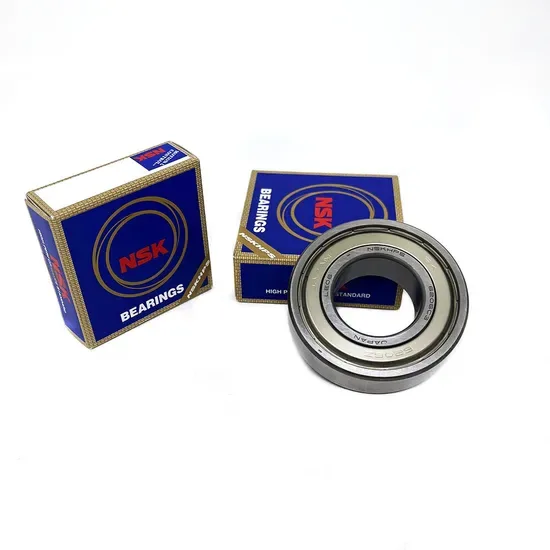 Deep Groove Ball Bearings X&S NSK 6202 6203 6301 Deep Groove Ball Bearings for Auto Parts Deep Groove Ball Bearings NSK High-Temperature Deep Groove Ball Bearing 608zz 6302 6910 6319-2RS Automotive Bearings and Parts NSK Deep Groove Ball Bearing 608 6204 6301 for Electric Motor Automotive
Target Industries
Any alternative is marked separately on the quote and requires buyer approval.