

The cheapest linear guide is often the most expensive component in your machine.
Choosing between the NSK NH and NS series requires matching dynamic load capacity to precision needs, but securing genuine products with full traceability is critical to avoid costly downtime. The NH series offers higher rigidity for heavy loads, while the NS provides compact precision for standard automation. However, technical selection means nothing if the supply chain introduces counterfeit components that fail under stress.
I still remember the smell of burnt grease in a workshop in Hanover. I was there for a machinery expo, eager to source components for a client’s new automation line. I found a supplier offering NSK linear guides at a price that seemed too good to be true. I ignored the lack of proper documentation, thinking I was saving my client money. Back home, we installed the NH series guides on a high-speed machining center. Within weeks, the positioning accuracy drifted. The滑块 (carriages) had microscopic imperfections that only showed up under thermal expansion. We had to tear down the entire assembly, missing the delivery deadline and paying a penalty that dwarfed the savings from the cheap parts. That failure taught me that in precision motion control, the paper trail is as important as the steel.
What are the core differences between NSK NH and NS series?
NH delivers heavy-load rigidity, while NS maximizes space efficiency without sacrificing smoothness.
Many buyers assume that because NH and NS guides share similar mounting dimensions and interchangeability features, they are functionally identical. This is a dangerous misconception. The internal ball circuit design and rail profile differ significantly to address distinct mechanical challenges. Understanding these differences is essential for any engineer or procurement specialist acting as an NSK NH & NS Linear Guides Wholesale Supplier to their own clients.
The NH series is built for robustness. It features a wider rail and a larger ball diameter, which translates to higher basic dynamic load ratings and greater rigidity. This makes it the preferred choice for machine tools where cutting forces create significant moment loads. In contrast, the NS series is designed for compactness. It uses a smaller ball circuit to reduce the overall height and width of the block, making it ideal for automated assembly lines, semiconductor equipment, and medical devices where space is at a premium.
| Feature | NSK NH Series | NSK NS Series |
|---|---|---|
| Primary Application | Heavy-load machine tools, injection molding machines | Compact automation, semiconductor, medical devices |
| Rigidity | High | Standard |
| Profile Height | Higher | Lower (Compact) |
| Load Capacity | Superior dynamic and static load ratings | Adequate for standard industrial loads |
| Interchangeability | Full interchangeability within same size class | Full interchangeability within same size class |
A European automation integrator once mixed NH and NS series in a single container order to optimize his inventory for different projects. He used NH for the heavy lifting axes and NS for the lightweight pick-and-place units. This strategy reduced his overall procurement lead time by weeks because he could consolidate shipments. However, he strictly verified the part numbers to ensure no cross-contamination occurred during installation. Using an NS guide on a heavy-load axis would have led to premature fatigue failure, while using an NH guide on a delicate sensor arm would have added unnecessary mass and inertia.
How to choose the right series for your specific application?
Match the dynamic load rating and operating speed to your machine’s specific mechanical requirements.
Selection is not just about size; it is about life expectancy and precision retention. When advising clients, I always start with the load calculation. If the application involves high acceleration and deceleration, the inertial forces can exceed the static load capacity of a smaller guide. In such cases, the NH series provides a safety margin that the NS series might lack. Conversely, for high-speed scanning applications where weight affects motor sizing, the lighter NS series is superior.
Another critical factor is the operating environment. Machine tools often generate chips and coolant mist. The NH series typically offers better sealing options to protect the internal ball circuit from contamination. For cleanroom environments, the NS series can be specified with low-dust generation seals and special lubricants. Ignoring these environmental factors can lead to rapid degradation of the guide way surface, regardless of the series chosen.
Consider a case from a Middle East steel mill. They initially installed NS series guides on a conveyor system handling heavy slabs. The guides failed prematurely due to shock loads that exceeded their rated capacity. After switching to the NH series, the mean time between failures increased substantially. The key was not just the higher load rating, but the improved rigidity that prevented micro-movements under shock conditions. This shift saved them from frequent production stops and the associated labor costs of replacement.
Why is traceability critical when buying NSK linear guides?
Counterfeit guides cause severe precision loss; only demand suppliers with complete origin certificates.
The market for linear motion components is flooded with counterfeits. These fake products often look identical to the genuine article but use inferior steel and poor heat treatment. The result is unpredictable performance. A counterfeit guide might work fine for a few months, then suddenly seize or lose accuracy, causing catastrophic damage to the machine it is mounted on. This is why traceability is non-negotiable.
As an NSK NH & NS Linear Guides Wholesale Supplier, I insist on verifying the origin of every batch. Genuine NSK products come with specific batch numbers that can be traced back to the manufacturing facility. This documentation includes material certificates and quality inspection reports. Without these documents, you are buying a mystery box. The risk is not just financial; it is reputational. If your client’s machine fails due to a fake component, they will blame you, not the anonymous factory that produced the counterfeit.
I recall an MRO workshop that avoided a major assembly line crash by demanding traceability. They received a shipment of sliders that looked correct but had slightly off-center mounting holes. By checking the batch codes against the supplier’s certificate, they identified the goods as non-genuine before installation. This simple check prevented a potential shutdown that would have cost the plant a mid-six-figure loss in lost production. The lesson is clear: if the paperwork is missing, the product is suspect.
How to optimize procurement and reduce lead times?
Consolidate mixed-brand and mixed-series orders with a reliable global supplier for faster delivery.
Lead times for precision components can vary wildly. Ordering small batches from multiple sources often results in fragmented shipments and higher logistics costs. A more efficient approach is to consolidate orders. By working with a supplier who stocks both NSK NH and NS series, along with other complementary brands, you can combine various items into a single container. This strategy reduces customs clearance complexity and shipping frequency.
Moreover, maintaining a strategic stock of fast-moving items can buffer against supply chain disruptions. For distributors, this means keeping a balanced inventory of NH series for heavy industry clients and NS series for automation builders. For OEMs, it means establishing a long-term partnership with a supplier who can guarantee consistent availability. This reliability allows for leaner inventory management on the buyer’s side, as they can trust the supplier to deliver on time.
A Latin American distributor recently optimized his procurement by mixing NSK linear guides with spherical roller bearings in a single shipment. This consolidation reduced his overall logistics cost and simplified his inventory receiving process. He no longer had to manage multiple small parcels arriving at different times. Instead, he received one large, well-documented shipment that covered his needs for several months. This approach also gave him leverage in negotiations, as larger consolidated orders often attract better pricing and priority handling.
Conclusion
Precision requires the right component, but reliability requires the right source.
Selecting between NSK NH and NS series depends on your specific load and space requirements, but ensuring authenticity through traceable documentation is paramount. Avoid the trap of lowest unit price, which often leads to the highest total cost of ownership. Partner with a supplier who understands the technical nuances and can provide genuine products with full transparency.
NSK Bearings Mentioned in This Article
Deep Groove Ball Bearings Genuine NSK 6303-6317 Deep Groove Ball Bearings for Excavators 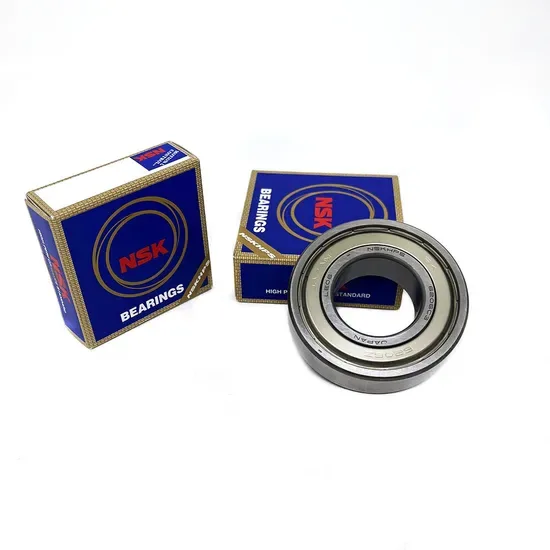 Deep Groove Ball Bearings X&S NSK 6202 6203 6301 Deep Groove Ball Bearings for Auto Parts Deep Groove Ball Bearings NSK High-Temperature Deep Groove Ball Bearing 608zz 6302 6910 6319-2RS Automotive Bearings and Parts NSK Deep Groove Ball Bearing 608 6204 6301 for Electric Motor Automotive
Target Industries
Any alternative is marked separately on the quote and requires buyer approval.
