

Cheap freight is a trap when moving precision transmission parts.
To ship genuine NSK linear rails and ball screws safely, you must prioritize rigid wooden crate packaging with VCI rust prevention over simple cardboard boxing, enforce strict traceability documentation for customs clearance, and utilize mixed-container consolidation services to balance MOQ flexibility with transit security. This approach prevents bending, corrosion, and authenticity disputes that typically arise during international ocean freight.
I still remember the silence in the control room of a quarry outside Riyadh. It was not the peaceful kind. The main crushing line had stopped because a ball screw, shipped in a loose bundle to save on sea freight, had seized after just two months. The local heat combined with fine stone dust had penetrated the inadequate sealing. I watched the site manager calculate the downtime cost, which dwarfed the initial shipping savings by a massive margin. That day, I learned that for high-precision components, the packaging is as critical as the part itself.
When sourcing from a global market, many buyers focus solely on the unit price of the rail or screw. They overlook the logistics chain. A bent guide rail or a corroded screw nut renders the component useless before it even reaches the machine tool. Proper handling requires understanding the specific vulnerabilities of these long, slender, and highly polished steel parts.
Transitioning from reactive repairs to proactive procurement means rethinking how these parts move across borders. It is not just about getting them from point A to point B; it is about ensuring they arrive in the same micron-level precision state as when they left the manufacturer’s facility.
How to package NSK rails and screws for ocean freight?
Use VCI paper and rigid wooden crates to prevent rust and bending during transit.
Ocean freight introduces two primary enemies to precision transmission parts: humidity-induced corrosion and physical deformation. Standard cardboard boxes, sufficient for domestic trucking, fail miserably in container environments where temperature fluctuations cause condensation.
The correct method involves a multi-layer defense. First, each NSK linear rail and ball screw must be wrapped in Volatile Corrosion Inhibitor (VCI) paper. This material releases protective vapors that form a molecular layer on the metal surface, blocking moisture without leaving oily residues that attract dust. Second, the wrapped parts are placed in rigid wooden crates. For long shafts, the crate design must include internal supports that prevent sagging. A common mistake is laying long rails flat on the bottom of a crate without adequate support points, leading to permanent curvature under their own weight during weeks at sea.
Consider the case of a European machine tool builder who switched from loose palletizing to custom wooden crating. Their return rate due to “out-of-straightness” complaints dropped noticeably. The key was aligning the support points with the rail’s mounting holes, distributing the load evenly.
| Packaging Element | Risk if Ignored | Recommended Standard |
|---|---|---|
| Outer Container | Physical impact, crushing | Rigid wooden crate with metal strapping |
| Inner Wrap | Surface rust, pitting | VCI paper or film, sealed tightly |
| Support Structure | Bending, loss of straightness | Custom foam inserts or wooden blocks at mounting points |
| Labeling | Misidentification, handling errors | Clear “Fragile” and “This Side Up” markings |
Ignoring these standards might save a few dollars in packaging materials, but it risks the entire batch. When evaluating a supplier, ask specifically about their crate construction and VCI usage. If they hesitate, view it as a red flag.
What are the MOQ and consolidation rules for mixed shipments?
Flexible MOQ allows mixing rails, screws, and bearings in one container to optimize inventory costs.
Many industrial buyers face a dilemma: they need a variety of precision parts, but ordering full containers of single SKUs ties up capital and warehouse space. Minimum Order Quantities (MOQ) for premium brands can be prohibitive for smaller distributors or MRO operators.
The solution lies in consolidation. By combining NSK linear guides with other bearing types—such as deep-groove ball bearings or spherical roller bearings—you can achieve a full container load (FCL) while maintaining diverse stock. This approach reduces per-unit freight costs significantly compared to Less than Container Load (LCL) shipments, which often suffer from rougher handling and higher damage rates.
A distributor in Southeast Asia successfully implemented this strategy by grouping high-turnover maintenance items with slower-moving precision rails. They filled a 20-foot container with a mix of NSK rails, FAG bearings, and local Chinese brand equivalents for less critical applications. This mixed-brand approach allowed them to offer competitive pricing to their end-users while keeping their own inventory lean.
However, consolidation requires careful planning. Weight distribution is crucial. Heavy bearings should be placed at the bottom, with lighter but longer items like rails secured above or alongside them to prevent crushing. Additionally, ensure that all items in the container share similar environmental protection needs. Do not pack hygroscopic materials next to precision steel parts unless both are equally well-sealed.
This method transforms logistics from a cost center into a strategic advantage. It enables smaller players to access premium brands without the burden of massive single-SKU orders.
How to verify authenticity during customs clearance?
Original NSK packaging and traceability documents are mandatory for proving genuineness.
Counterfeit precision parts are a persistent issue in the global supply chain. A fake linear rail may look identical to the naked eye but lacks the hardened steel quality and precise grinding tolerances of the genuine article. Customs authorities and end-users increasingly demand proof of origin.
Verification starts with the packaging. Genuine NSK products come in specific, high-quality boxes with distinct printing and holographic seals. Repacked goods, often sold at lower prices, lack this primary layer of authentication. More importantly, you must request the original certificate of analysis and traceability documents. These papers link the specific batch number on the part to the manufacturer’s production records.
A mining operator in Africa once received a shipment of ball screws that failed prematurely. Upon investigation, the packaging was generic, and the supplier could not provide batch-specific test reports. The parts were likely counterfeit or substandard rejects. In contrast, when sourcing through a verified channel, the documentation arrives with the goods, ready for customs inspection and internal quality audits.
Be wary of suppliers who claim “original quality” but cannot provide original packaging. This is often a euphemism for refurbished or counterfeit items. Always insist on seeing sample photos of the actual packaging and documentation before finalizing the order.
Authenticity is not just about brand prestige; it is about performance reliability. Without proper documentation, you have no recourse if the parts fail, and you risk damaging your reputation with your own clients.
What trade terms minimize transit risks?
Clear FOB/CIF terms and insurance protect against harsh-environment transit damage.
Incoterms define who bears the risk at each stage of the journey. For precision parts, the choice between FOB (Free on Board) and CIF (Cost, Insurance, and Freight) can determine who pays for damaged goods.
Under FOB, the buyer assumes risk once the goods cross the ship’s rail at the port of origin. This gives the buyer more control over the choice of freight forwarder and insurance provider. However, it requires the buyer to have strong logistics expertise. CIF places the responsibility on the seller until the goods reach the destination port, including insurance. While convenient, the insurance coverage under standard CIF terms may be minimal and difficult to claim.
For high-value NSK linear rails and ball screws, it is often advisable to negotiate specific insurance clauses that cover “all risks,” including breakage and corrosion. A clear agreement on packaging standards within the contract also helps. Specify that goods must be delivered in undamaged, original packaging. If the crate arrives crushed, the liability is clear.
Consider a scenario where a shipment arrived in Latin America with water damage inside the container. Because the trade terms clearly specified VCI wrapping and wooden crating, and the insurance policy covered moisture damage, the buyer was able to claim compensation quickly. Without these specifics, the dispute would have dragged on for months.
Do not treat trade terms as mere formalities. They are your financial safety net. Ensure your legal team reviews them with the same scrutiny applied to technical specifications.
Conclusion
Protect your investment by treating logistics as part of the product specification.
Shipping NSK linear rails and ball screws requires more than just booking a container. It demands rigorous packaging standards, smart consolidation strategies, strict authenticity verification, and clear trade terms. By focusing on these elements, you ensure that the precision you pay for is the precision you receive. Ignore them, and you pay for downtime instead.
NSK Bearings Mentioned in This Article
Self-Aligning Ball Bearings NSK 2217M Self Aligning Ball Bearing Genuine Wholesale Supplier 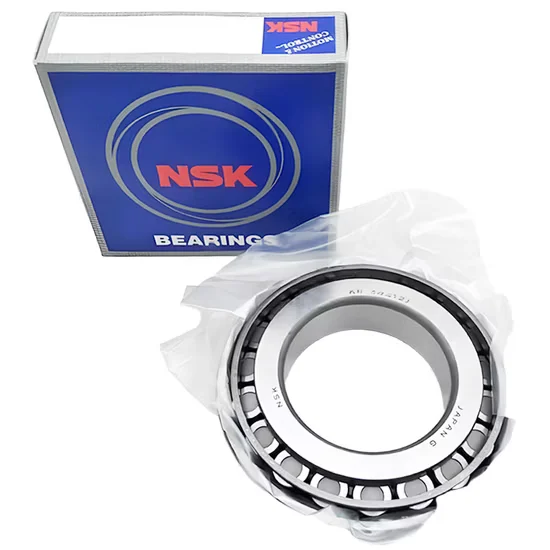 Tapered Roller Bearings Genuine NSK Tapered Roller Bearings 33205 33005 33108 32904 Wholesale Supplier
 Deep Groove Ball Bearings Genuine NSK 6211 Deep Groove Ball Bearing Wholesale Supplier
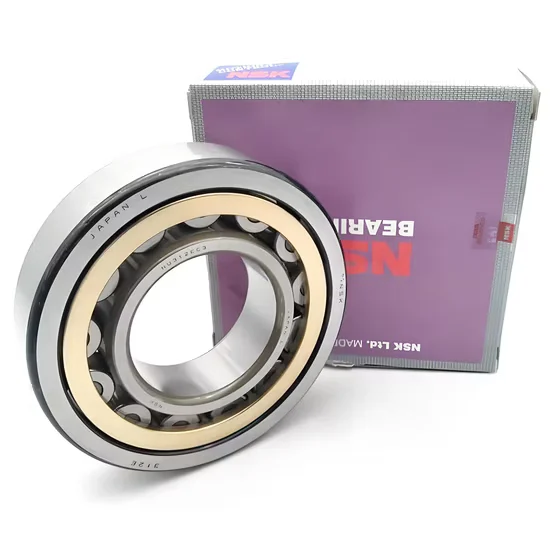 Cylindrical Roller Bearings NSK N2304e Cylindrical Roller Bearing Genuine Original Wholesale Supplier
Target Industries
Any alternative is marked separately on the quote and requires buyer approval.
