NSK HPS vs SKF Explorer Bearings: Wholesale Supplier for Bulk Orders

Premium branding does not guarantee performance if the application profile is mismatched.
When selecting between these two high-performance series, the decision hinges on specific operational dynamics rather than brand prestige alone. NSK HPS bearings are optimized for high-speed stability and low torque in precision applications, while SKF Explorer bearings excel in handling heavy shock loads and misalignment in harsh environments. Proper selection requires verifying load capacity ratios, thermal displacement rates, and contamination resistance levels against actual site conditions. Sourcing genuine units with complete traceability documentation is critical to prevent catastrophic failures caused by counterfeit or improperly graded components.
I still remember the humidity of the Ningbo Beilun port, where I spent my early career installing spindles on machine tools. The salt air was relentless, but the real corrosion came from cutting corners. A client in South America needed replacement parts for a heavy-duty crane gearbox. To save on initial procurement costs, they swapped specified premium bearings for standard alternatives without a thorough工况 review. The result was predictable but painful. Within months, the main shaft overheated and seized, halting the entire production line. The cost of emergency air freight and compensation dwarfed any initial savings. That incident shifted my focus entirely to cross-brand technical verification. Now, when distributors ask about NSK HPS vs SKF Explorer comparison, I do not look at the price tag first. I look at the load charts and the environment.
Understanding the fundamental engineering differences is the first step in making an informed choice. Both series represent the pinnacle of their respective manufacturers’ capabilities, utilizing high-purity steel and optimized internal geometries to extend fatigue life under extreme conditions. However, their design philosophies diverge when it comes to specific stress factors.
What Defines NSK HPS and SKF Explorer in Heavy-Duty Applications?
Both series optimize internal geometry and steel purity, but they target different failure modes.
The core argument for choosing one over the other lies in how they handle stress. NSK HPS (High Performance Standard) bearings are engineered with a focus on reducing friction and heat generation. This makes them particularly suitable for applications where rotational accuracy and speed are paramount. In contrast, SKF Explorer bearings are designed with a robust approach to contamination and misalignment. They feature modified raceway profiles that distribute stress more evenly, which is crucial in environments where shaft deflection or housing inaccuracies are common.
For global industrial distributors and MRO operators, this distinction is vital. A bearing that performs exceptionally well in a clean, high-speed spindle may fail prematurely in a dusty mining conveyor pulley. The key is matching the bearing’s strengths to the machine’s weaknesses. When evaluating high performance bearing selection for heavy machinery, one must consider whether the primary threat is thermal buildup or mechanical shock.
| Feature | NSK HPS Focus | SKF Explorer Focus |
|---|---|---|
| Primary Optimization | Low torque & high-speed stability | Misalignment tolerance & shock load capacity |
| Steel Purity | Controlled inclusion density | Substantially lower inclusion density |
| Cage Design | Optimized for reduced friction | Reinforced for harsh environments |
| Ideal Environment | Clean, precision-controlled | Dusty, high-vibration, misaligned |
This table highlights the qualitative differences in design intent. It is not about one being better than the other, but about which tool fits the job. A European wind farm operator once switched to NSK HPS for their main shaft bearings, expecting longer life due to the premium label. However, the site experienced higher-than-expected wind shear, causing significant misalignment. The bearings failed faster than the previous standard series because they were not designed to handle that specific type of mechanical stress. Switching to a series with better misalignment tolerance resolved the issue.
How to Match Bearing Series to Specific Operating Conditions?
SKF Explorer excels in misalignment and heavy shock loads, while NSK HPS offers superior high-speed stability and low torque.
Matching the right series to the operating condition requires a detailed analysis of the application. For heavy-load crane gearboxes, the directional focus should be on load capacity ratios and temperature rise limits. In these scenarios, the ability of the bearing to handle sudden shocks without brinelling is critical. SKF Explorer bearings often provide a safety margin here due to their optimized internal geometry.
Conversely, for high-speed machine tool spindles, the priority shifts to rotational accuracy classes and thermal displacement rates. NSK HPS bearings are engineered to minimize heat generation, which is essential for maintaining precision over long machining cycles. A mismatch in precision grades can cause premature failure even with top-tier brands.
In mining conveyor pulleys, the environment is harsh. Contamination resistance levels and relubrication interval extensions become the deciding factors. Upgrading to an equivalent series like Explorer or HPS can significantly reduce maintenance frequency. However, if the sealing solution is not matched to the contamination level, even the best bearing will fail. A Middle East steel mill upgraded their conveyor system with premium bearings but neglected to upgrade the seals. Dust ingress led to rapid wear, negating the benefits of the high-performance steel.
When sourcing, it is essential to verify that the selected series aligns with the actual operating parameters. This is where technical cross-reference support becomes invaluable. Distributors must ensure that the replacement bearing not only fits dimensionally but also meets the performance requirements of the application.
What Are the Hidden Costs of Selecting the Wrong Premium Series?
Improper selection leads to thermal runaway and cage failures, negating any initial cost savings.
Many buyers assume that a higher price guarantees authenticity and performance. Actually, proper traceability documentation and batch consistency are the only real proofs of genuine high-performance bearings. Selecting the wrong series can lead to hidden costs that far exceed the price difference between brands. Thermal runaway is a common consequence of using a bearing not optimized for the speed and load conditions. This can cause the lubricant to break down, leading to metal-to-metal contact and eventual seizure.
Cage failures are another risk. In high-vibration environments, a cage designed for low friction may not have the structural integrity to withstand the forces. This can result in catastrophic failure, damaging not just the bearing but also the surrounding components. The downtime associated with such failures can be substantial, especially in continuous process industries.
A US buyer once purchased a bulk order of what they believed to be SKF Explorer bearings at a discounted rate. The lack of proper documentation raised red flags, but the low price was tempting. The bearings failed within weeks, causing significant damage to the equipment. Investigation revealed that they were counterfeits with inferior steel quality. The cost of replacement parts, labor, and lost production was several times the initial savings.
To avoid these pitfalls, buyers must prioritize verification over price. This involves checking mill certificates, original packaging markers, and batch-specific inspection reports. Working with a supplier who can provide complete traceability documentation is essential for mitigating these risks.
How to Verify Authenticity and Traceability in Bulk Procurement?
Require mill certificates, original packaging markers, and batch-specific inspection reports from suppliers.
Verifying the authenticity of high-performance bearings is a critical step in the procurement process. Counterfeit bearings are a significant problem in the global market, and they often look identical to genuine products. The only way to ensure authenticity is through rigorous documentation checks. Mill certificates provide proof of the steel quality and manufacturing process. Original packaging markers, such as holograms and serial numbers, can be verified with the manufacturer. Batch-specific inspection reports offer detailed data on the dimensional accuracy and performance characteristics of the bearings.
As a global full-range bearing supplier, we emphasize the importance of complete traceability. Our portfolio covers genuine products from mainstream international brands, including NSK and SKF. We provide mixed-brand consolidation services, allowing distributors to source multiple brands in a single shipment. This not only reduces logistics costs but also simplifies the verification process. Our technical team offers cross-reference support to help clients select the right bearing for their specific application.
When placing bulk orders, it is important to work with a supplier who understands the nuances of high-performance bearing selection. They should be able to provide technical datasheets and application guidance. This ensures that the bearings you receive are not only genuine but also suitable for your operational needs.
Conclusion
Selection must be driven by data, not brand loyalty.
Choosing between NSK HPS and SKF Explorer requires a clear understanding of the application’s specific demands. Whether it is high-speed precision or heavy-load durability, the right choice prevents costly failures. Ensure every bulk order is backed by verifiable traceability to protect your operational integrity.
NSK Bearings Mentioned in This Article
Deep Groove Ball Bearings Genuine NSK 6303-6317 Deep Groove Ball Bearings for Excavators 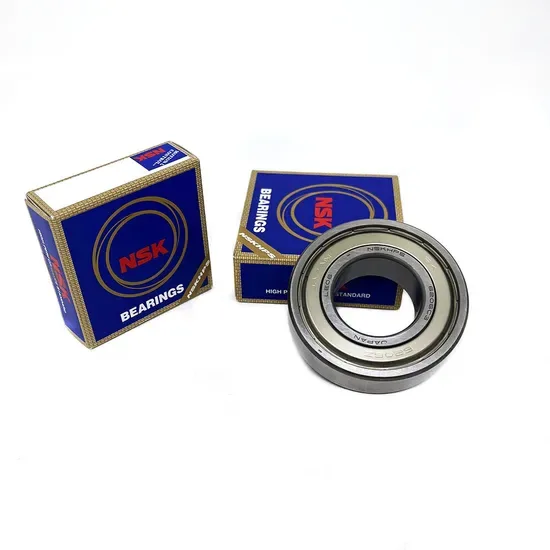 Deep Groove Ball Bearings X&S NSK 6202 6203 6301 Deep Groove Ball Bearings for Auto Parts Deep Groove Ball Bearings NSK High-Temperature Deep Groove Ball Bearing 608zz 6302 6910 6319-2RS Automotive Bearings and Parts NSK Deep Groove Ball Bearing 608 6204 6301 for Electric Motor Automotive
Target Industries
Any alternative is marked separately on the quote and requires buyer approval.