
NSK Clearance Codes vs Other Brands: Genuine Wholesale Supplier

NSK C3 is not SKF C3.
Bearing clearance codes are brand-specific designations, not universal standards. Directly substituting an NSK bearing with an SKF or FAG unit using the same clearance code without consulting a conversion matrix leads to thermal failure and false counterfeit claims. Accurate cross-referencing requires comparing internal radial clearance values in microns against ISO 5753 groups rather than relying on alphanumeric labels.
I still remember the heat radiating from the housing of a spherical roller bearing in Dubai. It was less than twelve hours after installation at a mining site. The client, a seasoned procurement manager, scanned the QR code on the NSK packaging. The data did not match his internal database for what he believed was the equivalent European brand part he had used previously. He accused us of supplying counterfeit goods. The truth was simpler and more dangerous: he had ordered an NSK C3 clearance bearing to replace a FAG unit that also carried a C3 designation, assuming they were identical. They were not. The internal clearance ranges differed enough that under heavy load and high ambient temperature, the rolling elements bound up. This incident shifted my entire approach to mixed-brand sourcing. I stopped trusting code letters and started verifying micron-level tolerances.
Understanding why these discrepancies exist is critical for any distributor or MRO buyer managing a multi-brand inventory. The assumption that a code like C3 means the same thing across all manufacturers is a persistent myth in the industry. In reality, each brand designs its bearings with specific internal geometries, cage materials, and heat treatment processes. These design choices influence how much internal space is needed for thermal expansion and lubrication. NSK clearance codes vs other brands reflect these proprietary engineering decisions rather than a unified global standard. When you source bearings for harsh environments, such as steel mills or wind farms, ignoring these nuances invites catastrophic downtime.
Why Don’t NSK and European Brands Share the Same Clearance Codes?
Internal design differences dictate unique clearance tolerances, making direct code substitution risky.
The primary reason NSK clearance codes do not align perfectly with SKF, FAG, or TIMKEN lies in the manufacturing tolerances and intended application profiles. While all major manufacturers adhere to ISO 5753 for radial internal clearance groups, the way they label and implement these groups within their specific product lines varies. NSK, being a Japanese manufacturer, often optimizes its bearings for high-speed and precision applications common in Asian industrial machinery. European brands like SKF and FAG have historically focused on heavy-load and robust industrial scenarios. These differing focal points result in slight variations in the actual micron range assigned to a given code.
For instance, an NSK C3 clearance might sit at the lower end of the ISO C3 spectrum, while an SKF C3 might occupy the middle or upper end. This difference seems negligible on paper but becomes critical when operating temperatures rise. As the bearing heats up, the inner ring expands faster than the outer ring, reducing internal clearance. If the starting clearance is already tight due to a brand-specific interpretation of the code, the bearing can reach zero clearance prematurely. This leads to increased friction, heat generation, and eventual seizure.
I have seen this play out in Latin America where mixed container orders are common. A maintenance team received a shipment containing NSK and NTN bearings for the same conveyor system. They assumed the C3 codes were interchangeable. The NSK units ran smoothly, but the NTN units, which had a slightly different tolerance stack-up for the same code, began to vibrate excessively within weeks. The issue was not quality but compatibility. By mapping the exact micron values for each brand, we eliminated these mismatches. This experience underscores why relying solely on the letter code is insufficient. You must look at the technical data sheets for each brand to ensure the actual physical clearance matches your application requirements.
What is the Exact NSK to SKF/FAG/TIMKEN Clearance Conversion Matrix?
A detailed comparison reveals that NSK C3 often requires careful verification against European equivalents to ensure proper fit.
To avoid the pitfalls of assumption, buyers need a clear conversion reference. Below is a qualitative comparison of how NSK clearance codes relate to other major brands. Note that these are general guidelines based on standard deep-groove ball and spherical roller bearings. Specific series may vary, so always consult the official catalog for the exact part number.
| Clearance Group | NSK Designation | SKF Equivalent | FAG/INA Equivalent | TIMKEN Equivalent | Relative Micron Range Trend |
|---|---|---|---|---|---|
| Normal | CN | CN | N | Standard | Baseline |
| Greater than Normal | C3 | C3 | C3 | C3 | NSK often tighter lower limit |
| Much Greater than Normal | C4 | C4 | C4 | C4 | Significant variation in upper limit |
| Very Large | C5 | C5 | C5 | C5 | Specialized applications only |
This table highlights that while the codes look identical, the “Relative Micron Range Trend” indicates potential discrepancies. For example, when replacing an FAG C3 bearing with an NSK unit, you might find the NSK option feels tighter during manual rotation checks. This does not mean it is defective; it means it is manufactured to a different point within the ISO tolerance band.
In Southeast Asia, an OEM assembling gearboxes faced high rejection rates due to noise issues. They were using NSK bearings as alternatives to a European brand. The engineers assumed C3 was C3. However, the tighter lower limit of the NSK C3 in certain sizes caused pre-load issues in their specific housing fits. Once we adjusted the selection to account for this nuance, sometimes moving to a looser tolerance group or adjusting the housing fit, the rejection rate dropped noticeably. This case proves that a static conversion chart is not enough; you must understand the direction of the tolerance shift.
When sourcing NSK clearance codes vs other brands, always request the specific internal clearance values in microns for the batch you are purchasing. Reputable suppliers can provide traceability reports that include these measurements. This data allows your engineering team to make informed decisions rather than guessing based on code letters. It transforms a potential failure point into a controlled variable.
How to Avoid “Fake Bearing” Claims Caused by Clearance Mismatches?
Verify QR data against actual physical clearance measurements to distinguish genuine parts from mismatches.
One of the most frustrating aspects of modern bearing procurement is the rise of digital authentication tools. Many brands now use QR codes or holograms to verify authenticity. However, these systems often check the part number and batch code against a central database. If you order an NSK bearing but your system expects the data structure of an SKF bearing, the mismatch can trigger a false positive for counterfeit goods. This happened in the Dubai case mentioned earlier. The client’s scanner was calibrated for European data formats. When it read the NSK code, it flagged an error.
The solution is not to distrust the technology but to understand its limitations. Digital verification confirms that the bearing came from the factory, but it does not confirm that it is the right bearing for your specific application if you are cross-referencing brands. To avoid these disputes, always pair digital verification with physical inspection. Use feeler gauges or dial indicators to measure the internal radial clearance of a sample from the batch. Compare this measurement to the official ISO range for that clearance group. If the physical measurement falls within the ISO C3 range, the bearing is genuine and compliant, regardless of what the QR code scanner says about cross-brand equivalence.
I now include a step in our supply process where we verify the physical clearance of mixed-brand orders before shipment. This proactive measure prevents clients from facing embarrassing situations with their own customers. It also builds trust. When a client receives a bearing that matches their technical expectations, they are less likely to question its authenticity. This approach turns a potential conflict into a demonstration of technical competence.
Which Clearance Group Fits Your Specific Operating Temperature?
Selection must be based on thermal expansion calculations and load conditions, not just brand codes.
Choosing the right clearance group is fundamentally a thermal management problem. As operating temperature increases, the inner ring expands more than the outer ring because it is typically mounted on a shaft that conducts heat from the motor or engine. This reduces the internal clearance. If the initial clearance is too small, the bearing will run hot and fail. If it is too large, vibration and noise will increase, leading to premature fatigue.
For standard applications with normal operating temperatures, Normal clearance (CN) is usually sufficient. However, for applications with high temperatures, such as kilns, dryers, or heavily loaded gearboxes, greater clearance is required. C3 is the most common choice for these scenarios. But remember, NSK C3 might behave differently than FAG C3 under the same thermal load. If you are switching brands, you must recalculate the required clearance based on the new brand’s specific tolerance range.
In extreme conditions, such as mining crushers or steel mill rollers, C4 or even C5 clearance might be necessary. These groups provide ample space for thermal expansion and misalignment. However, they are not suitable for high-precision or high-speed applications where rigidity is key. The decision should always be driven by engineering calculations rather than habit.
When dealing with NSK clearance codes vs other brands, consider the entire system. The housing material, shaft fit, and lubrication type all influence the effective clearance. A comprehensive approach ensures that the bearing performs as intended, regardless of the brand logo on the box. This level of diligence is what separates professional procurement from simple part swapping.
Conclusion
Bearing clearance codes are not universal translations.
Treating NSK C3 as identical to SKF C3 is a recipe for mechanical failure and commercial dispute. The differences in internal design and tolerance implementation mean that direct substitution without verification is risky. By focusing on micron-level data, understanding thermal dynamics, and verifying physical measurements, buyers can ensure reliable performance across mixed-brand inventories. Accurate knowledge of NSK clearance codes vs other brands protects both equipment integrity and business reputation.
NSK Bearings Mentioned in This Article
Deep Groove Ball Bearings Genuine NSK 6303-6317 Deep Groove Ball Bearings for Excavators 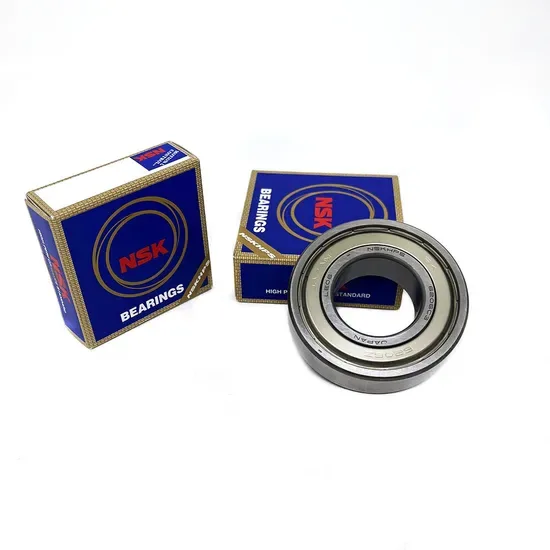 Deep Groove Ball Bearings X&S NSK 6202 6203 6301 Deep Groove Ball Bearings for Auto Parts Deep Groove Ball Bearings NSK High-Temperature Deep Groove Ball Bearing 608zz 6302 6910 6319-2RS Automotive Bearings and Parts NSK Deep Groove Ball Bearing 608 6204 6301 for Electric Motor Automotive
Any alternative is marked separately on the quote and requires buyer approval.