NSK Bearings Returns & Claims: Wholesale Supplier Support

Most early bearing failures are not manufacturing defects.
A valid NSK bearing claim requires verifiable material or dimensional deviations confirmed through metallographic testing, as the vast majority of premature failures stem from improper installation, lubrication errors, or storage issues rather than factory flaws. Without clear contractual terms defining analysis standards and burden of proof, buyers risk unjustified rejections or financial losses on non-defective stock.
I still remember the humidity in that Jakarta paper mill. The maintenance manager pointed at a set of spherical roller bearings, insisting they were defective because the cage was deformed. He wanted a full refund. I did not argue. I took the parts back to the bench. The deformation pattern was unmistakable: violent impact marks consistent with hammering during installation, not a material weakness. But our contract at the time was vague. It lacked specific clauses for failure analysis. I had to absorb the cost. That lesson changed how I handle every subsequent inquiry. Now, data dictates the outcome, not volume of complaint.
Understanding this distinction is critical for any procurement team managing industrial assets. Let us break down how to navigate this complex process effectively.
What Triggers a Valid NSK Bearing Claim?
Only verifiable material or dimensional deviations qualify for a successful claim.
Many buyers assume that if a bearing fails before its expected service life, it is automatically a warranty issue. This is a dangerous misconception. Manufacturers like NSK adhere to strict international standards for production. A claim is only valid if the component deviates from these agreed-upon specifications in terms of material composition, hardness, or dimensional tolerance.
Consider the difference between a surface scratch and a subsurface crack. A scratch might happen during shipping or handling. A subsurface crack, however, often indicates a fatigue failure related to load or material integrity. To determine validity, one must look beyond the visible damage.
| Failure Indicator | Likely Cause | Claim Validity |
|---|---|---|
| Cage deformation | Installation error (hammering) | Invalid |
| Uniform wear | Normal operation or lubrication issue | Invalid |
| Subsurface spalling | Material defect or excessive load | Requires Analysis |
| Dimensional out-of-tolerance | Manufacturing error | Valid |
| Rust from sealed packaging | Storage or packaging failure | Context Dependent |
A US buyer once returned a batch of deep-groove ball bearings due to noise. Upon inspection, we found no dimensional errors. The noise was caused by contaminated grease introduced during their regreasing process. The claim was rejected because the product itself met all original specifications.
To avoid such disputes, your purchase order must specify that claims are contingent upon third-party or mutually agreed-upon technical verification. Do not rely on visual inspection alone.
How to Conduct a Proper Failure Analysis?
Metallographic testing separates installation abuse from genuine factory flaws.
Visual inspection is insufficient for definitive proof. When a bearing fails, the surface tells only part of the story. The real evidence lies within the microstructure. Metallographic analysis involves cutting the bearing ring, polishing the cross-section, and examining it under a microscope. This reveals heat treatment quality, inclusion levels, and the origin of cracks.
In one case involving a mining conveyor, premature spalling occurred on several units. The operator blamed the brand. We conducted a metallographic exam. The results showed that the steel quality was perfect, but the load distribution was uneven due to misalignment in the housing. The failure was operational, not material.
Another common scenario is false brinelling in gearbox rebuilds. This looks like pitting but is actually caused by vibration while the bearing is stationary. If the packaging was intact and storage conditions were dry, the claim might lean toward packaging insufficiency. However, if the bearings were stored in a humid warehouse without proper protection, the responsibility shifts to the buyer.
The process should follow these steps:
- Secure the Evidence: Do not clean the failed bearing aggressively. Preserve lubricant residues for contamination analysis.
- Document Conditions: Record operating hours, load profiles, and maintenance logs.
- Dimensional Check: Verify inner and outer diameters against original drawings.
- Microstructural Exam: Perform metallography to check for material defects.
- Root Cause Determination: Correlate findings with operational data.
Without this rigorous approach, you are guessing. And in international trade, guesses do not hold up in arbitration.
What Should Your Return Clause Include?
Contracts must define analysis standards and burden of proof clearly.
Ambiguity is the enemy of efficient claims processing. A robust return clause does not just state “defective goods can be returned.” It specifies how “defective” is defined and who pays for the investigation.
Key elements to include:
- Timeframe: Define the window for reporting failures after installation.
- Analysis Protocol: Specify that failure analysis must follow recognized industry guidelines.
- Cost Allocation: State that if the analysis proves a manufacturing defect, the supplier covers all costs including testing and shipping. If it proves user error, the buyer bears the cost.
- Traceability: Require that returned items retain their original batch numbers for verification.
I have seen contracts where the burden of proof was entirely on the supplier, yet the buyer provided no operational data. This leads to stalemates. By shifting the focus to collaborative analysis, both parties protect their interests.
For distributors stocking multi-brand inventory, this clarity is vital. You cannot afford to hold capital in disputed stock. A clear clause allows you to resolve issues quickly, either by processing a replacement or by providing the end-user with technical evidence to correct their installation practices.
How to Prevent Unjustified Claim Rejections?
Standardize installation protocols and maintain traceability documentation.
Prevention is far more cost-effective than litigation. Most claims arise from preventable errors. By implementing strict installation and storage protocols, you reduce the likelihood of failure and strengthen your position if a claim does arise.
First, ensure that your technical team follows manufacturer-recommended installation methods. Use induction heaters or hydraulic presses instead of hammers. Document the installation process, including torque values and alignment checks.
Second, maintain complete traceability. Keep records of batch numbers, delivery dates, and storage conditions. If a bearing fails, you can prove it was stored correctly and installed by trained personnel. This documentation is powerful evidence.
In our operations, we provide ISO-compliant quality assurance and complete traceability documentation for every shipment. This helps our clients in over 80 countries manage their own downstream claims with confidence. When a client in Southeast Asia faced a query from their end-user, our detailed batch records allowed them to verify the authenticity and handling history instantly, resolving the dispute without returning the goods.
Furthermore, having access to long-term after-sales technical support can help diagnose issues before they become claims. Our team assists with failure analysis, helping clients distinguish between product issues and application errors. This support turns a potential conflict into a collaborative problem-solving session.
Conclusion
Data, not assumptions, drives successful bearing claims.
Navigating NSK bearing returns and claims requires a disciplined approach centered on failure analysis and clear contractual terms. By understanding the root causes of failure and maintaining rigorous documentation, buyers can protect their investments and minimize downtime. Remember, the goal is not just to return a part, but to ensure the reliability of your machinery.
NSK Bearings Mentioned in This Article
Deep Groove Ball Bearings Genuine NSK 6303-6317 Deep Groove Ball Bearings for Excavators 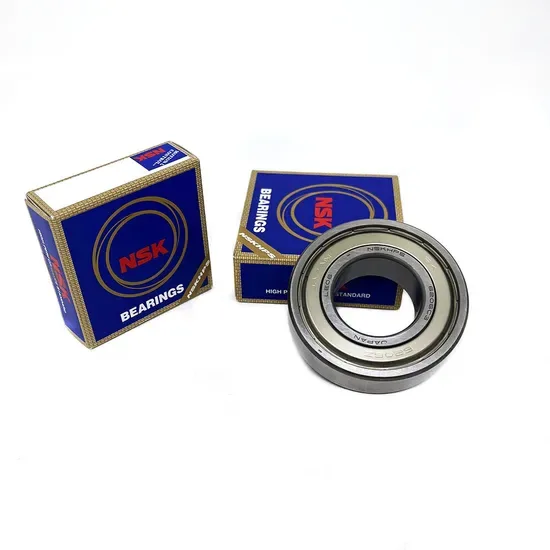 Deep Groove Ball Bearings X&S NSK 6202 6203 6301 Deep Groove Ball Bearings for Auto Parts Deep Groove Ball Bearings NSK High-Temperature Deep Groove Ball Bearing 608zz 6302 6910 6319-2RS Automotive Bearings and Parts NSK Deep Groove Ball Bearing 608 6204 6301 for Electric Motor Automotive
Target Industries
Any alternative is marked separately on the quote and requires buyer approval.
