
NSK Bearings Import Duties Guide for Wholesale Buyers

The most expensive mistake in bearing procurement is not a defective product, but a misclassified tariff code.
Accurate HS code classification for NSK bearings is the single most critical factor in determining your final landed cost and clearance speed. Precision rolling elements fall under specific Chapter 84 subheadings that are distinct from generic steel parts. Misclassification triggers severe duty penalties and port demurrage, while correct declaration ensures smooth customs clearance and predictable import duty rates.
I started out inspecting bearing tolerances in Qingdao before shifting to international trade. Years ago, a South American wholesale buyer imported a large batch of NSK angular contact bearings. Because their local broker misclassified the HS code under generic steel parts instead of precision rolling elements, the import duty suddenly spiked by a double-digit percentage. The entire container was stuck at Santos port for months, racking up massive demurrage fees and nearly ruining the deal. That painful lesson taught me that getting the tariff classification right is just as critical as the physical product quality. Now, I always cross-check technical specs against customs declarations to ensure smooth clearance.
Understanding these nuances is not just about compliance; it is about protecting your margin. When you source premium Japanese bearings, the product value is high, but the hidden costs of logistics and taxation can erode profitability if not managed with precision. This guide breaks down the specific requirements for importing these components, focusing on the technical and procedural details that matter most to global distributors.
What is the correct HS code for NSK precision bearings?
Precision rolling elements are classified under specific subheadings in Chapter 84, separate from general mechanical parts.
Many buyers assume all bearings share one universal code, but the World Customs Organization distinguishes between different types based on their design and application. For NSK bearings, which often include high-precision ball and roller types, the classification depends on whether they are radial or thrust, and their specific internal geometry.
The primary heading for rolling bearings is typically 8482. Within this, you will find further breakdowns:
- Ball bearings: Often fall under 8482.10
- Roller bearings: Often fall under 8482.20 through 8482.50
- Thrust bearings: Often fall under 8482.60
Using a generic code for steel parts, such as those found in Chapter 73, is a common error that leads to immediate red flags during customs inspection. Customs authorities use automated systems to match declared values and descriptions against historical data. A discrepancy between a high-value precision component and a low-duty generic steel code triggers a manual review.
For importers of NSK bearings, it is essential to consult the technical datasheet provided by the manufacturer. The bore size, load capacity, and precision grade (such as P0, P6, or P5) help determine the exact subheading. While the broad category remains consistent, the specific digits can vary by country. Always verify the local tariff schedule of the destination country, as national interpretations of the Harmonized System can differ slightly. Relying on a supplier’s default declaration without verification is a risk that experienced buyers avoid.
How do misclassifications impact landed costs and lead times?
Wrong codes trigger severe duty penalties and port demurrage, wiping out profit margins.
The financial impact of a classification error extends far beyond the additional tax. When customs authorities detain a shipment for re-evaluation, the clock starts ticking on storage fees. In major ports, demurrage charges can accumulate daily, quickly surpassing the value of the goods themselves.
Consider the case of a European distributor who imported a mixed container of industrial bearings. A few pallets of NSK spherical roller bearings were declared under an incorrect code due to a clerical error. The entire container was held for inspection. While the error was minor, the delay lasted several weeks. The resulting storage fees and administrative penalties cost several times the savings they had hoped to achieve through aggressive sourcing.
Beyond direct costs, there is the opportunity cost of delayed inventory. For MRO clients waiting for emergency spare parts, a delay of even a few days can halt production lines. The reputational damage to a distributor who cannot deliver on time is often harder to repair than the financial loss.
To mitigate this risk, buyers must ensure that the commercial invoice description matches the HS code precisely. Vague terms like “machine parts” or “steel components” are insufficient. The description should specify “NSK angular contact ball bearings, precision grade P6, for industrial machinery.” This level of detail helps customs officers process the entry quickly, reducing the likelihood of a physical inspection.
Which documents are mandatory for smooth customs clearance?
Commercial invoices must align perfectly with technical datasheets and certificates of origin.
Documentation gaps are a leading cause of clearance delays. Customs authorities require a clear paper trail that verifies the origin, value, and specifications of the goods. For NSK bearings, which are often subject to anti-dumping duties or specific trade agreements depending on the country of manufacture, the certificate of origin is crucial.
A typical clearance package should include:
- Commercial Invoice: Must list each SKU separately with its corresponding HS code.
- Packing List: Details the weight, dimensions, and quantity of each item.
- Certificate of Origin: Verifies the manufacturing country, which determines applicable duty rates.
- Technical Datasheets: Provides proof of the bearing’s specifications, supporting the HS code classification.
- Bill of Lading: The transport document that proves ownership and shipment details.
Missing any of these documents, or having inconsistencies between them, will result in a hold. For example, if the packing list shows a net weight that differs significantly from the bill of lading, customs may suspect undeclared goods. Similarly, if the technical datasheet is not available during an inspection, officers may not be able to verify the classification, leading to prolonged hold times.
Buyers should request these documents from their supplier before shipment. Reviewing them for accuracy allows time to correct errors while the goods are still in transit. Waiting until the shipment arrives at the port to discover a missing certificate is a recipe for disaster. Proactive document management is a key skill for successful importers.
How to optimize import duties for mixed-brand container shipments?
Itemized declarations and proper consolidation strategies prevent blanket high-rate assessments.
Importing a full container of a single SKU is straightforward, but most distributors operate with mixed-brand, mixed-size orders. Combining different bearing types with varying HS codes in one shipment requires precise itemized declarations. If the entire container is declared under a single, higher-duty code to simplify paperwork, the importer pays excessive taxes on items that could have been cleared at a lower rate.
Conversely, grouping items incorrectly can lead to audits. The key is accurate segmentation. Each line item on the invoice should reflect the correct HS code for that specific bearing type. For instance, deep groove ball bearings and tapered roller bearings may have different subheadings. Lumping them together creates ambiguity.
Effective consolidation involves more than just packing goods into a box. It requires a logistical partner who understands the nuances of customs classification. By organizing the cargo so that items with similar codes are packed together, and providing a detailed manifest that mirrors this physical arrangement, inspectors can verify the contents more efficiently. This reduces the time spent on physical checks and minimizes the risk of errors.
Our approach to global shipping consolidation ensures that every item in a mixed container is documented with complete traceability. We verify the technical specifications against the customs declarations before the goods leave our facility. This service prevents the blanket high-rate assessments that often plague poorly documented shipments. By handling the complexity of multi-brand orders, we allow distributors to focus on sales rather than customs disputes.
Conclusion
Correct classification protects your margin and your reputation.
Importing NSK bearings requires attention to detail that goes beyond the product itself. Accurate HS codes, complete documentation, and strategic consolidation are essential for avoiding costly delays and penalties. By treating customs compliance as a core part of the procurement process, buyers can ensure smooth clearance and predictable landed costs. This disciplined approach turns a potential logistical nightmare into a competitive advantage.
NSK Bearings Mentioned in This Article
Deep Groove Ball Bearings Genuine NSK 6303-6317 Deep Groove Ball Bearings for Excavators 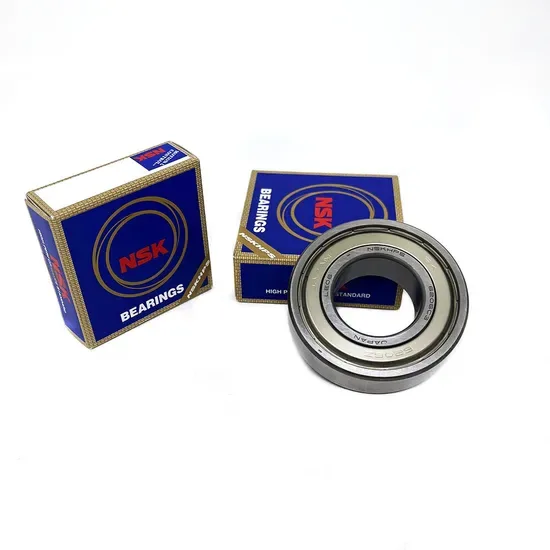 Deep Groove Ball Bearings X&S NSK 6202 6203 6301 Deep Groove Ball Bearings for Auto Parts Deep Groove Ball Bearings NSK High-Temperature Deep Groove Ball Bearing 608zz 6302 6910 6319-2RS Automotive Bearings and Parts NSK Deep Groove Ball Bearing 608 6204 6301 for Electric Motor Automotive
Any alternative is marked separately on the quote and requires buyer approval.
