
NSK Bearings for Vibrating Screens: Wholesale Supplier

Tighter clearance does not reduce vibration in high-friction screens; it causes seizure.
Selecting genuine NSK spherical roller bearings for vibrating screens requires matching C3 or C4 clearance and machined brass cages to specific amplitude and material density. This configuration prevents premature failure caused by thermal expansion and shock loads in harsh mining environments, ensuring operational continuity for heavy-duty screening equipment.
The dust in Addis Ababa tastes like iron. I stood next to a vibrating screen that was smoking, the air thick with the smell of burnt lubricant and frustrated curses from the site manager. That batch of bearings was from my early days in the trade. I had focused entirely on the customs documentation, ensuring the paperwork was flawless for clearance, but I had failed to verify the operating conditions. I had supplied standard clearance spherical roller bearings. In the high-temperature, high-dust environment of an African quarry, those standard units could not withstand the high-frequency impact. Within half a month, the cages had disintegrated. That failure taught me that mining wholesale is not just about price competition. A slight deviation in clearance or cage material results in immediate downtime on site. Now, when configuring bearings for vibrating screens, I always ask about the screen amplitude and material比重 first. This technical diligence is what separates a reliable partner from a mere order taker.
Understanding why standard specifications fail is the first step toward selecting the right components. The following sections detail the technical requirements for NSK bearings for vibrating screens, focusing on clearance, cage materials, and maintenance practices that extend service life.
Why Do Standard Bearings Fail in Vibrating Screens?
High impact and thermal expansion destroy standard bearing specifications rapidly.
Vibrating screens operate under extreme conditions that differ significantly from standard rotating machinery. The primary causes of failure are not usually manufacturing defects, but rather a mismatch between the bearing design and the application’s dynamic loads. Standard deep-groove ball bearings or standard clearance spherical roller bearings are often specified due to lower cost or availability, but they lack the robustness required for continuous vibration and shock loading.
The core issue lies in thermal expansion. During operation, friction generates heat. In a tightly fitted standard clearance bearing, this heat causes the inner ring to expand. Without sufficient internal space, the rolling elements bind against the raceways, leading to rapid temperature rise, lubricant breakdown, and eventual seizure. This is counter-intuitive to many operators who believe tighter clearance reduces play and vibration. In reality, the high-friction environment of a vibrating screen demands larger internal clearance to accommodate thermal growth without compromising structural integrity.
Another critical factor is the cage material. Standard steel cages, while adequate for many industrial applications, are vulnerable to the high-impact forces generated by heavy material falling onto the screen deck. When the screen vibrates, the bearings experience constant acceleration and deceleration. If the cage cannot withstand these shock loads, it will deform or fracture, causing the rolling elements to scatter. This type of catastrophic failure often occurs suddenly, leading to extensive damage to the shaft and housing.
| Failure Mode | Standard Specification | Recommended Specification for Vibrating Screens | Root Cause |
|---|---|---|---|
| Internal Clearance | Normal (C0/C2) | C3 or C4 | Thermal expansion causing seizure |
| Cage Material | Stamped Steel | Machined Brass | Shock load fracture |
| Lubrication | Standard Grease | High-Temperature Synthetic | Lubricant breakdown under heat |
| Alignment | Rigid Mounting | Self-Aligning Design | Misalignment due to frame flex |
A case from a Middle East steel mill illustrates this point. The plant experienced repeated bearing failures on their primary ore screens every few weeks. Upon inspection, we found that the inner rings were scored and the cages were broken. The operator had been using standard clearance bearings to save costs. After switching to NSK spherical roller bearings with C4 clearance and machined brass cages, the service life extended noticeably. The key was allowing the bearing to breathe thermally while providing a cage strong enough to handle the impact.
How to Select the Right NSK Spherical Roller Bearing?
Match C3/C4 clearance and machined brass cages to screen amplitude and material density.
Selecting the correct NSK bearings for vibrating screens involves a detailed analysis of the operating parameters. The two most critical factors are internal clearance and cage design. These must be aligned with the specific amplitude of the screen and the density of the material being processed.
Internal clearance is designated by codes such as C3 and C4. For vibrating screens, C3 clearance is typically the minimum requirement, while C4 is preferred for high-amplitude or high-temperature applications. The choice depends on the expected operating temperature and the fit of the bearing on the shaft. A loose fit on the shaft can reduce the effective internal clearance, so starting with a larger clearance ensures that the bearing remains operational even after mounting.
Cage material is equally important. Machined brass cages offer superior strength and resistance to shock loads compared to stamped steel cages. Brass is also more forgiving in terms of lubrication and can withstand higher temperatures without losing structural integrity. In high-impact mining environments, the difference in lifespan between a steel cage and a machined brass cage can be substantial. The window-type design of some brass cages further enhances oil flow and cooling, which is beneficial in dusty environments where heat dissipation is challenging.
When evaluating NSK spherical roller bearings for these applications, it is essential to verify the dynamic load rating. The bearing must be capable of handling the combined radial and axial loads generated by the vibrating motion. Additionally, the self-aligning capability of spherical roller bearings helps compensate for any misalignment caused by frame flexing or installation errors. This feature is crucial in maintaining even load distribution across the rolling elements, preventing premature wear.
For distributors and MRO operators, sourcing genuine products with complete traceability is vital. Counterfeit bearings often use inferior materials and incorrect clearances, leading to unpredictable failures. Ensuring that the NSK bearings for vibrating screens come with proper documentation guarantees that the specifications match the manufacturer’s standards. This level of quality assurance is necessary for minimizing unplanned downtime in critical mining operations.
What Are the Key Maintenance Practices for Screen Bearings?
Proper alignment and lubrication intervals extend service life significantly.
Even the best-selected bearings will fail if not maintained correctly. Installation and maintenance practices play a crucial role in the longevity of NSK bearings for vibrating screens. The most common installation error is misalignment, which causes uneven load distribution and overheating. Using the self-aligning features of spherical roller bearings can mitigate this, but proper mounting techniques are still essential.
Lubrication is another critical factor. Vibrating screens generate significant heat, which can degrade standard greases quickly. Using high-temperature synthetic lubricants helps maintain a protective film between the rolling elements and raceways. The relubrication interval should be determined based on operating hours and environmental conditions. In dusty environments, more frequent lubrication may be required to flush out contaminants, but over-lubrication can also cause heating due to churning. It is a balance that requires regular monitoring.
Inspection routines should include checking for unusual noise, vibration levels, and temperature rises. Early detection of these signs can prevent catastrophic failures. Thermal imaging cameras are useful tools for identifying hot spots before they lead to seizure. Additionally, checking the condition of the seals and housings ensures that contaminants do not enter the bearing assembly.
A European wind farm operator once reported inconsistent performance in their auxiliary screening equipment. Upon review, we found that the maintenance team was using a generic grease that was not suitable for the high-speed, high-vibration environment. Switching to a specialized synthetic lubricant and adjusting the relubrication schedule resulted in a noticeable drop in operating temperatures and an extension of bearing life. This case highlights the importance of aligning maintenance practices with the specific demands of the application.
How to Verify Bearing Authenticity for Mining Projects?
Traceability documents prevent counterfeit failures and ensure specification compliance.
The market for industrial bearings is flooded with counterfeit products that mimic reputable brands. For mining projects, where reliability is paramount, verifying the authenticity of NSK bearings for vibrating screens is non-negotiable. Counterfeit bearings often look identical to genuine ones but lack the precise engineering and material quality required for heavy-duty applications.
Traceability documentation is the primary tool for verification. Genuine bearings come with batch numbers and certificates that link them to the manufacturer’s production records. These documents provide proof of origin and confirm that the bearings meet the specified standards. Distributors who offer mixed-batch sourcing with full traceability support help clients avoid the risks associated with counterfeit goods.
Visual inspection can also reveal clues. Genuine bearings have precise machining, consistent marking, and high-quality packaging. Counterfeits may have rough edges, inconsistent fonts, or poor-quality packaging. However, visual inspection alone is not sufficient. Technical testing, such as hardness checks or dimensional verification, may be required for high-value orders.
Working with a supplier who provides technical selection support and complete traceability documentation ensures that the bearings received are genuine. This level of transparency builds trust and reduces the risk of project delays caused by faulty components. For regional distributors, offering this level of assurance is a key competitive advantage in markets where counterfeit goods are prevalent.
Conclusion
Correct clearance and cage material selection are non-negotiable for vibrating screen reliability.
Selecting the right NSK bearings for vibrating screens requires a deep understanding of the operating environment. Matching C3 or C4 clearance with machined brass cages addresses the challenges of thermal expansion and shock loads. Proper maintenance and verification of authenticity further ensure long-term performance. By focusing on these technical details, operators and distributors can minimize downtime and maximize efficiency in harsh mining conditions.
NSK Bearings Mentioned in This Article
Deep Groove Ball Bearings Genuine NSK 6303-6317 Deep Groove Ball Bearings for Excavators 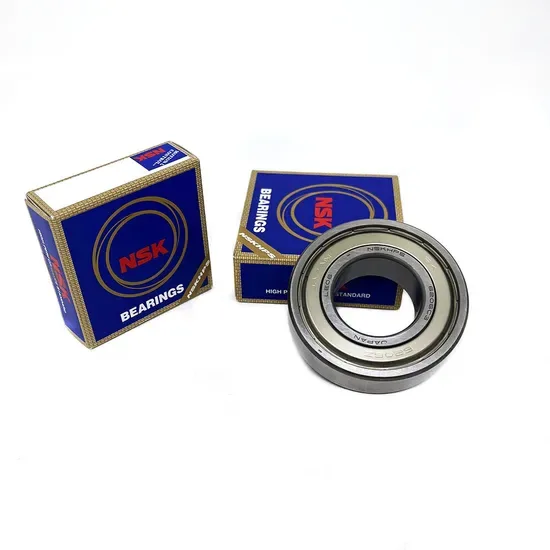 Deep Groove Ball Bearings X&S NSK 6202 6203 6301 Deep Groove Ball Bearings for Auto Parts Deep Groove Ball Bearings NSK High-Temperature Deep Groove Ball Bearing 608zz 6302 6910 6319-2RS Automotive Bearings and Parts NSK Deep Groove Ball Bearing 608 6204 6301 for Electric Motor Automotive
Any alternative is marked separately on the quote and requires buyer approval.