
NSK Bearings for Belt Conveyors – Wholesale Supplier

Most conveyor bearing failures are not caused by overload, but by seal failure allowing abrasive dust ingress.
Genuine NSK bearings with appropriate internal clearance and advanced sealing solutions are essential for maintaining belt conveyor reliability in extreme environments, preventing costly unplanned downtime through proper selection and maintenance strategies.
I still remember the thick, gray dust coating every surface inside that cement plant in Saudi Arabia. The drive pulley had seized again, halting the entire production line. When we dismantled the housing, the spherical roller bearings were packed solid with fine particulate matter. The seals had failed completely. The previous supplier had provided unbranded units that looked identical to genuine parts on the outside but lacked the precise manufacturing tolerances required for such harsh conditions. Replacing them with sealed NSK spherical roller bearings and recalculating the load requirements resolved the issue permanently. In heavy industry, especially in regions with extreme ambient heat and high dust levels, the choice of bearing is not just a procurement decision but a critical operational safeguard.
Selecting the right components requires understanding that NSK Bearings in Belt Conveyors must withstand dynamic loads, thermal expansion, and contaminant exposure simultaneously. This guide details how to select, maintain, and source these critical components effectively.
Why Do Belt Conveyor Bearings Fail Prematurely in Harsh Environments?
Dust ingress and thermal expansion are the primary silent killers of conveyor bearings, often misidentified as simple overload failures.
In many industrial settings, operators assume that a bearing failure results from excessive weight or shock loading. However, field data suggests that contamination is a far more prevalent cause. When abrasive particles like cement dust or sand bypass the seal, they act as grinding agents between the rolling elements and raceways. This leads to rapid wear, increased friction, and eventual seizure.
Consider the case of a mining operation where idler bearings were replaced frequently. The initial assumption was that the heavy ore load was crushing the bearings. Upon inspection, it became clear that the seals were inadequate for the fine, abrasive dust present in the mine. Switching to genuine NSK heavy-duty bearings with enhanced sealing capabilities significantly reduced the replacement frequency. The robust construction of these bearings ensures that the internal geometry remains protected even under severe external contamination.
Thermal expansion presents another challenge, particularly in desert environments. As temperatures rise, shafts expand, which can alter the internal clearance of the bearing. If the initial clearance is too tight, this expansion leads to preloading, generating excessive heat and accelerating fatigue. Selecting the correct internal clearance, such as C3 or C4, allows for this thermal growth without compromising performance.
Understanding these failure modes is crucial for anyone sourcing NSK Bearings in Belt Conveyors. It shifts the focus from merely buying a part to engineering a solution that accounts for the specific environmental stresses of the application.
How to Select the Right NSK Bearing for Conveyor Drive Pulleys and Idlers?
Match spherical roller bearings with correct internal clearance and advanced sealing to ensure longevity in demanding applications.
Selection is not a one-size-fits-all process. Drive pulleys and idlers operate under different conditions and require distinct considerations. Drive pulleys transmit torque and handle higher radial loads, while idlers support the belt and material weight, often running at lower speeds but exposed to more direct contamination.
For drive pulleys, spherical roller bearings are the preferred choice due to their ability to accommodate misalignment and heavy loads. When selecting these bearings, pay close attention to the sealing type. Standard shields may not suffice in high-dust environments. Look for bearings with contact seals *culate matter.
Idlers, on the other hand, benefit from bearings designed for low friction and long life with minimal maintenance. Here, the internal clearance is critical. In hot climates, a standard clearance might become insufficient as the shaft expands. Opting for a C3 or C4 clearance ensures that the bearing can accommodate this expansion without developing harmful internal preload.
| Application Factor | Standard Environment | Harsh/Dusty Environment | High-Temperature Environment |
|---|---|---|---|
| Sealing Type | Basic Shield | Contact Seal | High-Temp Resistant Seal |
| Internal Clearance | Normal (C0) | Normal or C3 | C3 or C4 |
| Lubrication | Standard Grease | High-Viscosity Grease | High-Temp Synthetic Grease |
| Bearing Type | Deep Groove Ball | Spherical Roller | Spherical Roller |
This table highlights the qualitative differences in selection criteria based on environmental conditions. Note that specific grease types and seal materials should be verified against the manufacturer’s guidelines for your specific temperature range.
When evaluating NSK Bearings in Belt Conveyors, ensure that the selected model matches these environmental demands. A bearing that performs well in a clean warehouse will likely fail quickly in a cement plant if the sealing and clearance are not adjusted accordingly.
What Are the Hidden Costs of Using Non-Genuine Bearings in Heavy Conveyors?
Unplanned downtime and collateral damage far exceed initial procurement savings when using non-genuine bearings.
The temptation to cut costs by purchasing cheaper, non-genuine alternatives is strong, especially for large-scale projects requiring hundreds of bearings. However, this short-term saving often leads to significant long-term expenses. A single bearing failure can cause a conveyor to stop, halting production and leading to substantial revenue loss. In some cases, the cost of lost production can be several times the total annual budget for bearing replacements.
Moreover, a failed bearing can cause collateral damage to other components. A seized bearing can damage the shaft, housing, and even the conveyor belt itself. Repairing these additional damages adds to the overall cost, not to mention the extended downtime required for complex repairs.
A European wind farm operator once reported that switching from unbranded bearings to genuine premium brands reduced their maintenance calls significantly. While the upfront cost was higher, the reduction in emergency repairs and the extension of service life resulted in a lower total cost of ownership. This experience underscores the importance of viewing bearings as a critical investment rather than a commodity expense.
For distributors and MRO operators, emphasizing the value of genuine NSK Bearings in Belt Conveyors helps clients understand that reliability is worth the premium. It is not just about the price of the part, but the cost of keeping the plant running.
How to Ensure Bearing Authenticity and Optimize Procurement for MRO?
Verify traceability documents and consolidate sourcing from reliable global suppliers to guarantee authenticity and optimize inventory.
Counterfeit bearings are a persistent issue in the global market. These fake products often look identical to genuine ones but lack the quality control and material integrity required for heavy-duty applications. To ensure authenticity, always request traceability documentation from your supplier. Genuine bearings come with batch numbers and certificates that verify their origin and manufacturing standards.
Procurement strategy also plays a vital role. For MRO operations, having a flexible supply chain is essential. Emergency breakdowns require quick access to spare parts, while planned maintenance allows for bulk ordering. Working with a supplier who offers both single-unit emergency shipments and container-load consolidation for bulk orders provides the flexibility needed to manage inventory efficiently.
Technical support is another key factor. A reliable supplier should offer assistance with model selection and cross-referencing. This ensures that you are getting the exact equivalent or upgrade needed for your application, reducing the risk of incorrect installations. For example, if a specific NSK model is unavailable, a knowledgeable supplier can recommend a suitable alternative with matching dimensions and load ratings.
By prioritizing authenticity and strategic sourcing, buyers can secure high-quality NSK Bearings in Belt Conveyors that deliver consistent performance. This approach minimizes the risk of counterfeit products and ensures that maintenance teams have the right parts when they need them.
Conclusion
Reliability in harsh environments depends on genuine components and informed selection.
Choosing the right bearings involves more than checking dimensions; it requires understanding the environmental challenges and operational demands. Genuine NSK spherical roller bearings, selected with appropriate clearance and sealing, provide the durability needed for belt conveyors in extreme conditions. Avoiding counterfeit products and partnering with trusted suppliers ensures long-term performance and reduces the hidden costs of downtime. For those managing heavy industrial assets, investing in quality NSK Bearings in Belt Conveyors is a decisive step toward operational excellence.
NSK Bearings Mentioned in This Article
Deep Groove Ball Bearings Genuine NSK 6303-6317 Deep Groove Ball Bearings for Excavators 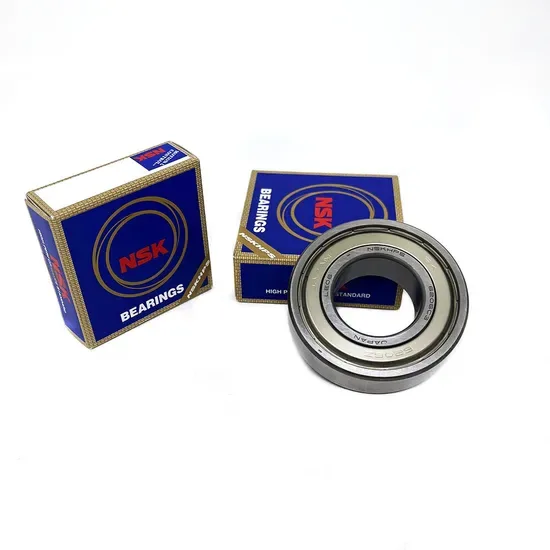 Deep Groove Ball Bearings X&S NSK 6202 6203 6301 Deep Groove Ball Bearings for Auto Parts Deep Groove Ball Bearings NSK High-Temperature Deep Groove Ball Bearing 608zz 6302 6910 6319-2RS Automotive Bearings and Parts NSK Deep Groove Ball Bearing 608 6204 6301 for Electric Motor Automotive
Target Industries
Any alternative is marked separately on the quote and requires buyer approval.