Genuine NSK Bearings Wholesale Supplier for Global Industrial & MRO Orders

Visual inspection is no longer sufficient to guarantee bearing authenticity.
To secure genuine NSK orders, buyers must demand a complete traceability package including the Certificate of Origin, material test reports, and factory-assigned batch codes. These documents are non-negotiable for verifying authenticity and preventing catastrophic equipment failures in heavy industry.
The dust in a cement plant crusher housing does not just coat the machinery; it infiltrates the microscopic gaps of a bearing cage. I recall standing beside a massive gyratory crusher in West Africa, watching a production line that had been silent for weeks. The culprit was not a design flaw or an operator error, but a set of spherical roller bearings that looked perfect to the naked eye. They bore the NSK logo, the packaging seemed intact, and the price had been attractive. Yet, under the extreme load and vibration of crushing limestone, the inferior steel failed. The cage disintegrated, scoring the shaft and halting operations for an extended period. This incident reshaped my approach to procurement. It highlighted that in harsh environments, the paper trail is as critical as the metal itself.
For procurement managers and MRO operators, the challenge is not just finding a supplier, but verifying the lineage of every component. As a Genuine NSK Bearings Wholesale Supplier for Global Industrial & MRO Orders, we see too many buyers focus solely on unit cost, ignoring the hidden liability of undocumented parts. The following sections detail how to verify these essential documents and why they matter more than ever in today’s complex supply chain.
What Certificates Are Mandatory for Genuine NSK Orders?
A genuine NSK bearing is defined by its documentation as much as its dimensions.
When procuring high-value components, the invoice alone is insufficient proof of origin. A complete certification package serves as the legal and technical backbone of your purchase. Without it, you are buying a mystery box. The mandatory documents form a triad of verification: the Certificate of Origin (CoO), material test reports, and specific factory traceability codes.
The Certificate of Origin is the primary document proving where the bearing was manufactured. It must align with the manufacturing location stated on the bearing box and the bearing itself. For NSK products, this often means verifying production from facilities in Japan, China, Thailand, or Europe, depending on the specific product line.
Material test reports provide insight into the metallurgical quality of the steel. While buyers cannot easily perform spectrographic analysis on-site, the presence of these reports indicates that the supplier has access to the manufacturer’s quality control data. These documents confirm that the steel meets the required cleanliness standards, which is vital for fatigue life in heavy-load applications.
Traceability codes, often laser-etched on the bearing ring or printed on the inner box, link the physical item to its production batch. This code allows for cross-referencing with official databases. If a supplier cannot provide a clear path from the batch number to the factory records, the authenticity is questionable.
| Document Type | Purpose | Verification Method | Risk if Missing |
|---|---|---|---|
| Certificate of Origin | Proves manufacturing country | Cross-check with factory location | Customs delays; unknown origin |
| Material Test Report | Confirms steel quality | Review for batch consistency | Premature fatigue failure |
| Traceability Code | Links item to production batch | Scan/query official database | Inability to claim warranty |
In mixed-brand consolidation shipments, ensuring each brand’s specific documentation is separated and clearly labeled is crucial. We maintain a strict policy where every NSK bearing, even in small MRO batches, carries its full original traceability. This ensures that when customs officials or quality auditors request proof, the paperwork is immediate and accurate.
How to Verify NSK Bearing Certificates Before Shipment?
Do not accept photocopies or scanned images without original validation.
Verification is an active process, not a passive receipt of files. Many counterfeiters have become sophisticated, producing high-quality fake certificates that mimic the layout and stamps of genuine documents. To avoid this, buyers must implement a rigorous cross-checking protocol before the goods leave the warehouse.
First, request original scanned documents rather than low-resolution photocopies. High-resolution scans allow for the inspection of security features, such as watermarks or specific font types used by the manufacturer.
Second, cross-check the batch numbers found on the certificates against the physical items. In a recent consolidation for a mining client in South America, we identified a discrepancy where the batch number on the CoO did not match the laser etching on the bearing rings. This mismatch flagged the entire lot for further inspection, preventing potentially substandard parts from entering the site.
Third, utilize official verification channels where available. Some manufacturers offer online portals where batch codes can be entered to confirm production dates and locations. If a supplier hesitates to provide these codes or claims they are “internal only,” it is a significant red flag. Genuine suppliers have no reason to withhold traceability data that proves their product’s legitimacy.
For distributors stocking multi-brand inventories, this verification step is vital for maintaining reputation. A single fake part can damage relationships with end-users who rely on consistent quality. By insisting on pre-shipment verification, buyers protect their operational integrity and ensure that the Genuine NSK Bearings Wholesale Supplier for Global Industrial & MRO Orders they engage with adheres to strict authenticity standards.
Why Do Counterfeit NSK Bearings Fail in Heavy Industries?
Modern fakes pass visual checks but fail under stress due to inferior materials.
The misconception that a bearing looks right means it is right is dangerous. Counterfeiters have mastered the art of external replication. The logos are crisp, the packaging is convincing, and the initial fit feels correct. However, the internal composition tells a different story. Fake bearings often use lower-grade steel with higher inclusion levels, which acts as stress concentrators under load.
In heavy industries like mining and cement production, bearings operate under extreme conditions. They face heavy radial and axial loads, high vibrations, and contaminated environments. Genuine NSK bearings are engineered with precise heat treatment and clean steel to withstand these forces. Counterfeit parts lack this metallurgical integrity.
The failure mode is often rapid and catastrophic. Instead of gradual wear, fake bearings may experience sudden cage fracture or raceway spalling. This leads to secondary damage, such as scored shafts or damaged housings, which exponentially increases repair costs and downtime. The initial savings on the bearing price are dwarfed by the cost of unplanned shutdowns and extensive mechanical repairs.
Consider the case of a steel mill in Southeast Asia. They replaced a set of cylindrical roller bearings with cheaper alternatives that appeared identical. Within months, the bearings failed, causing a gearbox seizure. The resulting downtime lasted for weeks, and the repair bill included not just new bearings, but also machining for the damaged shaft. The total cost was several times the savings they had initially achieved.
This reality underscores why procurement decisions must prioritize verified authenticity over lowest price. As a Genuine NSK Bearings Wholesale Supplier for Global Industrial & MRO Orders, we emphasize that the true cost of a bearing is measured in its service life and reliability, not just its purchase price.
How to Handle Certificates for Mixed-Brand Container Consolidation?
Separate and label traceability docs for each brand to avoid customs and quality disputes.
Consolidating shipments from multiple brands into a single container is a common strategy for reducing logistics costs. However, it introduces complexity in documentation management. Mixing papers for SKF, FAG, NSK, and other brands without clear separation can lead to confusion during customs clearance and internal quality checks.
Each brand has its own documentation format and requirements. NSK certificates differ in layout and specific data points from those of European or American manufacturers. When these documents are jumbled together, it becomes difficult to match a specific bearing to its corresponding certificate. This can delay customs clearance, as officers may struggle to verify the origin of mixed goods.
To manage this effectively, implement a strict labeling system. Each brand’s documentation should be packaged separately, either physically attached to the respective boxes or compiled in distinct digital folders accessible via QR codes on the packing list. Clearly label each set with the brand name, order number, and item list.
In our operations, we ensure that even in mixed-container MRO orders, the NSK-specific traceability docs are kept distinct. This allows end-users to quickly retrieve the necessary papers for audit or warranty purposes without sifting through unrelated documents. It also simplifies the process for local distributors who need to present specific certificates to their clients.
This organized approach minimizes administrative friction and ensures that every component, regardless of brand, is fully traceable. It reflects a professional handling of complex supply chains, reinforcing the value of working with a Genuine NSK Bearings Wholesale Supplier for Global Industrial & MRO Orders who understands the nuances of global trade compliance.
Conclusion
Authenticity is verified through documents, not just appearance.
Securing genuine NSK bearings requires a disciplined approach to documentation. By demanding complete traceability packages, verifying batch codes before shipment, and understanding the risks of counterfeit materials, buyers can protect their operations from costly failures. In mixed-brand consolidations, clear separation of documents ensures smooth logistics and compliance. Prioritizing these steps guarantees that the bearings installed in critical machinery are truly fit for purpose.
NSK Bearings Mentioned in This Article
Self-Aligning Ball Bearings NSK 2217M Self Aligning Ball Bearing Genuine Wholesale Supplier  Cylindrical Roller Bearings NSK N2316EM Cylindrical Roller Bearing Genuine Original Wholesale Supply
 Spherical Roller Bearings Genuine NSK Spherical Roller Bearing 21320CAK 21321CAK 21322CAK 21324CAK Wholesale
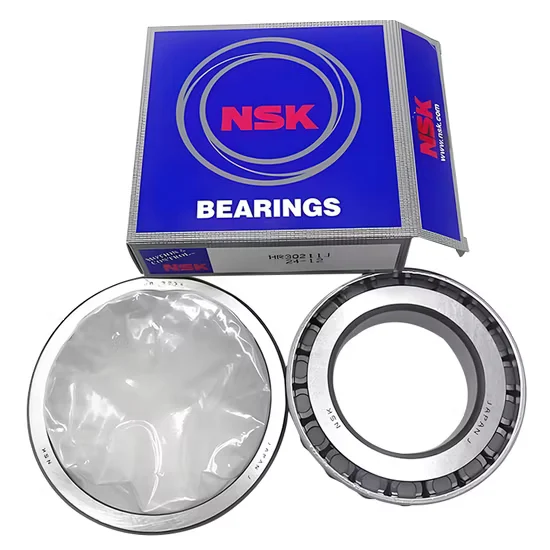 Tapered Roller Bearings NSK 32976 32964 32934 32980 Taper Roller Bearing Genuine Wholesale
Any alternative is marked separately on the quote and requires buyer approval.
