
Genuine NSK Bearings for Process Pumps – Wholesale Supplier

Most bearing failures in process pumps are not caused by fatigue, but by incorrect internal clearance selection for high-temperature environments.
Selecting genuine NSK bearings tailored to specific process pump conditions is critical to preventing catastrophic failures and ensuring continuous production. The right choice involves matching the bearing type and internal clearance to the thermal expansion profile of the pump housing and shaft, while strictly verifying supply chain traceability to avoid refurbished counterfeits that lack these precise engineering tolerances.
I still remember the silence in the chemical plant after a耐腐蚀 centrifugal pump seized up. It wasn’t a gradual decline; it was an abrupt, violent stop that shut down the entire production line for two days. When we dismantled the unit, the cause was immediately visible: the cage of the NSK bearing had fragmented completely, with rollers fused into a solid mass of metal. The maintenance log showed a recent replacement, but the part failed under standard operating temperatures. Upon closer inspection, the replacement was a refurbished unit disguised as new. Its internal clearance had not been adjusted for the thermal expansion inherent in that specific high-temp slurry application. That incident shifted my focus from simply swapping parts to rigorously analyzing工况 parameters and insisting on verifiable provenance for every single component.
Understanding why these components fail requires looking beyond the surface. In harsh industrial environments, the difference between a reliable operation and a costly shutdown often lies in the microscopic details of bearing selection and authentication.
Why Do NSK Bearings Fail in Process Pumps?
Premature failure in process pumps is frequently driven by harsh operating conditions combined with incorrect internal clearance, leading to cage fragmentation rather than simple wear.
In many maintenance workshops, the default assumption is that a bearing failed because it reached the end of its natural fatigue life. However, in process pumps handling aggressive chemicals or high-temperature slurries, the reality is often different. The primary culprit is frequently a mismatch between the bearing’s internal clearance and the thermal expansion of the pump assembly.
When a pump operates at elevated temperatures, the shaft and housing expand at different rates. If the bearing selected has a standard C3 clearance when a C4 is required, the rolling elements become preloaded as the system heats up. This generates excessive heat and stress, eventually causing the cage to fracture. I have seen this scenario play out repeatedly in high-temp slurry pumps, where false bearings with incorrect clearance led to immediate roller seizure.
Another significant factor is lubrication compatibility. Process fluids can sometimes leak past seals, contaminating the grease or oil within the bearing. If the lubricant is not compatible with the process fluid, it can break down, losing its viscosity and protective film strength. This leads to metal-to-metal contact, rapid wear, and eventual failure. Vibration baseline monitoring can often detect these issues early, but only if the initial installation was correct.
The key takeaway is that failure analysis must go beyond visual inspection. It requires understanding the thermal dynamics of the entire pump assembly. Without this context, even a premium brand bearing will fail prematurely if the wrong clearance class is chosen for the operating temperature range.
How to Select the Right NSK Bearing for Your Pump?
Match the bearing type and internal clearance to the specific temperature and load profiles of your pump application to ensure optimal performance.
Selecting the correct bearing is not a one-size-fits-all task. It requires a detailed analysis of the pump’s operating conditions. For chemical centrifugal pumps, corrosion resistance and seal integrity are paramount. For high-temperature slurry pumps, thermal stability and appropriate clearance are critical.
A common mistake is assuming that a higher precision grade automatically translates to better performance in all scenarios. In reality, for many process pump applications, robustness and correct clearance are more important than ultra-high precision. The goal is to ensure that the bearing can accommodate the expected thermal expansion without becoming overly preloaded.
| Application Factor | Standard Condition | Harsh/High-Temp Condition |
|---|---|---|
| Internal Clearance | C3 | C4 or Custom |
| Lubrication Type | Standard Grease | High-Temp Synthetic |
| Cage Material | Steel | Brass or Polymer |
| Seal Type | Rubber Contact | Non-Contact Labyrinth |
This table illustrates how selection criteria shift based on environmental severity. For instance, in a high-temperature environment, a C4 clearance might be necessary to prevent seizure, whereas a C3 clearance would suffice for a standard water pump. Similarly, the cage material may need to change from steel to brass or a specialized polymer to withstand higher temperatures or corrosive agents.
I once assisted a client in Southeast Asia who was experiencing frequent failures in their hot oil circulation pumps. They were using standard C3 clearance bearings, which worked fine in cooler months but seized during peak summer operations. By switching to C4 clearance bearings and verifying the lubricant’s thermal stability, we eliminated the seizures entirely. This highlights the importance of tailoring the selection to the specific thermal profile of the application.
When sourcing these components, it is essential to consult technical datasheets and, if possible, engage with suppliers who offer technical selection support. Generic recommendations often overlook the nuanced requirements of specific process pump designs.
How to Identify Fake or Refurbished NSK Bearings?
Verify traceability documents and inspect packaging and internal geometry to distinguish genuine NSK bearings from refurbished fakes.
The market for industrial bearings is plagued by counterfeit and refurbished products. These items may look identical to genuine parts on the outside but lack the precise engineering and material quality required for demanding applications. Identifying them requires a keen eye and a systematic approach.
Visual inspection is the first line of defense. Genuine NSK bearings have consistent, high-quality marking on the raceways and shields. Refurbished units often show signs of re-marking, such as uneven font depth or misaligned text. Additionally, the packaging should be intact, with clear batch numbers and manufacturing dates that can be traced back to the manufacturer.
However, visual cues alone are not enough. Dimensional inspection is crucial. Refurbished bearings may have been ground down to remove surface defects, altering their original dimensions. Using precise micrometers, check the inner and outer diameters, as well as the width, against the manufacturer’s specifications. Any deviation, no matter how small, indicates a non-genuine product.
Traceability documentation is another critical verification step. Reputable suppliers provide certificates of origin and material test reports that link the bearing to its production batch. If a supplier cannot provide these documents, it is a major red flag. In my experience, batches of fake bearings often lack consistent batch numbering or have documents that do not match the physical product.
We implement strict traceability verification for all our inventory, sourcing directly from official channels to ensure authenticity. This process not only protects our clients from fraudulent parts but also saves significant time and money by avoiding the downtime associated with premature failures.
By combining visual inspection, dimensional checks, and document verification, buyers can significantly reduce the risk of purchasing counterfeit or refurbished bearings. This diligence is essential for maintaining the reliability of critical process pump operations.
What is the True Cost of Unplanned Pump Downtime?
Genuine bearing investment is minimal compared to the total production loss incurred from unplanned pump downtime.
When evaluating the cost of bearings, many procurement managers focus solely on the purchase price. However, this perspective ignores the far greater costs associated with unplanned downtime. A single bearing failure can halt an entire production line, leading to lost revenue, overtime labor costs, and potential damage to other equipment.
Consider the case of a chemical plant where a single pump failure caused a two-day shutdown. The cost of the bearing itself was negligible compared to the lost production value, which ran into the mid-six figures. Additionally, the emergency repair efforts required overtime pay for maintenance staff and expedited shipping fees for replacement parts.
Investing in genuine NSK bearings with verified traceability is a risk mitigation strategy. While the upfront cost may be slightly higher than that of questionable alternatives, the long-term savings in terms of reliability and reduced downtime are substantial. Furthermore, genuine bearings come with technical support and warranty coverage, providing an additional layer of security.
For MRO operators and pump OEMs, the focus should be on total cost of ownership rather than just initial purchase price. By selecting the right bearing for the application and ensuring its authenticity, companies can avoid the catastrophic financial impacts of unexpected failures.
This perspective shifts the conversation from cost-cutting to value preservation. It emphasizes that reliability is not an expense but an investment in continuous production and operational efficiency.
Conclusion
Reliability in process pumps hinges on precise bearing selection and unwavering commitment to authenticity.
Choosing the right NSK bearings involves more than just picking a part number; it requires a deep understanding of thermal dynamics, load profiles, and supply chain integrity. By prioritizing genuine components with verified traceability, operators can safeguard their processes against the hidden risks of counterfeit parts and incorrect specifications. This approach ensures that every rotation contributes to sustained productivity rather than unexpected downtime.
NSK Bearings Mentioned in This Article
Deep Groove Ball Bearings Genuine NSK 6303-6317 Deep Groove Ball Bearings for Excavators 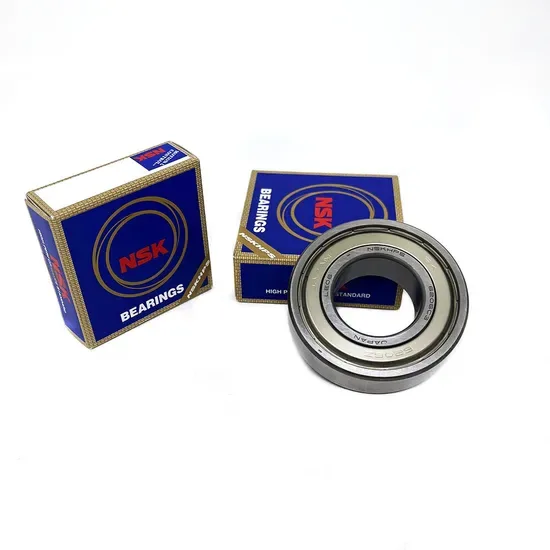 Deep Groove Ball Bearings Genuine NSK Deep Groove Ball Bearing 608 6204 6203 for Small Rotary Motors
 Deep Groove Ball Bearings Genuine NSK 16001 16002 16003 16004 16005 Deep Groove Ball Bearing for Winder
 Deep Groove Ball Bearings Genuine NSK 6903 6802 Deep Groove Ball Bearing for Machine Tool
Target Industries
Any alternative is marked separately on the quote and requires buyer approval.