Genuine NSK Bearings for Food and Beverage – Wholesale Supplier

Stainless steel housings do not guarantee washdown survival.
Selecting genuine NSK bearings for food and beverage applications requires verifying seal integrity and lubricant certifications to prevent contamination. The core argument is that material composition alone is insufficient; the mechanical design of the seal and the regulatory status of the grease determine compliance and operational longevity.
I still remember the smell of sour juice mixing with the metallic tang of rust on a filling line in Dongguan. It was not a minor leak. A batch of imported bearings, assumed to be high-grade due to their shiny stainless steel exteriors, had failed catastrophically. The moisture from daily steam cleaning had penetrated the seals, causing internal corrosion. Worse, the non-certified lubricant had leaked out, contaminating an entire production run of fruit juice. The financial penalty was severe, but the reputational damage to the brand was irreversible. That incident shifted my focus from simple part replacement to rigorous technical verification. I learned that in food processing, a bearing is not just a mechanical component; it is a critical barrier against biological and chemical contamination.
This guide breaks down the technical specifics of selecting authentic components. It moves beyond marketing claims to examine the engineering details that matter during high-pressure washdowns and continuous operation. For buyers sourcing globally, understanding these distinctions is the only way to ensure batch consistency and regulatory compliance.
Why Do Standard Bearings Fail in Food Plants?
Moisture ingress and non-certified grease are the primary drivers of catastrophic contamination.
Standard industrial bearings are designed for performance under load, not for resistance to aggressive cleaning agents. In food and beverage environments, equipment faces daily exposure to hot water, caustic detergents, and acidic sanitizers. When a standard bearing is installed in such an environment, the first point of failure is usually the seal.
The contact pressure between the seal lip and the inner ring is critical. If this pressure is too low, fluids penetrate easily. If it is too high, friction generates heat, degrading the lubricant faster. Many generic “food-grade” replacements fail because they use standard rubber compounds that swell or crack when exposed to specific cleaning chemicals. This creates micro-channels for bacteria to enter the bearing housing.
Consider a bakery mixer scenario. The primary risk here is not just water, but dough and flour particles acting as abrasives. If the grease inside the bearing is not certified for incidental food contact, any leakage becomes a direct health hazard. I have seen cases where maintenance teams refilled bearings with general-purpose lithium grease because it was cheaper and readily available. The result was grease migrating into the product zone. The cleanup cost far exceeded the savings on the lubricant.
Another frequent failure occurs in meat processing plants. Conveyors are subjected to high-pressure washdowns multiple times a day. Standard IP ratings often do not account for the thermal shock of hot water followed by cold rinses. This expansion and contraction can break the bond between the seal and the housing. Once the seal is compromised, rust forms rapidly on the internal raceways, leading to seizure. The machine stops, production halts, and the entire line must be sanitized before restarting.
The lesson is clear: stainless steel outer rings are merely the first line of defense. The real protection lies in the seal design and the chemical stability of the internal lubricant. Without verifying these elements, even the most expensive bearing will fail prematurely in a wet environment.
How to Compare NSK Food-Grade Bearing Specifications?
A specification matrix reveals the differences that marketing brochures hide.
When evaluating options, buyers must look beyond the part number. Genuine NSK bearings for food and beverage applications have distinct structural features that differentiate them from standard industrial lines. Comparing these specifications side-by-side helps identify components that can withstand the rigors of food processing.
The following table outlines the key parameters to verify when sourcing NSK Bearings for Food and Beverage. Note that these are qualitative comparisons based on design intent and certification levels.
| Feature | Standard Industrial Bearing | Genuine NSK Food-Grade Bearing |
|---|---|---|
| Material | Chrome Steel (Susceptible to rust) | Stainless Steel (Corrosion resistant) |
| Seal Type | Standard Rubber or Metal Shield | Specialized Contact Seals (Enhanced washdown resistance) |
| Lubricant | General Purpose Lithium Grease | NSF H1 Certified Food-Grade Grease |
| Certification | None specific to food safety | Compliant with FDA/USDA guidelines for materials |
| Washdown Resistance | Low (Vulnerable to high-pressure water) | High (Designed for frequent cleaning cycles) |
In a recent project for a juice filler manufacturer, the engineering team struggled with premature bearing failures. They were using stainless steel bearings but had not specified the seal type. By switching to a model with enhanced seal contact pressure, the lifespan of the bearings increased noticeably. The key was not just the material, but the mechanical interface that kept water out.
It is also important to check the lubricant fill ratio. Some bearings are marketed as “sealed for life,” but in high-temperature washdown environments, the grease can degrade or wash out over time. Genuine NSK units often use specific grease formulations that maintain viscosity and adhesion under these conditions. However, even with high-quality grease, regular inspection intervals are necessary. Assuming a bearing is maintenance-free without verifying the operating conditions is a common mistake.
Buyers should request detailed datasheets that specify the exact grease type and seal material. If a supplier cannot provide this information, the product is likely a generic substitute rather than a genuine engineered solution.
What Documents Prove Bearing Authenticity & Compliance?
Traceability and NSF certificates are mandatory, not optional.
In the food industry, documentation is as important as the hardware itself. Regulatory audits require proof that every component in contact with the production environment meets safety standards. A bearing without proper certification is a liability.
The primary document to request is the NSF certification for the lubricant. NSF H1 registration confirms that the grease is safe for incidental food contact. This certificate should be traceable to the specific batch of bearings supplied. Additionally, material certificates for the stainless steel components verify that the alloy composition meets corrosion resistance standards.
I once assisted a buyer in Europe who received a shipment of bearings that looked identical to the genuine article. However, upon requesting the batch-specific NSF certificates, the supplier could not provide them. The grease used was a generic alternative that lacked proper registration. Using these bearings would have violated local food safety regulations, risking heavy fines and product recalls.
Authenticity also extends to the bearing itself. Counterfeit products often mimic the packaging and markings of major brands but lack the precise manufacturing tolerances. Genuine NSK bearings come with unique identification codes that can be verified through authorized channels. These codes link the physical product to its manufacturing history, ensuring quality control.
For global buyers, ensuring that these documents are included in the shipping package is crucial. Customs authorities in many regions now require detailed compliance documentation for industrial components used in food processing. Missing papers can lead to delays, storage fees, and even seizure of goods.
Always verify that the certificates are current and match the part numbers ordered. A certificate from a different batch or product line is invalid. This level of scrutiny protects both the buyer and the end consumer.
How to Source Genuine NSK Bearings Globally?
Authorized channels ensure batch consistency and technical support.
Sourcing genuine components from outside the manufacturer’s home country presents challenges. The market is flooded with replicas and lower-quality substitutes that carry misleading labels. For OEMs and MRO buyers, securing a reliable supply chain is essential for maintaining production uptime.
Working with a professional global full-range bearing supplier offers several advantages. First, it provides access to genuine stock from multiple premium brands, including NSK, SKF, and FAG. This allows for mixed-batch consolidation, reducing shipping costs and simplifying logistics. Second, reputable suppliers maintain complete traceability documentation for every item sold. This ensures that every bearing can be traced back to its origin, satisfying audit requirements.
Consider a mining equipment manufacturer in South America. They needed a mix of heavy-duty roller bearings and precision food-grade bearings for their processing plant. By sourcing through a consolidated supplier, they received a single container with all required parts, each accompanied by the necessary certificates. This approach minimized administrative overhead and ensured that all components met their strict quality standards.
Technical support is another critical factor. A knowledgeable supplier can help select the right bearing for specific application scenarios. Whether it is a high-speed filler or a heavy-load conveyor, expert guidance prevents misapplication. This reduces the risk of premature failure and optimizes maintenance schedules.
When evaluating suppliers, look for those with ISO-compliant quality assurance systems and a proven track record in serving international clients. Flexibility in MOQs is also important, allowing for both emergency spare-part orders and large project shipments. This adaptability ensures that buyers can respond quickly to maintenance needs without overstocking inventory.
Conclusion
Verification prevents contamination.
Selecting the right components for food processing machinery demands more than just checking a part number. It requires a deep understanding of seal mechanics, lubricant certifications, and supply chain traceability. By focusing on these technical details, buyers can avoid costly failures and ensure compliance with safety standards. Genuine NSK Bearings for Food and Beverage offer the reliability needed for these demanding environments, but only when sourced through verified channels with proper documentation.
NSK Bearings Mentioned in This Article
Deep Groove Ball Bearings Genuine NSK 6303-6317 Deep Groove Ball Bearings for Excavators 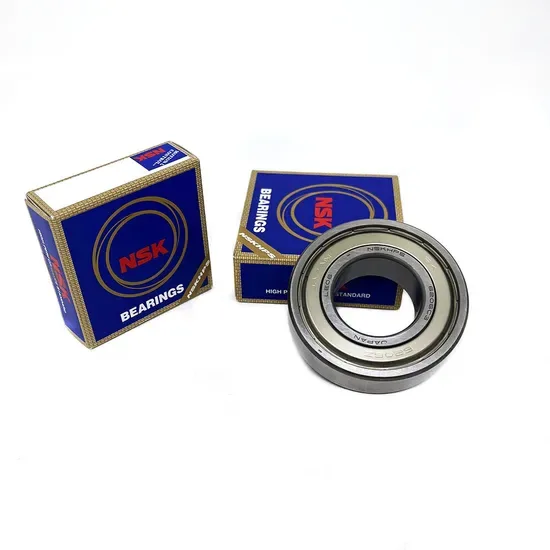 Deep Groove Ball Bearings Genuine NSK Deep Groove Ball Bearing 608 6204 6203 for Small Rotary Motors
 Deep Groove Ball Bearings Genuine NSK 16001 16002 16003 16004 16005 Deep Groove Ball Bearing for Winder
 Deep Groove Ball Bearings Genuine NSK 6903 6802 Deep Groove Ball Bearing for Machine Tool
Target Industries
Any alternative is marked separately on the quote and requires buyer approval.
